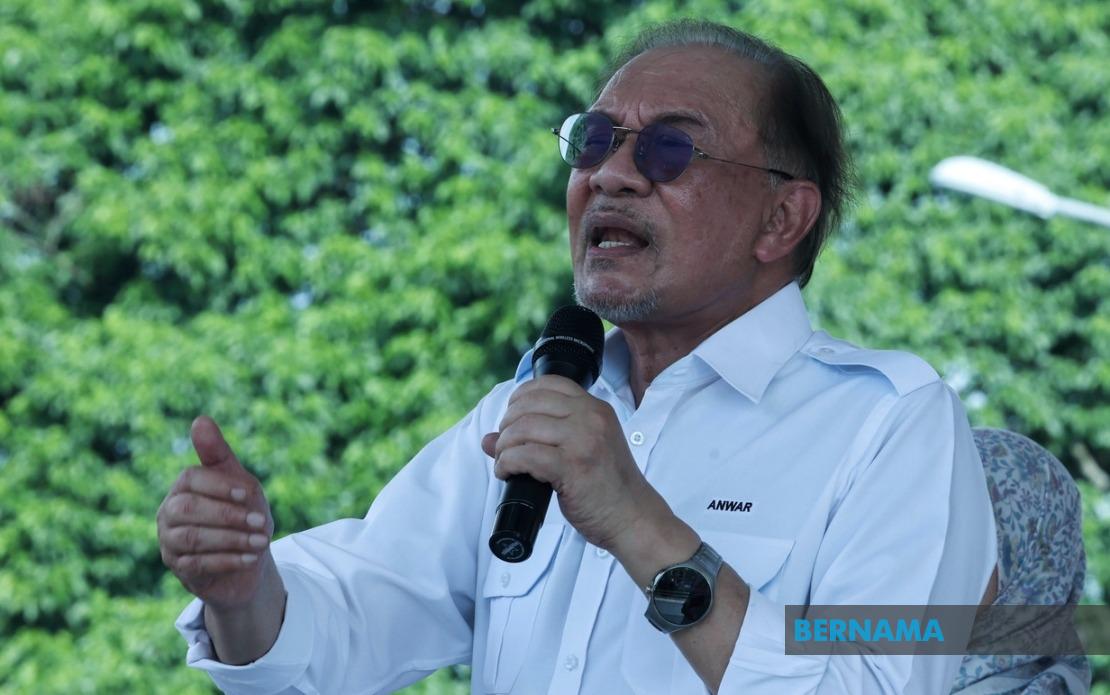
Prime Minister Datuk Seri Anwar Ibrahim has reaffirmed the federal government's unwavering commitment to addressing the housing affordability crisis facing Malaysia's civil service workforce through a dedicated affordable housing programme designed to lighten their financial burden. Speaking during a campaign engagement in Segamat, the Pakatan Harapan chairman outlined how the initiative represents a comprehensive response to the mounting pressures civil servants face in securing home ownership amid escalating property costs across the nation.
The government's strategy centres on a pragmatic approach to land utilisation, leveraging underutilised or dormant parcels held by various government agencies as development platforms for affordable housing complexes. Anwar highlighted that properties currently sitting idle within the portfolios of customs authorities, immigration departments, and educational institutions would be repurposed for constructing low-cost housing units, primarily benefiting those in public service. This methodology transforms what have traditionally been underperforming assets into productive infrastructure serving the public interest.
Beyond the conceptual framework, Anwar emphasised that this initiative has progressed substantially beyond the planning phase into active implementation across multiple states. The programme has already gained concrete traction in Johor, where approximately 1,700 housing units have received official approval and are currently advancing through various construction stages. This tangible progress demonstrates the government's determination to translate policy objectives into real residential units that will soon house civil servants and their families throughout the state.
The underlying rationale extends further than simply providing shelter. By ensuring civil servants achieve home ownership without excessive financial strain, the government aims to counteract broader inflationary pressures in the property market while simultaneously acknowledging the vital role public servants play in national development. Securing stable, affordable housing for this demographic represents recognition that government employees deserve housing security commensurate with their contributions to public administration and service delivery.
Anwar's remarks were delivered at a PMX Meet-and-Greet Programme in Kg Jawa, an event scheduled as part of his electoral campaign for the 16th Johor State Election. The gathering brought together various senior party figures, including PKR vice-president Datuk Seri Amirudin Shari, who serves as joint election director, alongside Deputy National Unity Minister R. Yuneswaran and prominent state-level political figures representing the Pakatan Harapan coalition. The presence of electoral candidates contesting specific state constituencies underscored the political significance of this housing initiative during the campaign period.
For Malaysian readers and observers, this housing programme carries particular relevance given the persistent affordability challenges facing young professionals and established civil servants alike. In Johor specifically, rapid urbanisation and population growth have exacerbated property price inflation, making homeownership increasingly inaccessible for middle-income households dependent on government salaries. The 1,700-unit commitment thus represents a substantial intervention intended to reverse this trend and prevent talent drain within the civil service.
The Pakatan Harapan coalition's approach of maximising government asset utilisation also reflects a broader governance philosophy emphasising efficient resource management and tangible service delivery. Rather than requesting substantial additional budgetary allocations, the strategy redirects existing government landholdings toward productive social purposes, demonstrating fiscal prudence while achieving meaningful outcomes. This methodology could potentially serve as a model for other states and federal territories grappling with similar housing accessibility problems.
The timing of this announcement coincides with heightened political competition in Johor, where Pakatan Harapan is contesting all 56 state assembly seats through coalition partners including PKR fielding 20 candidates, Amanah contributing 19, and DAP supplying 17 representatives. Against a broader field of 172 total candidates, the housing initiative represents a tangible policy offering aimed at persuading voters, particularly civil service households, that the coalition delivers concrete improvements to their living standards and financial security. Such targeted policy messaging during electoral campaigns reflects attempts to connect governance priorities with constituents' pressing concerns.
Pollicially, Anwar's emphasis on civil servant welfare through housing accessibility addresses a constituency that spans urban and semi-urban areas throughout Johor and beyond. Civil servants represent a stable, organised demographic whose household financial security directly impacts consumer spending, economic stability, and social cohesion across communities. By visibly prioritising their housing needs, the government signals that public sector workers remain central to its policy framework and development agenda.
Looking regionally, Malaysia's approach to affordable housing for public employees reflects broader Southeast Asian trends toward addressing middle-income housing deficits through government intervention. As countries throughout the region experience rapid urbanisation and property market dynamics that increasingly exclude middle-income professionals from homeownership, initiatives targeting civil servants become politically and economically significant. Malaysia's experience with land-based housing solutions could offer insights for neighbouring nations confronting comparable challenges.
The programme's success will depend substantially on implementation efficiency, construction timelines, and whether quality standards meet expectations of civil servants transitioning from rental to owned accommodation. Monitoring how effectively the 1,700 approved units progress through construction phases will establish credibility for government housing commitments. Additionally, whether this Johor initiative expands across other states will indicate whether affordable housing for civil servants becomes a sustained policy priority or remains geographically concentrated.
As electoral activities intensify leading toward the July 11 polling date, with early voting scheduled for July 7, housing affordability will likely feature prominently in campaign discussions. The government's willingness to commit resources and political attention to this issue reflects recognition that civil service housing security constitutes a legitimate governance priority deserving public resources and policy innovation. Whether voter response validates this emphasis will become evident through electoral outcomes in Johor.

