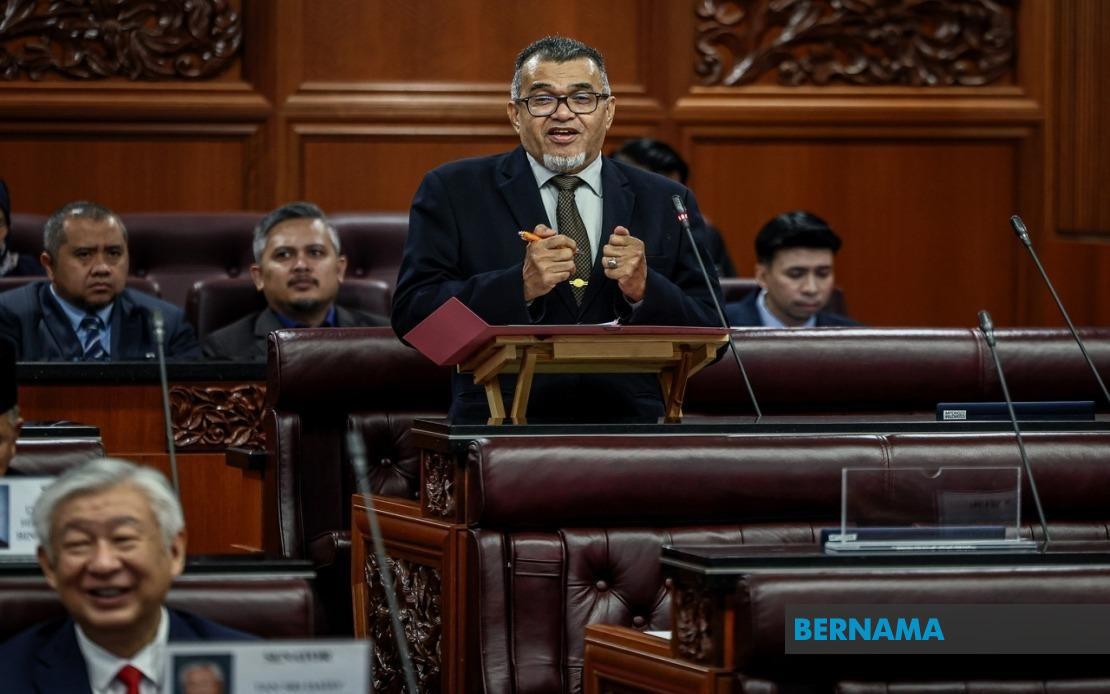
The Malaysian government is preparing sweeping legal changes to combat a mounting crisis of cable theft across the country's railway infrastructure, with Deputy Transport Minister Datuk Hasbi Habibollah confirming that proposed amendments to rail transport legislation will dramatically escalate financial penalties for offenders. The new framework under consideration would increase fines from the current ceiling of RM1,000 to as much as RM100,000 per incident, a hundred-fold increase designed to create genuine deterrence where existing penalties have failed to prevent widespread criminal activity.
Datuk Hasbi unveiled the proposal during parliamentary proceedings at Dewan Negara, responding to concerns raised by Senator Datuk Dr Mohd Hatta Md Ramli about recurring service disruptions stemming from theft and the government's strategy to safeguard public transportation reliability. The deputy minister indicated that formal presentation of the amended legislation to Parliament is likely before year-end, suggesting the government views this as a priority matter requiring expedited parliamentary attention and passage.
The urgency of this legislative push reflects the scale of financial damage that cable theft has inflicted on Malaysia's rail operators. Cumulative losses across the three major rail networks—Keretapi Tanah Melayu Berhad (KTMB), Prasarana Malaysia Berhad, and the East Coast Rail Link (ECRL) project—now total approximately RM50 million, according to official government figures. This staggering sum underscores how the problem has graduated from a security nuisance to an economically significant threat against critical infrastructure.
The ECRL project, still under construction and not yet operationally serving passengers, has already become a particular target for thieves. Government records show 71 separate cable theft incidents along the ECRL corridor, resulting in documented losses of RM4.06 million. Additional cases involving damage to equipment and other materials associated with the project have added another RM0.69 million in losses, bringing the ECRL-specific total to RM4.75 million. Although the project remains in its development phase without active passenger operations, these thefts carry potentially serious ramifications for the timeline of installation, testing, system commissioning, and final operational preparation.
The rationale underlying the proposed penalty increase centres on what the government characterizes as the inadequacy of existing fines relative to the actual harm inflicted on rail operators and the travelling public. Officials argue that current penalties bear no meaningful relationship to either the direct financial losses incurred through stolen materials or the downstream costs of service disruptions, delayed maintenance, and operational inefficiencies that cascade through the system when cables are compromised. This disconnect between offence severity and punishment has apparently created insufficient incentive for would-be thieves to seek alternative income sources.
Beyond legislative measures, the government is simultaneously investing in technological and human security enhancements to physically prevent cable theft at source. A programme to install 1,146 closed-circuit television cameras is currently underway across the railway network extending from Johor northward, creating video surveillance coverage intended to deter criminal activity and provide investigative evidence when thefts occur. These cameras represent a substantial capital commitment toward continuous monitoring of vulnerable sections of track and rail installations.
Grounded security operations have also been strengthened through equipment acquisition and tactical adjustments. The KTMB has procured twenty scrambler motorcycles specifically for use by Auxiliary Police personnel, enabling more rapid response capability and visible deterrence through continuous twenty-four-hour patrols along the railway corridor. Physical security measures have been simultaneously upgraded, including the closure of high-security access points such as vulnerable manholes, reducing opportunities for thieves to gain entry to areas where cable infrastructure remains exposed.
Canine units, operating under the K9 designation, have been integrated into the security apparatus as well. Sniffer dogs provide an additional layer of detection capability, potentially identifying thieves or stolen materials that might otherwise evade human surveillance or electronic monitoring systems. This multipronged approach—combining legislative deterrence, surveillance technology, human patrol presence, and canine units—reflects official recognition that addressing cable theft requires simultaneous intervention across several different security domains rather than reliance on any single measure.
The cable theft problem must be understood within the broader context of Malaysia's critical infrastructure vulnerability and the challenges facing urban transport operators across Southeast Asia. Railway networks in the region have become increasingly attractive targets for metal thieves seeking recyclable copper and aluminium, particularly during economic downturns when scrap metal prices rise and legitimate employment opportunities contract. The organized nature of some theft operations, combined with porous security in certain remote sections of track, has created persistent operational headaches for transit authorities attempting to maintain reliable service.
For Malaysian commuters and businesses reliant on rail transport, these theft incidents represent more than abstract financial losses—they translate into delayed journeys, missed connections, cancelled services, and eroded confidence in public transportation infrastructure at a time when the government is simultaneously trying to encourage modal shift from private vehicles toward mass transit. Each significant theft incident requires time-consuming investigation, repair work that may span days or weeks, and operational adjustments that propagate inconvenience through the broader transport network.
The proposed legal amendments must navigate Parliament successfully to become effective, and their ultimate impact on criminal behaviour will depend heavily on consistent enforcement and prosecution. The government's parallel investment in security infrastructure suggests recognition that heightened penalties alone cannot eliminate the problem without corresponding improvements in detection and apprehension capabilities. If the legislative reforms proceed as scheduled and receive parliamentary approval by year-end, Malaysia will have among the most stringent penalties for railway infrastructure theft within the Southeast Asian region, positioning it as a potential model for neighbouring countries facing comparable challenges.
Looking forward, success of this comprehensive anti-theft strategy will be measurable through documented reductions in cable theft incidents and corresponding loss figures in subsequent years. The convergence of elevated legal consequences, enhanced surveillance, augmented patrol operations, and physical security hardening represents a reasonably coherent policy response to a problem that has clearly exceeded the capacity of traditional enforcement approaches. Whether the combination of deterrence, prevention, and detection will achieve meaningful behavioural change among potential offenders remains to be demonstrated through operational results on Malaysia's railway networks.

