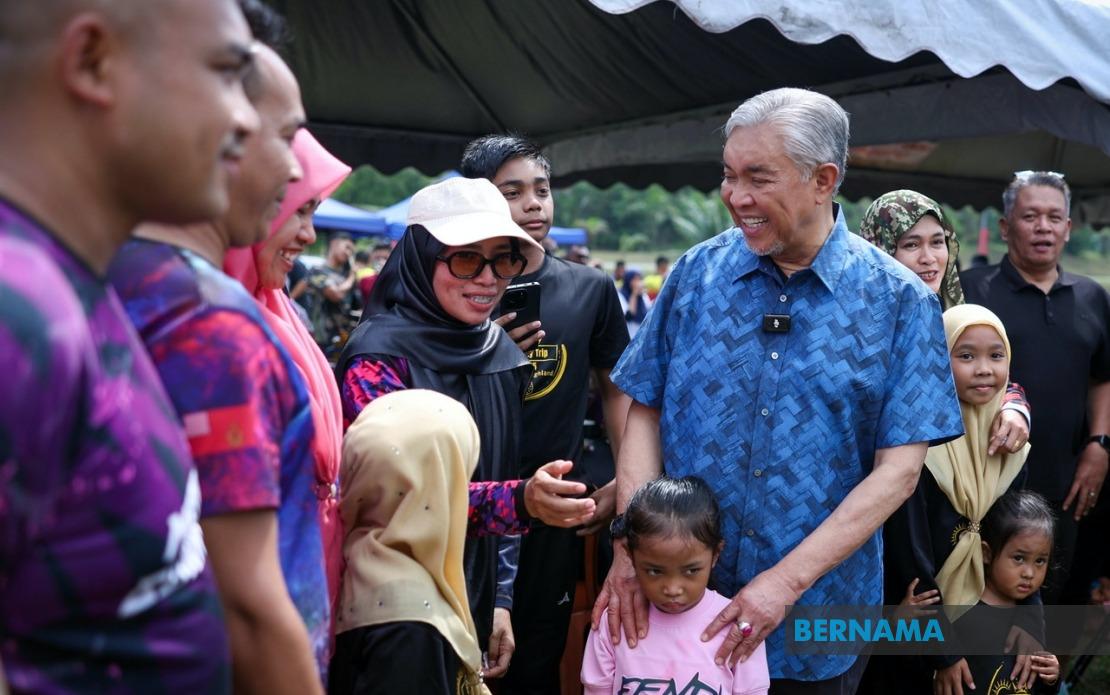
The Malaysian government is treating the wellbeing of armed forces personnel as a strategic investment in national security, with Deputy Prime Minister Datuk Seri Dr Ahmad Zahid Hamidi framing troop welfare as essential to military effectiveness. Speaking at the Southern Zone Malaysian Armed Forces (ATM) Family Day Carnival at Kem Syed Sirajuddin in Tampin on July 26, Ahmad Zahid connected soldier morale directly to defence capability, arguing that when service personnel are freed from worrying about family needs, they can dedicate themselves fully to protecting the nation.
The government has committed substantial resources toward this goal. Under this year's defence budget, RM844 million has been allocated specifically for housing services across military installations nationwide. This funding addresses both immediate accommodation shortages and longer-term infrastructure enhancement at barracks and cantonment areas. The commitment signals recognition that military housing has historically been underfunded relative to civilian government housing programmes, a gap the current administration appears determined to close.
A flagship initiative within this spending envelope involves constructing 1,300 Military Family Housing (RKAT) units at Kem Syed Sirajuddin in Gemas alone. This project represents one of Malaysia's largest recent military housing developments and addresses chronic accommodation pressures that have affected recruitment and retention. The Gemas site development is particularly significant given its location in southern Pahang, a region with substantial military presence including armour and infantry units. By concentrating investment in major barracks, the government aims to create model family communities that improve quality of life across extended military postings.
Educational support forms the second pillar of this welfare initiative. Ahmad Zahid specifically highlighted government commitment to improving school transport and educational facilities for military children, recognising that security of schooling arrangements influences whether service personnel can focus on duties without distraction. This dimension touches on a persistent challenge in military communities—children often face difficulties accessing quality schooling when families are posted to remote training areas or operational stations. By improving transport and institutional support, the government acknowledges these practical barriers to family stability.
Prime Minister Datuk Seri Anwar Ibrahim had previously reinforced this policy direction, explicitly stating that military welfare remained a government priority in recognition of the armed forces' contributions to national stability. This dual-leadership messaging from both Anwar and Ahmad Zahid suggests the welfare agenda commands high-level cabinet consensus rather than representing a departmental initiative. Such alignment is significant in Malaysian governance, where defence spending and personnel policy sometimes face budget constraints compared to other sectors.
The philosophy underlying these initiatives reflects a broader understanding that modern military effectiveness depends on personnel stability and morale. Research in defence studies consistently shows that housing insecurity, educational anxiety, and welfare concerns directly correlate with retention problems, particularly among experienced non-commissioned officers and mid-level professionals. By addressing these factors comprehensively, Malaysia's government is attempting to protect institutional knowledge and capability within its armed forces.
For Malaysian defence planners, this represents an important recalibration of priorities. The country faces complex security challenges including maritime boundaries disputes, non-traditional threats, and internal stability concerns. These demands cannot be met if the military loses experienced personnel to civilian employment simply because housing remains inadequate or children's schooling remains unsecured. The RM844 million investment and housing construction programme should thus be understood as defence spending with compound strategic returns.
The location of the announcement at Kem Syed Sirajuddin carries symbolic weight. This installation serves as headquarters for a significant portion of Malaysia's Army strength in the central region, making it an appropriate venue to communicate government support to troops and their families. The presence of Army Chief Gen Tan Sri Azhan Md Othman at the event further underscored the military hierarchy's backing for the welfare agenda, signalling that defence leadership views personnel care as central to operational capability.
Regionally, Malaysia's approach reflects growing recognition across Southeast Asia that defence force capability increasingly depends on personnel welfare policies that competitive labour markets demand. With populations aging and younger Malaysians having diverse career options, military service can only remain attractive if compensation and living conditions remain competitive. Neighbouring countries including Singapore and Thailand have invested heavily in military family housing and educational benefits, and Malaysia's programme appears designed partly to ensure local forces remain competitive for qualified personnel.
The stated focus on serving and retired military personnel indicates the government also recognises obligations to those who have left active service. Pension adequacy, housing access for retirees, and healthcare benefits were implicitly included in the welfare commitment, though specific retired personnel initiatives were not detailed in Ahmad Zahid's remarks. This broader coverage suggests the government envisages defence welfare as a lifecycle commitment rather than a service-years-only benefit.
Implementation capacity will determine whether these ambitions translate into material improvement. Malaysia's record on large infrastructure projects includes both successes and delays, and military housing construction must navigate land acquisition, environmental clearance, and contractor management. The 1,300 RKAT units at Gemas alone represent a multi-year construction programme requiring sustained funding and oversight. Government persistence in prioritising this spending across political cycles will test the stated commitment.
For military personnel themselves, these announcements promise meaningful improvements in daily life quality. Better housing reduces the stress of family separation or inadequate accommodation. Improved school transport and educational support removes obstacles to children's development. Collectively, these measures acknowledge that defence capability rests fundamentally on the wellbeing of the individuals who serve. As Malaysia navigates evolving security challenges in the region, ensuring that service personnel can concentrate on defence duties without distraction from family welfare concerns represents a logical and necessary investment.

