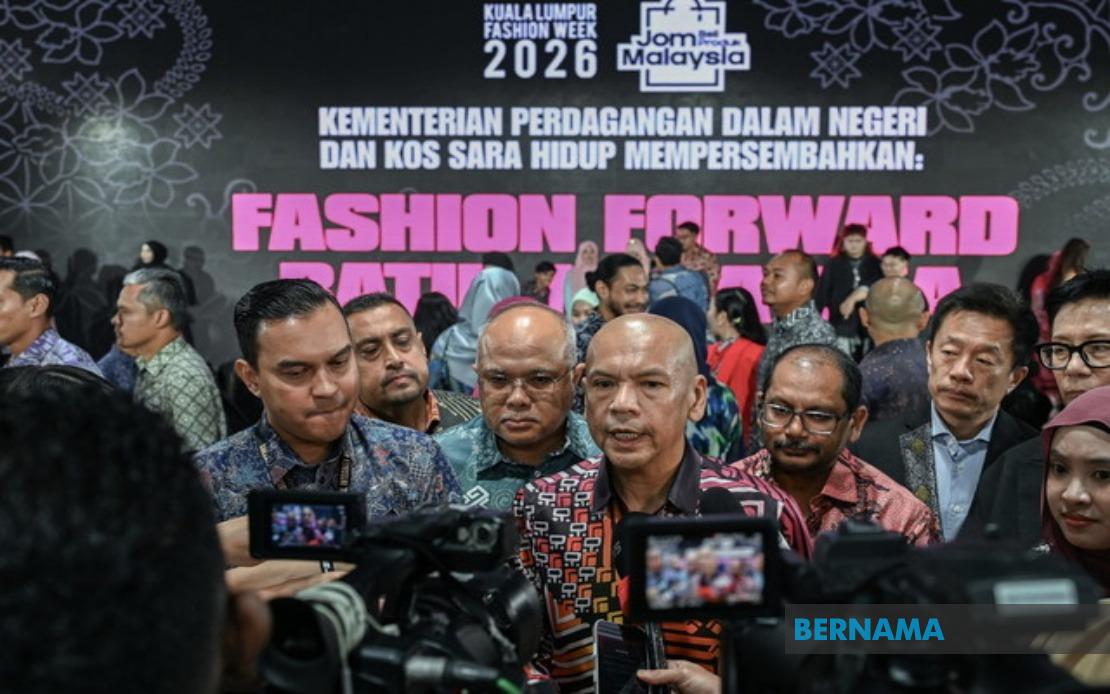
The Malaysian government is formally opening consultation channels with industry stakeholders, businesses, and civil society organisations to strengthen its approach to promoting domestic products and reducing reliance on imports. Domestic Trade and Cost of Living (KPDN) Minister Datuk Armizan Mohd Ali announced the invitation during the Kuala Lumpur Fashion Week 2026, signalling that policymakers recognise the need for ground-level input before finalising strategies that will affect manufacturers, retailers, and consumers across the nation.
The initiative centres on a newly established Cabinet Committee dedicated to empowering the consumption and procurement of local goods, a body formally created in July and chaired by Deputy Prime Minister Datuk Seri Fadillah Yusof. KPDN will serve as the administrative hub for this committee, which is expected to convene for its inaugural meeting shortly. The minister emphasised that this structural approach marks a departure from fragmented departmental efforts, where multiple government agencies previously pursued similar goals without sufficient coordination or shared direction.
Armizan articulated a fundamental challenge underlying the initiative: the perceived flooding of foreign products into Malaysian markets, particularly through e-commerce platforms and online retailers. Local entrepreneurs have voiced growing concerns about their ability to compete when consumers have unprecedented access to cheaper imported alternatives, often delivered to doorsteps within days. This phenomenon reflects broader regional and global trends reshaping retail landscapes, but Malaysia's response through coordinated government action distinguishes it from more laissez-faire approaches adopted elsewhere in Southeast Asia. The Cabinet Committee framework represents an attempt to create protective space for domestic enterprises while balancing consumer choice and economic efficiency.
The committee structure reflects the cross-cutting nature of supporting local products, drawing together the Ministry of Economy, the Ministry of Investment, Trade and Industry, the Ministry of Tourism, Arts and Culture, the Ministry of Entrepreneur Development and Cooperatives, the Finance Ministry, and various executing agencies. This horizontal coordination model aims to eliminate the administrative silos that have historically fragmented Malaysia's industrial policy. Rather than relying solely on top-down directives, KPDN is explicitly requesting that industry players, business associations, consumer groups, and other relevant stakeholders submit concrete proposals and feedback channels through which their priorities, concerns, and practical suggestions can inform the committee's deliberations before recommendations reach cabinet level.
One prominent example of this stakeholder engagement strategy materialised at the Fashion Forward Batik showcase during the Kuala Lumpur Fashion Week, where KPDN demonstrated its commitment to promoting cultural and creative industries as vectors for local product advancement. The fashion week itself exemplifies the potential leverage points available to government: the 2025 edition achieved documented media value of USD32 million, indicating substantial international reach and industry credibility. By aligning with established industry events and platforms, KPDN hopes to integrate domestic product promotion into existing commercial ecosystems rather than imposing artificial constraints or separate marketing channels that might limit their market penetration.
The strategic partnership between KPDN and the fashion week forms part of the "Jom Beli Produk Malaysia" (Go Malaysia) movement, a branded campaign designed to cultivate consumer preference for local goods through collaborative engagement with industry leaders rather than regulatory mandates alone. This carrot-and-stick combination—combining incentives and platforms for local products alongside potential measures against import surges—reflects sophisticated understanding of market dynamics. The fashion and textile sector represents a particularly symbolic choice, given batik's cultural significance and Malaysia's textile heritage, yet its contemporary vulnerability to cheaper Asian production. Elevating batik and Malaysian fashion designers through prestigious international platforms addresses both cultural preservation and economic competitiveness simultaneously.
The cultural and creative industries contribute measurably to Malaysia's economy, accounting for RM130.7 billion or 6.8 per cent of gross domestic product according to the 2024 Cultural and Creative Satellite Account Report. This substantial contribution justifies government investment in sector development and internationalisation. However, the sector's growth remains constrained by limited access to international markets, inadequate branding infrastructure, and competition from larger regional producers. By positioning local cultural products as premium, differentiated offerings rather than budget alternatives, Malaysia can potentially capture higher-value international segments while building domestic pride and consumption patterns that support producer livelihoods.
The invitation for stakeholder input signals recognition that effective industrial policy requires legitimacy and buy-in from those directly affected. Previous government initiatives sometimes faltered due to insufficient consultation with frontline businesses or misalignment between policy intentions and market realities. By soliciting proposals and feedback before the Cabinet Committee's first formal meeting, KPDN creates opportunity for course correction at an early stage and demonstrates responsiveness to industry concerns. This approach may prove particularly valuable given the diverse interests involved—retailers versus manufacturers, exporters versus domestic-focused businesses, online platforms versus traditional stores—whose perspectives frequently diverge.
The timing of this initiative reflects broader Southeast Asian trends as governments throughout the region grapple with post-pandemic supply chain reconfiguration and rising protectionist sentiment globally. Countries including Vietnam, Indonesia, and Thailand have similarly pursued local content policies and domestic product promotion campaigns. Malaysia's explicitly consultative approach, however, distinguishes it from more directive models, potentially yielding more sustainable and industry-compatible outcomes. The willingness to invite feedback and coordinate across multiple ministries suggests policymakers view this as a medium-to-long-term structural initiative rather than a temporary campaign.
For Malaysian businesses, particularly small and medium enterprises dependent on domestic markets, the Cabinet Committee's work carries significant implications. Success in coordinating government procurement, procurement standards, and regulatory frameworks to favour local producers could substantially improve market conditions. Conversely, poorly designed policies might inadvertently raise production costs for domestic manufacturers, inflate consumer prices, or create inefficiencies that undermine competitiveness. The stakeholder consultation process therefore represents a critical juncture where business voices can shape outcomes. Industry associations, chambers of commerce, and individual entrepreneurs should view KPDN's invitation as opportunity to formally advocate for measures aligned with their operational realities rather than relying on informal lobbying or post-hoc complaints about implementation failures.
The broader context encompasses Malaysia's economic diversification ambitions and the government's desire to strengthen domestic value chains while maintaining open trade relationships. Local product promotion need not imply isolationism; rather, it can complement export-oriented strategies by building consumer recognition and quality standards domestically that subsequently support international competitiveness. Cultural products, in particular, benefit from authentic local positioning when marketed globally. Malaysian batik sold as premium cultural artifact carries different market positioning than the same products marketed primarily on cost grounds against mass-produced competitors.
As the Cabinet Committee prepares for substantive work, the quality and scope of stakeholder feedback it receives will likely determine policy effectiveness. Vague aspirations to "support local products" without clear mechanisms, financial commitments, or measurable targets tend to generate minimal real-world impact. Conversely, specific proposals addressing concrete barriers—such as insufficient working capital for inventory, inadequate digital marketing capabilities, or regulatory obstacles to online sales—can generate actionable policy responses. The coming weeks, as KPDN solicits input, will reveal whether Malaysian stakeholders possess sufficient coordination and strategic clarity to translate general support for local products into coherent policy demands.

