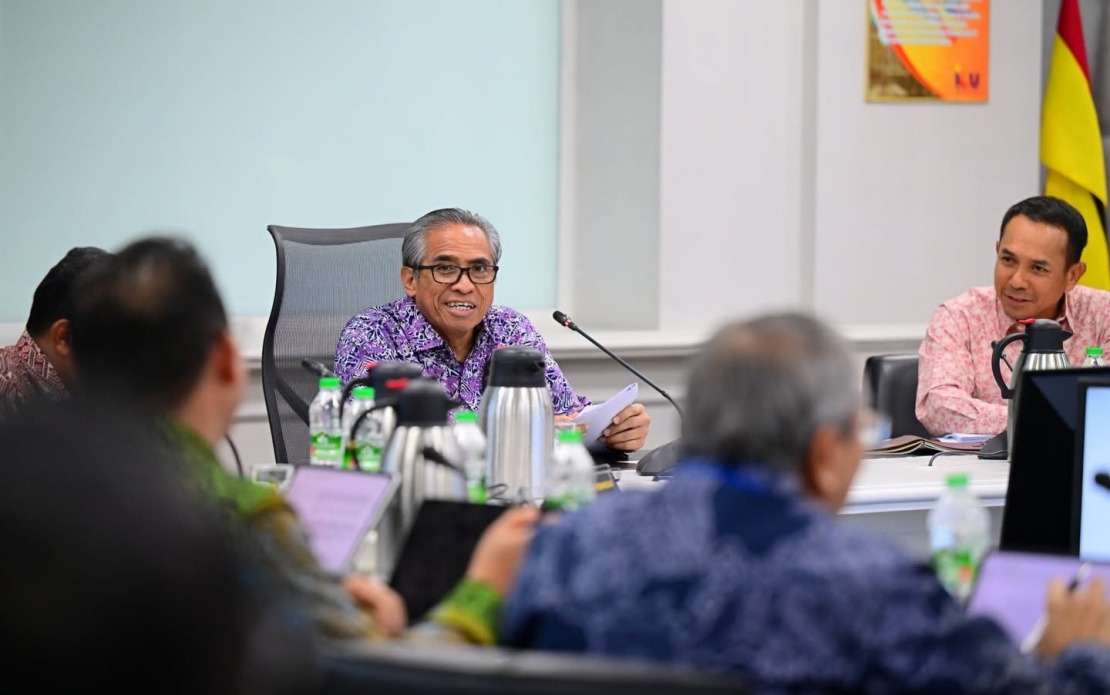
Tan Sri Shamsul Azri Abu Bakar, the Chief Secretary to the Government, has issued a comprehensive directive requiring all ministry secretaries-general to concentrate their efforts on accelerating the rollout of more than 40,000 identified small-scale development initiatives spread across the country. The decision emerged from a National Development Action Committee meeting chaired by Shamsul Azri on June 25, signalling a strategic pivot towards delivering tangible benefits to citizens through projects that can be realised in the near term rather than requiring lengthy construction periods.
The emphasis on what officials describe as "low-hanging fruit" represents a deliberate governance approach aimed at demonstrating visible progress on the ground. These modest-scale undertakings, while individually less complex than major infrastructure ventures, collectively address widespread citizen concerns about service quality and maintenance across multiple sectors. By concentrating administrative attention on completing tens of thousands of projects simultaneously, the government seeks to generate a multiplier effect in public satisfaction and confidence.
The portfolio of projects Shamsul Azri identified spans essential municipal and social services that directly affect daily life. Road repairs and drain maintenance dominate the infrastructure segment, addressing persistent complaints about deteriorating pavement conditions and inadequate stormwater management in residential areas. Government quarters refurbishment targets living standards for public servants, while classroom repairs and healthcare facility upgrades signal commitment to education and health sectors. Improvements to public markets and food stalls reflect recognition that informal economy infrastructure deserves the same maintenance attention as formal sectors.
A critical feature distinguishing this initiative is the projected completion timeline. Most projects are designed to be finished within three to six months, contrasting sharply with conventional development projects requiring years to completion. This compressed schedule creates psychological momentum, allowing communities to witness tangible change within a single election cycle or financial year. For citizens accustomed to seeing government projects stall indefinitely, rapid turnaround on thousands of modest improvements could substantially reshape perceptions of administrative effectiveness.
The directive places significant responsibility on ministry secretaries-general, who occupy the highest permanent civil service positions within their respective portfolios. By tasking these senior officials with direct oversight rather than delegating to lower administrative tiers, Shamsul Azri has signalled that project completion is a priority performance metric. The requirement for site visits and on-ground monitoring by these officials represents a departure from typical desk-based management, indicating that personal accountability and field presence are now expected.
Problematic slippage in project implementation has long plagued Malaysian governance, with numerous initiatives delayed indefinitely due to bureaucratic inefficiency, funding bottlenecks, or coordination failures between agencies. By selecting projects with proven feasibility and minimal technical complexity, the government reduces variables that typically derail implementation. Small-scale initiatives require fewer stakeholder approvals, simpler procurement processes, and more straightforward quality assurance than large infrastructure projects, thereby reducing the likelihood of abandonment or indefinite postponement.
The portfolio's emphasis on maintenance and incremental improvement rather than new construction aligns with emerging fiscal realities facing Southeast Asian governments. Major capital projects demand substantial upfront expenditure, whereas repair and maintenance initiatives can often proceed through existing operational budgets. This approach enables governments facing tighter fiscal constraints to maintain service delivery standards without requiring supplementary bond issuances or increased deficit spending. For Malaysia, where debt servicing claims significant portions of annual revenue, prioritising maintenance-intensive projects offers political payoff without proportional budgetary strain.
From a political economy perspective, small-scale projects distributed across numerous constituencies offer broader electoral appeal than concentrated investments in specific regions. A pothole filled in Kuala Lumpur, a classroom repaired in Kelantan, and a market upgraded in Sabah collectively touch diverse voter bases, whereas a single major toll road or industrial hub benefits geographically concentrated populations. This distribution strategy proves particularly valuable during periods approaching general elections, when government legitimacy depends partly on demonstrating equitable resource allocation.
The success of this initiative will ultimately depend on implementation rigour and the ability of ministry secretaries-general to translate high-level directives into operational reality. Previous Malaysian government programmes have foundered when central mandates encountered resistance from entrenched bureaucratic practices or inadequate inter-agency coordination. Whether provincial and district-level officials possess sufficient resources, technical capacity, and political will to execute thousands of projects simultaneously remains uncertain. Real bottlenecks may emerge around procurement timelines, labour availability, or materials supply, particularly if multiple projects compete for limited local resources.
Monitoring mechanisms will prove crucial to programme effectiveness. The requirement for secretaries-general to conduct personal site visits creates accountability mechanisms, though the quality and frequency of such oversight remains undefined. Transparent reporting of completion rates across all 40,000 projects would demonstrate commitment to evidence-based governance, yet government agencies traditionally resist making implementation failures public. If the government publishes quarterly completion statistics by ministry and region, it would establish useful benchmarks against which future claims of effectiveness could be measured.
The initiative's regional significance extends beyond Malaysia's borders. Across Southeast Asia, governments confront similar pressures to demonstrate responsive administration while managing fiscal constraints. If Malaysia successfully mobilises 40,000 small-scale projects within projected timelines, the model could influence policy approaches in neighbouring nations facing comparable governance challenges. Conversely, if implementation falters significantly, it would reinforce scepticism about developing-world governments' capacity to execute large-scale, coordinated administrative programmes.

