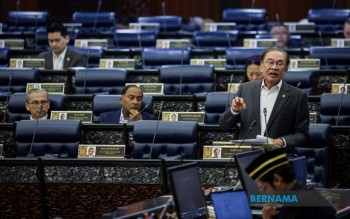
Prime Minister Datuk Seri Anwar Ibrahim has introduced a fresh initiative aimed at easing the tax compliance burden for Malaysian businesses, particularly those in the micro, small and medium enterprise segment. Speaking during parliamentary question time in Kuala Lumpur on July 7, Anwar announced the e-Invoice Voluntary Declaration Programme, which will remain accessible to businesses through December 31, 2027. The scheme represents a deliberate policy shift to recognise the operational pressures facing entrepreneurs during a period of global economic uncertainty.
The centrepiece of this initiative is a penalty moratorium on voluntary adjustments. Businesses that choose to make updates, amendments or corrections to their e-invoice records during the three-and-a-half-year window will face no financial sanctions from the Inland Revenue Board of Malaysia, a concession that Anwar acknowledged is rare in Malaysian income tax administration. This approach signals the government's understanding that many enterprises may harbour uncertainties about compliance requirements or may discover errors in their submissions without facing punitive consequences.
Anwar, who holds the dual portfolios of Prime Minister and Finance Minister, was responding to a parliamentary question from Lee Chuan How, the member for Ipoh Timor, regarding how the government plans to support business resilience in challenging international conditions. The MADANI administration has framed this declaration programme as one element of a broader suite of measures designed to foster business continuity among smaller enterprises that often operate with constrained administrative resources.
Beyond the voluntary declaration window, the government has authorised accelerated capital allowance claims to stimulate investment in e-invoice infrastructure. Eligible businesses can now claim full capital allowances within a single financial year for expenditures incurred in establishing and maintaining e-invoice systems. This fiscal incentive transforms the compliance requirement from a pure cost burden into an opportunity for businesses to offset their technological investment against taxable income, thereby reducing their overall tax liability.
The timing of this announcement follows significant regulatory movement on the e-invoice front. In December 2025, the government had already elevated the income threshold exempting smaller businesses from e-invoice obligations, raising the ceiling from RM500,000 to RM1 million in annual turnover. That threshold adjustment alone extended relief to more than one million taxpayers, effectively exempting the smallest commercial operators from these digital reporting obligations altogether.
For the Malaysian business community, particularly the fragmented landscape of family-run shops, hawker operators and service providers, this layered approach addresses a persistent tension. While digitalisation of tax administration improves revenue collection accuracy and reduces evasion, it simultaneously imposes implementation costs and administrative complexity that disproportionately affect enterprises with minimal back-office infrastructure. The voluntary declaration framework and accelerated deductions attempt to bridge that gap by providing temporal flexibility and fiscal relief.
The e-invoice system itself represents a fundamental modernisation of Malaysia's tax administration. By requiring digital submission of invoice data directly to tax authorities, it creates real-time visibility into commercial transactions and enables automated reconciliation between buyer and seller records. For compliant businesses, the system theoretically reduces audit exposure and administrative friction. However, the learning curve and technological requirements create barriers for operators without dedicated accounting staff or access to compatible software systems.
This initiative carries particular resonance for Southeast Asia's broader development context. Malaysia, like regional peers such as Thailand and Indonesia, faces the challenge of bringing informal or semi-formal economic activity into the formal tax system while avoiding regulatory overreach that might drive businesses underground. The graduated approach—combining exemptions for the tiniest operators, voluntary compliance windows for mid-tier enterprises, and incentives for infrastructure investment—reflects pragmatic recognition that uniform enforcement can be counterproductive.
The programme's design also reflects political economy considerations. MSMEs constitute the backbone of Malaysian employment and contribute substantially to GDP, yet they operate with thinner margins than larger corporations and possess less sophisticated compliance apparatus. During periods of economic headwinds, supporting this segment becomes both economically prudent and politically important. By demonstrating responsiveness to business sector concerns, the government aims to maintain entrepreneurial confidence and avoid the compliance fatigue that might otherwise trigger increased informality.
Implementation success will depend heavily on the Inland Revenue Board's operational capacity to process voluntary declarations efficiently and on business awareness of the scheme's availability and terms. For enterprises that have deferred e-invoice adoption or harbour concerns about past submissions, the penalty-free window creates genuine opportunity. The accelerated allowance provision, meanwhile, targets larger MSMEs with sufficient scale to justify system investments, effectively creating a two-tier incentive structure.
Looking forward, this programme occupies an intermediate phase in Malaysia's digital tax transformation. The ultimate objective remains comprehensive e-invoice coverage, but the government has explicitly acknowledged that reaching that goal requires managed transition rather than cliff-edge enforcement. By combining amnesty provisions, threshold exemptions and investment incentives, policymakers are attempting to balance revenue administration modernisation with business sector viability—a balance that will determine whether digital compliance becomes a catalyst for broader formalisation or instead becomes another compliance barrier.

