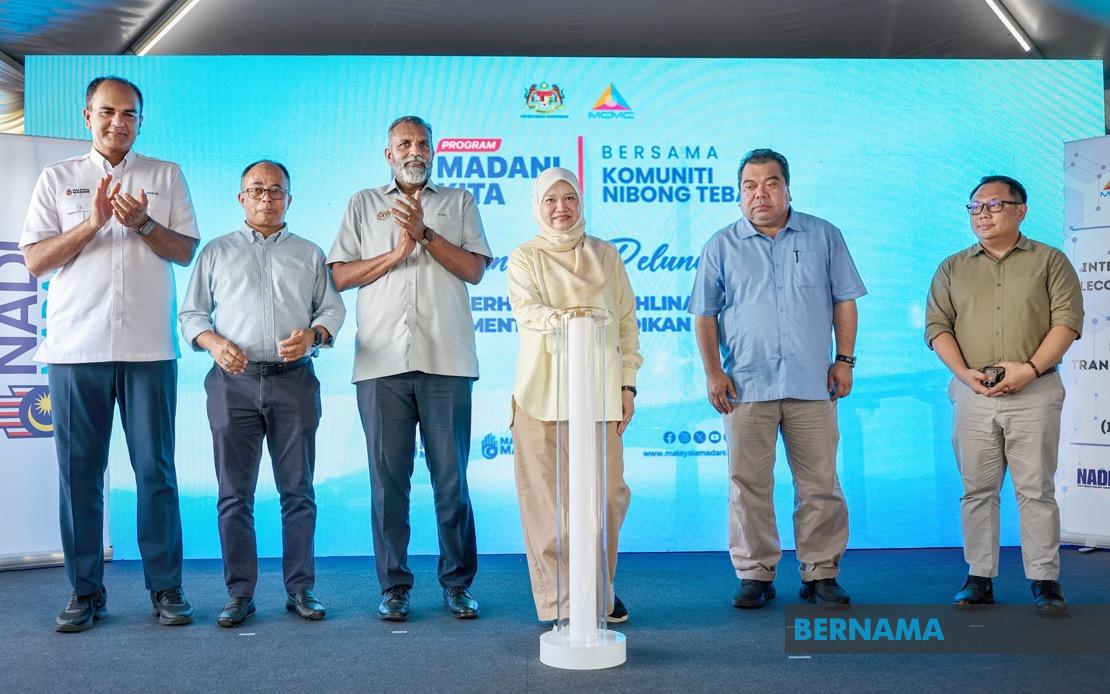
The Malaysian government is deepening its commitment to bringing public services directly to communities through an expanding network of MADANI Kita programmes, with 41 initiatives now operational across the country. Coordinated by the Communications Ministry, these programmes represent a deliberate shift towards decentralizing government engagement and making it easier for Malaysians to access information, services, and interact with multiple agencies without navigating traditional bureaucratic channels. The latest activation occurred in Nibong Tebal, where Education Minister and Nibong Tebal MP Fadhlina Sidek officially launched the local iteration of the programme, underscoring the government's push to embed itself within community spaces rather than waiting for citizens to approach government offices.
The architecture supporting these initiatives involves a coordinated effort across three primary bodies: the Community Communications Department (J-KOM), the Malaysian Information Department (JaPen), and the Malaysian Communications and Multimedia Commission (MCMC). According to Communications Ministry deputy secretary-general (Telecommunications Infrastructure) Mano Verabathran, this inter-agency cooperation channels services and information through the National Information Dissemination Centre (NADI), creating a unified platform for public outreach. The structural design reflects recognition that modern governance requires more than traditional communication methods; it demands physical spaces and events where citizens can encounter government representatives, understand policy frameworks, and provide real-time feedback.
Beyond simply distributing information, these programmes facilitate substantive dialogue between communities and government institutions. Verabathran emphasized that contemporary citizens expect more than passive receipt of policy announcements—they want to observe tangible outcomes, understand how initiatives directly benefit their lives, and have meaningful channels to voice concerns or suggestions. This philosophy positions MADANI Kita as a two-way conversation rather than a broadcast mechanism, acknowledging that government legitimacy increasingly depends on demonstrable responsiveness to public concerns and transparent communication about decision-making processes affecting their communities.
The programming encompasses diverse activities designed to appeal to different demographic segments while advancing government priorities. Technology, education, and skills development feature prominently, recognizing Malaysia's position as a nation transitioning towards a knowledge-based economy where youth engagement with digital literacy and technical competencies becomes strategically important. By incorporating these elements into community programmes, the government creates opportunities for skill-building while simultaneously promoting awareness of broader policy initiatives in these domains. This integration of practical benefit with policy communication represents a more sophisticated approach than traditional government outreach, which often treated education and entertainment as separate from governance functions.
Youth engagement constitutes a particular focus, with organisers deliberately moving beyond pure entertainment to create structured activities nurturing talent and building competitive spirit. The inclusion of e-sports reflects strategic positioning around sectors capturing significant youth interest, particularly in Southeast Asia where competitive gaming has become a legitimate cultural phenomenon commanding substantial viewership and participation. By legitimizing e-sports within government programming, Malaysian authorities signal recognition that engaging younger generations requires meeting them within their own cultural spaces and interests rather than imposing predetermined formats.
The practical scale of these initiatives demonstrates genuine commitment to widespread implementation. The Permatang Pauh programme, held alongside the Penang International Halal Expo 2026 from July 24-26, attracted more than 17,000 participants, indicating substantial public appetite for these engagement opportunities when programmes are accessible and promoted effectively. This attendance figure suggests that when government makes itself present in community spaces with relevant programming, significant numbers of citizens participate, challenging assumptions that public disengagement necessarily reflects apathy rather than structural barriers to participation.
For Malaysian policymakers and administrators, the MADANI Kita rollout offers lessons applicable across governance spheres. The programme demonstrates that service delivery improvements and better public understanding of government initiatives need not depend primarily on digital transformation or technological solutions; physical community presence, direct engagement, and integrated service delivery can achieve measurable results. This proves particularly relevant for Malaysia, where digital divides persist and significant population segments rely primarily on in-person interactions for government access.
Regionally, these initiatives carry implications for how Southeast Asian governments approach public engagement and service delivery. As democracies across the region grapple with declining trust in institutions and challenges in communicating policy rationale, Malaysia's systematic rollout of community-based engagement programmes offers a model worth studying. The approach acknowledges that sustained institutional legitimacy requires ongoing investment in communication infrastructure and direct citizen interaction, not merely competent service delivery.
The continuation and expansion of MADANI Kita programmes also reflects Malaysian government recognition that effective governance increasingly demands government presence throughout the country rather than concentration in capital cities and administrative centers. By distributing engagement opportunities across regions, these programmes contribute to more equitable access to information and services while simultaneously enhancing government understanding of regional perspectives and concerns that might not surface through formal consultation processes. This localization strategy, when sustained consistently, can contribute to more contextually appropriate policymaking and implementation that accounts for geographic and demographic diversity within the nation.

