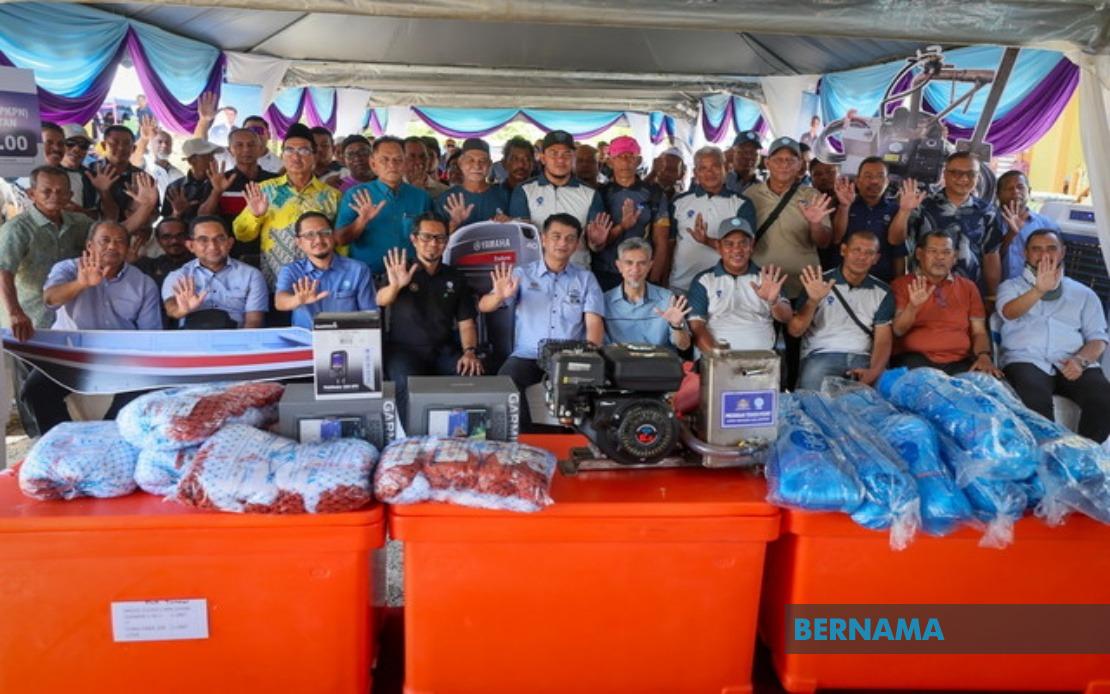
The Malaysian government has channelled RM10 million in funding this year toward the Special Fishermen Housing Project, a nationwide initiative designed to address the housing challenges facing the country's fishing communities. The programme represents a significant investment in the socio-economic welfare of one of Malaysia's traditional sectors, reflecting broader policy commitments to improve living standards beyond urban centres. Muhammad Faiz Fadzil, chairman of the Fisheries Development Authority of Malaysia (LKIM), outlined the scope of this intervention during a meeting with Kelantan fishermen at the Fish Inspection Complex in Pengkalan Kubor, emphasising that the allocation directly targets two distinct yet equally important components of housing improvement.
The financial breakdown reveals a strategic prioritisation approach, with over RM6.8 million dedicated to restoring and upgrading existing homes owned by qualifying fishermen across Malaysia. This repair and maintenance stream has already reached 80 percent completion and is anticipated to conclude between August and September this year. The work encompasses 344 separate housing units, meaning each repair project receives government support averaging approximately RM19,800, allowing families to address critical structural and safety issues without bearing the full financial burden themselves. This focus on existing housing stock reflects practical recognition that many fishing families currently occupy substandard dwellings inherited through generations, with repairs often impossible without external assistance.
The second allocation, exceeding RM3.1 million, targets the construction of 36 entirely new residential units for fishermen currently without adequate homes. The per-unit construction budget has been calibrated according to regional economic differences, with the government providing RM84,000 per unit in Peninsular Malaysia and RM95,000 per unit in Sabah and Sarawak, acknowledging higher construction costs in East Malaysia. However, this component faces extended timelines due to complications surrounding land ownership, particularly inheritance issues that require legal resolution before construction can proceed. Kelantan alone has received RM388,000 in PKPN allocation this year, demonstrating the state's significance within the fishing economy and indicating where implementation pressures are most acute.
The initiative carries particular importance for Kelantan, a state with deep historical ties to maritime livelihoods where fishing communities remain economically vulnerable despite ongoing government support. The housing project addresses not merely shelter needs but the broader dignity and stability required for families to access education, health services, and economic opportunities beyond subsistence existence. Poor housing conditions have long complicated efforts to improve social indicators in fishing communities, with inadequate sanitation, structural hazards, and overcrowding creating cascading health and educational disadvantages for children. By directly addressing these environmental factors, the government targets foundational improvements that could catalyse broader development gains across multiple sectors simultaneously.
Simultaneously, LKIM leadership is promoting a more fundamental sectoral transformation, encouraging fishermen to diversify into aquaculture as traditional fishing resources face mounting pressure from both resource depletion and escalating operational costs. Even with government fuel subsidies remaining in place, the economics of conventional fishing have become increasingly precarious as catches decline and input expenses climb relentlessly. This recognition reflects global trends affecting traditional fisheries, where wild-capture production faces inherent biological limits while aquaculture represents the only scalable pathway toward significantly expanded protein output. The government has established an ambitious target wherein aquaculture should account for 40 percent of national fish production by 2030, a substantial reorientation requiring active participation from existing fishing communities rather than simply replacing them with new sector entrants.
To facilitate this transition, LKIM has allocated RM400,000 to the Kelantan State Fishermen's Association specifically for tank-based prawn farming initiatives, providing both capital infrastructure and demonstration models for community adoption. This approach acknowledges that fishermen possess irreplaceable knowledge of water conditions, biological cycles, and supply chain dynamics that remain entirely applicable to controlled aquaculture environments. Rather than displaced from economic participation, fishermen are being positioned as natural candidates for aquaculture development if provided appropriate technical support and initial investment capital. The tank-based prawn farming model particularly suits communities near coastal infrastructure, requiring far less land than traditional agriculture while delivering significantly higher yields per unit area compared to conventional fishing's marine dependence.
The policy direction reflects broader recognition that Malaysia's fishing sector faces existential challenges from resource constraints that housing investments alone cannot address. While improving living conditions enables communities to invest in education and diversification, structural transformation toward aquaculture represents the only sustainable pathway for maintaining incomes as wild fishery stocks inevitably contract. The government's dual approach—simultaneously improving current living standards while facilitating sectoral evolution—demonstrates strategic patience with transitions that require generational adjustment yet cannot be indefinitely delayed without risking community livelihoods. For fishing families, the housing improvements provide immediate relief while aquaculture partnerships offer medium-term income stabilisation.
The expansion of aquaculture initiatives beyond Kelantan remains explicitly planned, indicating this represents a centralised strategic priority rather than isolated state-level experimentation. Successive state applications for similar funding could eventually distribute tank-based farming capacity across multiple coastal regions, creating distributed production that enhances food security while maintaining geographic employment benefits. This geographic distribution approach differs markedly from industrial consolidation patterns seen elsewhere, potentially preserving rural livelihoods while achieving production objectives. However, success depends substantially on community acceptance of technological transition and availability of sustained technical extension services beyond initial capital provision.
The timing of these initiatives reflects economic pressures that have intensified notably in recent years, with fuel price volatility particularly affecting artisanal fishing operations dependent on daily boat operation. Even modest fuel increases significantly compress profit margins for small-scale operators, while simultaneously forcing difficult choices between fishing frequency and household consumption needs. The government's continued fuel subsidies represent ongoing financial commitment to fisheries sustainability, yet acknowledge that subsidies alone provide inadequate long-term security without concurrent sectoral restructuring. Housing investments complement subsidy programmes by reducing household cash requirements for shelter, thereby freeing resources for children's education and business investment that enable eventual transition toward higher-value activities.
For Malaysian policymakers, this integrated approach demonstrates recognition that development challenges affecting traditional communities require multifaceted responses addressing immediate welfare needs alongside structural economic transformation. The fishing sector represents both heritage and contemporary economic reality affecting tens of thousands of Malaysian families, demanding policies that respect existing livelihoods while facilitating necessary evolution. International experience suggests aquaculture transitions succeed optimally when accompanied by housing stability and social investment, as families require sufficient security to undertake business innovation. The government's RM10 million housing commitment should therefore be understood as complementary infrastructure supporting the larger sectoral transformation toward aquaculture, with both components mutually reinforcing successful outcomes for fishing communities navigating Malaysia's evolving economic landscape.

