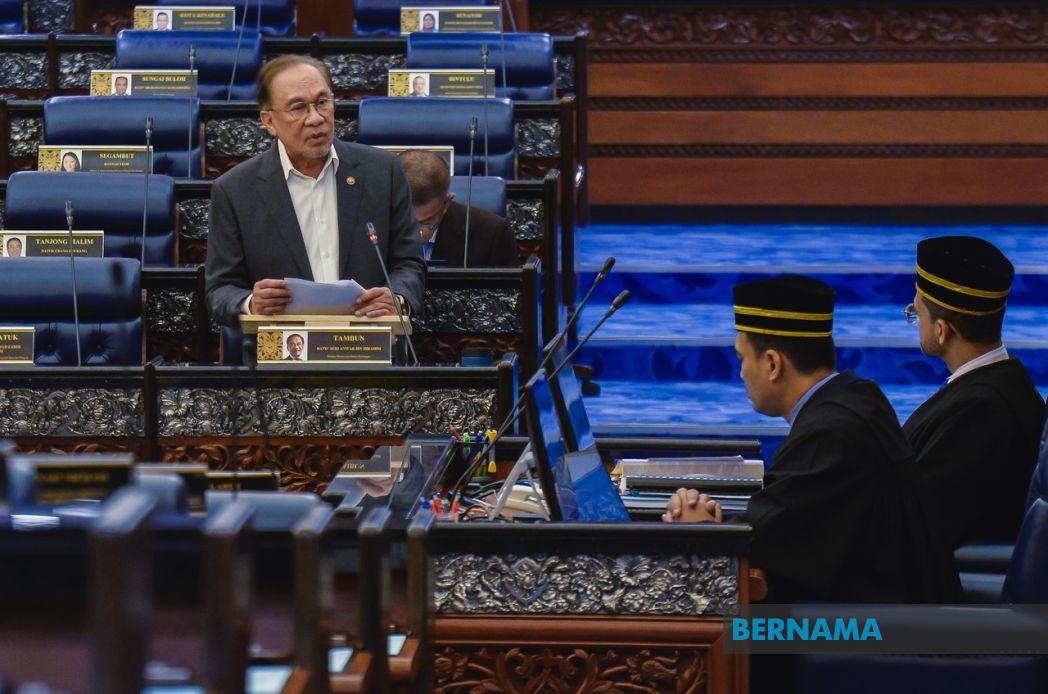
Prime Minister Datuk Seri Anwar Ibrahim has moved to dispel misconceptions surrounding government policy towards Federal Land Development Authority (FELDA) settlements, asserting during parliamentary question time that no blanket prohibition exists against programmes being conducted in these communities. Speaking in the Dewan Rakyat, the Premier emphasised that while activities are permitted to proceed in FELDA areas, the underlying principle governing such events remains adherence to election law rather than outright restriction.
The clarification emerged in response to questioning from Datuk Seri Hamzah Zainudin of PN-Larut, who had raised concerns about potential interference with settlement activities. Anwar specifically denied having issued any directive to cancel the FELDA Settlers' Day programme that had been scheduled for Kluang, Johor, on June 20 and 21. The Prime Minister's statement reflects growing scrutiny around government decisions affecting these historically significant rural communities and their accessibility to state-level initiatives.
At the heart of the government's position lies a crucial distinction between programme restrictions and regulatory compliance. Anwar explained that state government officials, including mentri besars, retain full authority to enter FELDA settlements and organise their own events without impediment. The constraint, he emphasised, applies not to the programmes themselves but specifically to the deployment of government machinery and resources for electoral campaigning purposes. This nuanced approach attempts to balance political activity with the stricter demands of electoral legislation, which explicitly prohibits state institutions and their assets from being mobilised for campaign functions.
The matter takes on particular significance in Malaysia's federal structure, where both national and state governments maintain concurrent responsibilities in certain policy areas. FELDA settlements, established decades ago as a rural development initiative, have historically served as important constituencies for state and federal politicians. Questions about programme accessibility in these areas reflect broader concerns about the balance between different levels of government and their respective powers. The Prime Minister's clarification seeks to reassure stakeholders that the MADANI administration maintains no ideological opposition to state-level activities in FELDA communities.
Anwar further contextualised his remarks within the government's broader development agenda for FELDA settlers, a constituency that has experienced significant economic challenges in recent years. The Prime Minister articulated a vision of revitalisation for these communities, suggesting that past administrations had allowed FELDA settlements to languish without adequate attention or resources. This framing positions current government initiatives not as restrictive measures but as corrective interventions designed to reverse historical neglect. The specific examples cited—including the establishment of dialysis centres and expanded development infrastructure through federal agencies—demonstrate a reorientation of priorities toward settler welfare.
The involvement of Deputy Prime Minister Datuk Seri Dr Ahmad Zahid Hamidi in this policy direction underscores the significance the government attaches to FELDA communities. Their joint commitment to provide enhanced facilities represents a conscious departure from what both leaders characterise as insufficient investment under previous governance. This messaging carries political implications, as FELDA settlers represent a distinctive demographic bloc whose satisfaction with government performance carries electoral consequences. By positioning improved welfare provisions as central to the MADANI agenda, the administration reinforces its claim to represent a departure from predecessor administrations.
Election law compliance remains the structural foundation underpinning the government's position on FELDA activities. Malaysian electoral legislation contains explicit prohibitions against utilising government resources and machinery for campaign purposes, a principle that extends across all settlement types and administrative levels. The government's interpretation emphasises that these restrictions operate as universal rules rather than selective instruments targeting particular communities or political opponents. This legalistic framing provides the administration with a defensible position while potentially addressing suggestions that FELDA settlers face unique limitations on political engagement.
The clarification also reflects emerging tensions around programme cancellations or postponements in various communities, with political actors offering competing explanations for such decisions. By explicitly addressing the FELDA Settlers' Day cancellation through a parliamentary forum, Anwar sought to establish an official record that could counter alternative narratives. This approach demonstrates awareness of how administrative decisions in rural areas can become subject to different interpretations across political communities, with potential consequences for government credibility among traditionally important constituencies.
For Malaysian readers, particularly those in rural areas with FELDA populations, the Prime Minister's statement carries implications for understanding government accessibility and political engagement within their communities. The distinction between programme restrictions and electoral law compliance represents a technical clarification that may not entirely resolve concerns about practical barriers to state-level political activity. State governments and FELDA settler organisations will likely seek further clarity on implementation details, particularly regarding the demarcation between lawful political activity and impermissible campaign operations.
The broader context of this clarification includes Malaysia's ongoing political transitions and the continued evolution of the MADANI government's relationship with various constituencies. FELDA communities, numbering several hundred thousand people across multiple states, constitute a significant demographic whose political preferences have historically influenced electoral outcomes in rural constituencies. Reassuring these communities about their continued capacity to host state-level initiatives and programmes responds to what government strategists evidently view as a matter requiring parliamentary attention and authoritative clarification. The timing and forum of the statement suggest serious consideration of FELDA settler concerns within government circles.

