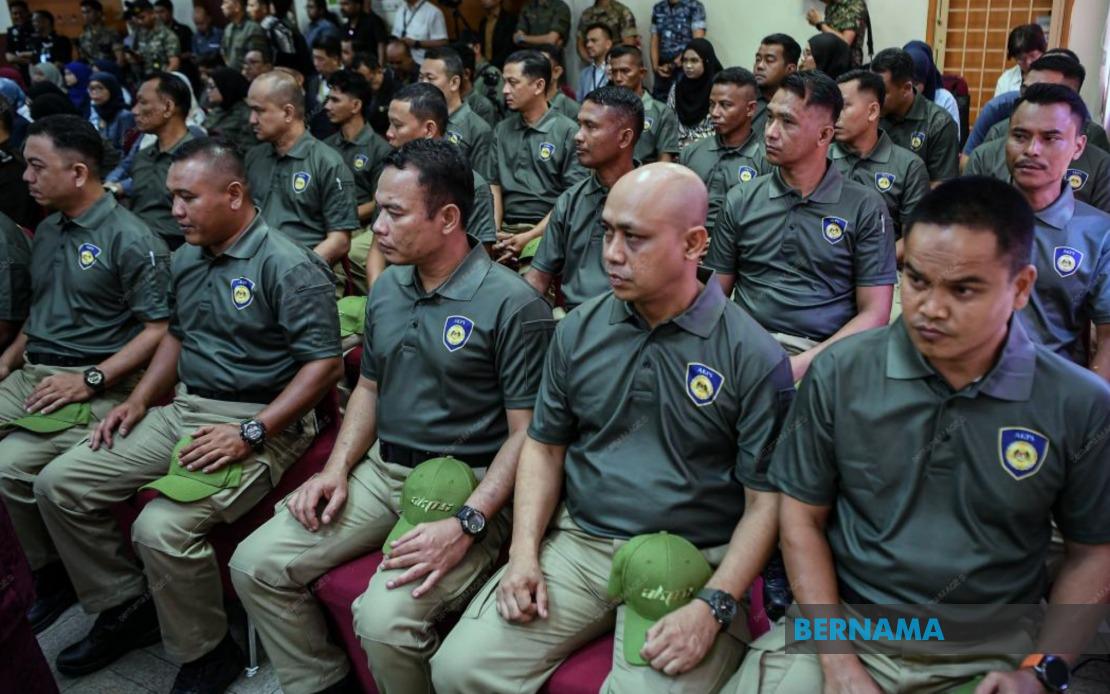
The Malaysian government has moved to reassure thousands of Border Control and Protection Agency (AKPS) staff that their employment rights and financial security will not be jeopardised as the agency undergoes a significant restructuring of its service arrangements from July 1. Deputy Home Minister Datuk Seri Dr Shamsul Anuar Nasarah delivered the undertaking during parliamentary proceedings in Kuala Lumpur on June 25, seeking to allay concerns among enforcement personnel affected by the shift to a new administrative framework under the Public Service Department (PSD).
At the heart of the assurance lies a commitment that officers retaining their original service schemes within their parent agencies will experience no disadvantage when it comes to career advancement, length of service recognition, retirement entitlements or existing welfare provisions. This guarantee addresses a fundamental anxiety among civil servants facing institutional change—that the transition might erode the protections and benefits accumulated through years of service. The Deputy Minister's statement underscores the government's intention to manage the restructuring without creating disparities among the enforcement workforce.
The AKPS itself represents a consolidation effort, having been established through the strategic merger of several separate enforcement bodies to create a more unified border and movement control apparatus. The agency now bears responsibility for coordinating all aspects of people and goods movement oversight across Malaysia's 122 entry points—a critical function for national security and trade facilitation. This consolidation was intended to streamline operations, but it necessarily complicated the administrative and human resources landscape by bringing personnel from diverse organisational backgrounds under a single command structure.
Prior to the new service scheme implementation, positions within AKPS had been populated through a secondment arrangement, with officers temporarily assigned from their original parent agencies while maintaining their formal employment relationships with those organisations. This interim structure, while pragmatic, created an ambiguous status for thousands of workers whose permanent career home remained technically with their original departments even as they performed duties under AKPS authority. The transition mechanisms announced by the Deputy Minister attempt to resolve this liminal situation through a structured process offering officers choices about their future posting arrangements.
Personnel who decline to accept transfer to appointments within the new AKPS service scheme structure will remain with the agency on a provisional basis while the PSD determines appropriate placements. Alternatively, these officers may request reassignment to their original parent departments, with the specific placements decided by their former heads of service based on available vacancies and organisational needs. This flexibility is intended to prevent compulsory postings that might displace officers against their preference, though the availability of desirable positions within parent agencies remains an open question that will likely concern affected staff.
Statistical data presented by the Deputy Minister reveals the scale of the workforce involved and the implementation challenges ahead. As of mid-June, AKPS had successfully filled 6,824 of its 8,403 allocated positions, leaving 1,579 vacancies unfilled. This represents an 81 percent occupancy rate at a critical point in the transition timeline, indicating that the recruitment and placement mechanisms have functioned reasonably well but significant gaps remain. The continuing cooperation among AKPS, the Home Ministry, the PSD and the contributing agencies signals ongoing efforts to populate these positions before full implementation of the new scheme.
The compensation structure designed to attract and retain personnel in border enforcement roles carries particular significance for Malaysia's operational capacity at international entry points. Appointments within the new AKPS framework include an additional annual salary increment (known locally as KGT) and a RM200 service incentive allowance—modest but meaningful supplementary payments intended to reflect the demanding and often hazardous nature of border control work. These financial inducements acknowledge the premium demands placed on enforcement officers who must maintain vigilance across high-traffic ports of entry while adapting to regulatory changes and emerging security challenges.
The transition management approach reveals the Malaysian government's broader strategy of institutional modernisation while minimising disruption to serving civil servants. Rather than imposing uniform changes, the framework allows officers to chart different paths forward—accepting new appointments under the restructured system, remaining provisionally with AKPS, or seeking return to their original agencies. This tripartite choice architecture theoretically accommodates diverse preferences and circumstances among the affected workforce, though practical implementation will determine whether all options remain genuinely viable as placements occur.
For the broader Malaysian public administration, the AKPS restructuring and the accompanying service scheme transition represent an attempt to improve coordination and efficiency in critical border management functions without provoking the institutional resistance and personnel disruption that forced change might trigger. Southeast Asia's growing trade flows and increasing migration pressures make effective border coordination essential for both economic facilitation and security. The government's emphasis on protecting personnel rights during the changeover appears designed to maintain workforce stability and operational continuity at the 122 entry points where thousands of officers process people and cargo daily.
The parliamentary assurance also reflects recognition that enforcement agencies depend fundamentally on staff morale and confidence in institutional fairness. Civil servants considering the transition will scrutinise whether the government's guarantees prove substantive when implemented, particularly regarding actual promotion opportunities and access to vacant positions in parent agencies. The success of the restructuring will ultimately depend not merely on formal policy commitments but on how thoroughly the three institutions—AKPS, the Home Ministry and the PSD—translate these protections into consistent administrative practice across thousands of individual cases.

