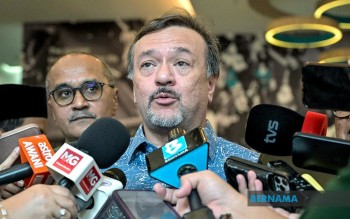
The Malaysian government is actively examining a range of policy options and measures intended to strengthen the micro, small and medium enterprise sector as it prepares Budget 2027, according to Finance Minister II Datuk Seri Amir Hamzah. Speaking after attending Bank Simpanan Nasional's 69th National Day celebration, Amir Hamzah confirmed that submissions have come through various government departments and ministries, alongside input gathered from non-governmental organisations during stakeholder consultations. The breadth of these recommendations reflects widespread recognition that MSMEs play a crucial role in Malaysia's economic foundation and employment landscape.
The evaluation phase currently underway represents a deliberate filtering process, Amir Hamzah explained, whereby the government must weigh feasibility and implementation capacity against the volume of incoming suggestions. Rather than adopting all proposals indiscriminately, officials are conducting a rigorous assessment to determine which initiatives align with government capabilities and deliver genuine impact. This measured approach underscores the challenge of balancing competing priorities within budget constraints while ensuring resources are deployed effectively across different economic segments.
MSMEs occupy a particularly important position within Malaysia's economic policy framework, constituting a significant employment generator and contributor to gross domestic product. Recognising this structural importance, the government has signalled heightened prioritisation of the sector within the upcoming budget framework. The emphasis reflects awareness that small and medium businesses, which often lack the scale and resources of larger corporations, require targeted policy support to thrive in increasingly competitive domestic and regional markets. This positioning suggests that Budget 2027 will devote meaningful attention to removing barriers that impede MSME growth and expansion.
Amir Hamzah outlined ten principal thrusts that will shape the upcoming budget's architecture and priorities. These foundational pillars address interconnected challenges that influence MSME performance and broader economic health. Among the key areas receiving focus are initiatives to relieve cost-of-living pressures that burden households and small business operators alike, job creation and skills development measures that expand employment opportunities across sectors, and economic stimulation strategies designed to generate sustained growth momentum. These thrusts demonstrate an integrated policy vision rather than siloed interventions, recognising that MSME competitiveness depends on wider macroeconomic stability and workforce development.
Economic momentum has provided a platform for this policy ambition. During the second quarter of 2026, Malaysia registered robust gross domestic product growth of 6.0 per cent, a performance that reflects diversified economic strength across manufacturing, services and other sectors. Rather than allowing such growth to concentrate among larger enterprises, government officials stress the imperative of ensuring that MSME operators and their workforces participate meaningfully in this expansion. This distribution challenge represents a policy priority, as growth that bypasses smaller businesses risks perpetuating uneven regional and sectoral development patterns.
The government's commitment to inclusive growth explicitly encompasses ensuring that different societal segments—with particular emphasis on MSMEs—derive tangible benefits from rising national prosperity. Officials acknowledge that headline GDP growth statistics can obscure distributional realities, whereby gains concentrate among specific industries or business sizes. By deliberately structuring Budget 2027 to address MSME constraints, policymakers aim to redirect growth benefits toward entrepreneurs and workers in smaller ventures who might otherwise remain peripheral to expansion narratives.
Regional economic considerations add another dimension to this policy attention. Malaysia's diverse geography encompasses developed urban centres and less-developed rural areas, with MSME participation varying significantly across these contexts. Ensuring that budget initiatives reach enterprises throughout the country, rather than clustering support in metropolitan regions, presents both an economic efficiency challenge and a social equity imperative. This geographic dimension informs how proposals are assessed and which measures ultimately receive implementation priority.
The consultation process leading to Budget 2027 has proven inclusive, drawing input from multiple stakeholder categories including business associations, civil society organisations and government agencies themselves. This multi-channel approach reflects recognition that effective MSME policy requires ground-level insight into the specific obstacles that small operators encounter. Non-governmental organisations, often embedded within business communities, bring particular credibility and practical understanding to policy dialogue. Their involvement signals that the government is attempting to anchor its proposals in evidence-based understanding rather than relying solely on bureaucratic perspectives.
Bank Simpanan Nasional's 69th National Day celebration provided the occasion for Amir Hamzah's remarks, itself symbolically significant given BSN's traditional focus on serving lower-income Malaysians and small entrepreneurs. The bank's simultaneous launch of the 'Cerita Mereka, Jiwa Malaysia' campaign and the BSN Mikro MADANI Carnival brought together micro-entrepreneurs from diverse backgrounds, creating a platform for celebrating their economic contributions and community impact. This programming underscores how MSME success extends beyond financial metrics, encompassing social cohesion and local resilience building.
The carnival assembled fifty-nine micro-entrepreneurs who had been featured within the broader campaign narrative, creating visible representation of small business success stories. By elevating these entrepreneurial voices and experiences, the event reinforced public recognition of MSMEs' multifaceted importance to Malaysian society. Such visibility may also influence policy formulation by maintaining focus on the human dimensions of small business operation rather than treating MSMEs as abstract economic categories.
Prime Minister Datuk Seri Anwar Ibrahim is scheduled to present Budget 2027 on October 9, providing a concrete deadline for finalising the government's assessment of incoming proposals and translating prioritised measures into budgetary allocations and policy frameworks. The interval between now and that presentation date will determine which MSME-focused initiatives advance from proposal stage to formal government commitment. The budget announcement will thus represent a critical juncture in Malaysia's approach to small and medium enterprise development, with measurable implications for business activity, employment generation and economic distribution patterns throughout 2027 and beyond.

