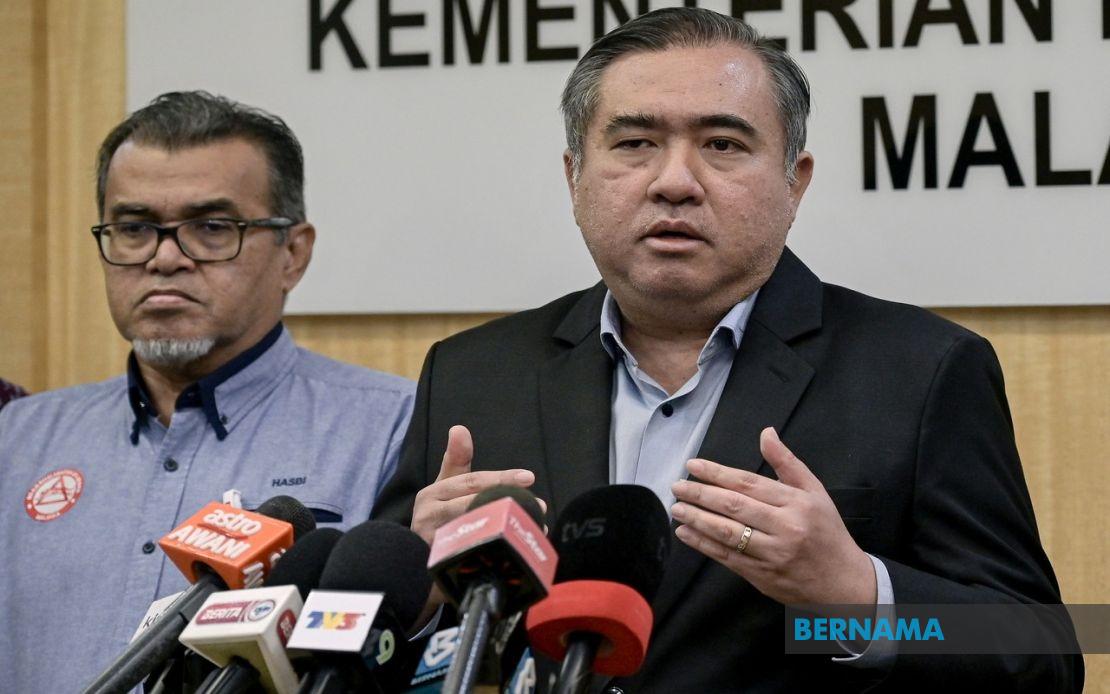
Transport Minister Anthony Loke has drawn a clear distinction between government regulatory oversight and corporate decision-making at Malaysia's ports, clarifying that leadership appointments are strictly internal matters beyond the purview of state involvement. Speaking at a press conference in Putrajaya on July 17, Loke addressed mounting scrutiny following international media reports about executive changes at MMC Ports Holdings Bhd, where former DP World chairman and chief executive officer Sultan Ahmed Sulayem assumed the position of executive chairman following the immediate resignation of group chief executive officer Azman Shah Mohd Yusof.
The minister emphasised that Malaysia's regulatory framework for port operators centres on a single, non-negotiable principle: maintaining majority Malaysian ownership. Companies holding port concessions or managing strategic national assets must retain at least 51 per cent local ownership, a threshold that remains binding regardless of who occupies senior management positions. This ownership mandate represents the government's primary safeguard for protecting national economic interests in critical infrastructure sectors, with shareholding structures forming the bedrock of government oversight rather than operational or administrative decisions.
Loke's position reflects a deliberate hands-off approach to corporate governance matters. The government does not require approval for management appointments, nor does it maintain authority over the selection of chief executives, whether Malaysian citizens or foreign nationals. This principle applies consistently across the sector. The Port of Tanjung Pelepas operates under leadership headed by foreign nationals in executive roles, yet the government maintains no involvement in those staffing decisions. Such arrangements underscore the distinction between ownership regulation and operational autonomy that characterises Malaysia's approach to port management.
The absence of government notification regarding the MMC Ports Holdings leadership transition carries particular significance. Loke stated clearly that the Transport Ministry had received no formal communication from either the company or its concessionaire about any changes in share ownership or structural adjustments. This suggests that from the government's perspective, any transition was handled as a straightforward internal corporate matter without triggering notification requirements under existing policy frameworks. The lack of communication indicates that shareholding patterns remained unaltered or that changes did not require disclosure under current regulations.
However, the minister made clear that any future alterations to shareholding must be formally communicated to the government through appropriate channels, particularly the Public-Private Partnership Unit (UKAS). This notification requirement serves as the government's primary mechanism for monitoring compliance with ownership thresholds and ensuring that strategic assets do not slip below the required Malaysian control level. While operational matters remain corporate prerogatives, changes in ownership architecture cross into government domain and necessitate transparent reporting.
The remarks come amid international attention to structural changes in Malaysia's largest port operator group. Sultan Ahmed Sulayem's appointment as executive chairman represents a significant leadership transition, particularly given his previous prominence in the global maritime sector as chair and chief executive of DP World, one of the world's largest port operators. His appointment signals potential strategic shifts or governance restructuring within MMC Ports Holdings, though the government maintains its position that such matters are corporate decisions rather than government concerns.
The timing of these clarifications reflects broader regional and global interest in Malaysian port operations. Southeast Asian ports have attracted substantial foreign investment and international attention as strategic nodes in global maritime trade networks. Malaysia's major port operators occupy crucial positions in regional logistics chains, handling enormous cargo volumes and serving as connection points for supply chains spanning multiple continents. Consequently, any significant changes in leadership or structure draw scrutiny from international business communities and maritime industry observers.
Loke's distinction between ownership regulation and operational autonomy creates a framework intended to balance national interest with commercial flexibility. By maintaining firm ownership requirements while permitting international talent and expertise to lead operational decisions, the government theoretically allows Malaysian-owned entities to access global best practices and professional leadership while retaining control through shareholding. This model assumes that foreign expertise in executive positions enhances efficiency and competitiveness without compromising state interests embedded in ownership structures.
For Malaysian stakeholders and port sector observers, these clarifications establish the boundaries of government involvement in corporate governance at strategic national assets. They signal that regulatory scrutiny will focus on ownership concentration and shareholder disclosure while remaining neutral regarding management appointments. Companies operating under concession agreements can reorganise leadership structures, recruit international talent, and implement operational changes without government impediments, provided shareholding thresholds remain satisfied and changes are properly disclosed.
The policy position also reflects Malaysia's competitive positioning within global port operations. As regional ports compete for international business and investment, the ability to appoint experienced international leaders while maintaining Malaysian ownership may enhance operational performance and attract foreign partnerships. Restricting management appointments to Malaysian nationals could limit access to specialised expertise and potentially disadvantage local operators competing against port authorities elsewhere in Southeast Asia that impose fewer restrictions on expatriate executives.
Moving forward, the clarity provided by the Transport Minister establishes expectations for MMC Ports Holdings and other Malaysian port operators regarding government expectations. Leadership transitions require no advance approval or official sanction, but any shareholding adjustments must be formally reported. This framework permits corporate dynamism while maintaining government oversight of ownership structures that ultimately determine who controls Malaysia's strategic port assets and the revenues and strategic value they generate.
The transport minister's statements ultimately position the government as a regulator of ownership rather than micromanager of operations, a distinction that permits port operators considerable latitude in strategic and personnel decisions while reserving state authority over the nationality and control of shareholding itself. For Malaysia's port sector, this approach balances international competitiveness with the fundamental principle that critical national infrastructure must remain under majority Malaysian ownership.

