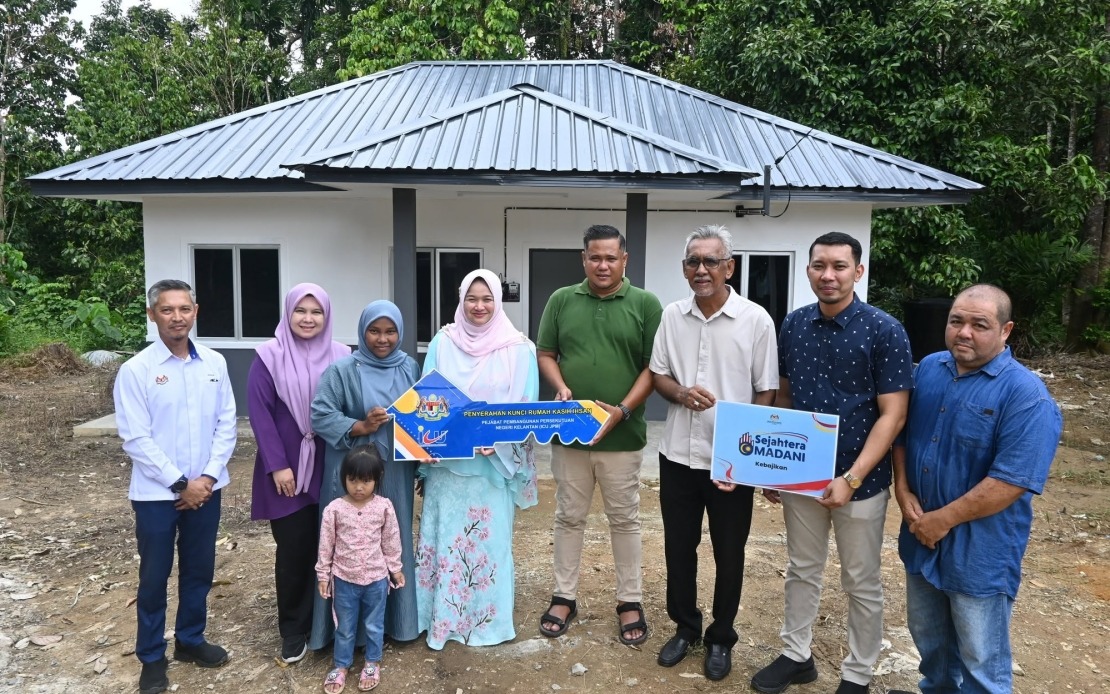
The Malaysian government's commitment to addressing housing shortages among lower-income households has taken tangible form with the handover of Rumah Kasih Ihsan units in Jeli, Kelantan. Prime Minister Datuk Seri Anwar Ibrahim announced on August 19 that the Kelantan Implementation Coordination Unit (ICU), operating under the Prime Minister's Department (JPM), had successfully distributed homes to two beneficiaries in the district, marking another milestone in the administration's nationwide housing initiative.
The distribution process reflects the government's strategic approach to poverty alleviation through direct infrastructure provision. Rather than relying solely on cash assistance or subsidy programmes, the Rumah Kasih Ihsan scheme embodies a philosophy that stable housing forms the foundation for broader socioeconomic advancement. This methodology aligns with international development practices that recognise housing security as a prerequisite for educational attainment, health outcomes, and economic mobility among disadvantaged populations.
Yusof Mohamed Nawawi, resident of Kampung Renyut, became the first beneficiary to receive formal acceptance documentation for construction of a replacement dwelling that will meet contemporary safety and comfort standards. His case exemplifies the programme's targeting mechanism, identifying households residing in substandard or deteriorating structures that pose health and safety risks. The transition from inadequate housing to purpose-built accommodation represents not merely a material upgrade but a significant improvement in quality of life and household stability.
The second beneficiary, Shamsul Bahri Che Musa, received full possession of a completed Rumah Kasih Ihsan unit, demonstrating the programme's capacity to deliver completed projects within reasonable timeframes. This dual approach—combining construction commitments alongside finished properties—suggests a scalable model capable of addressing housing backlogs systematically. The coordination by the PMX Coordination Team and execution by Dr Wan Nur Ibtisam Wan Ismail underscores the institutional frameworks now in place to manage programme delivery across Malaysia's diverse geographical and demographic landscape.
Complementing the housing transfers, both recipients were presented with food baskets as a gesture of governmental concern extending beyond shelter provision. This supplementary support acknowledges the multidimensional nature of vulnerability, recognising that newly housed families often face other pressing needs requiring immediate assistance. Such comprehensive approaches tend to produce better long-term outcomes by addressing immediate hardship while households transition into improved living circumstances.
Kelantan's prominence in this initiative reflects the state's particular housing challenges, stemming from demographic patterns, economic structures, and existing infrastructure deficits. Rural areas throughout the northern and eastern regions have historically experienced greater housing quality disparities compared to urban centres, making targeted interventions in districts such as Jeli strategically important for narrowing regional inequality. The focus on Kelantan also demonstrates the government's willingness to direct resources to regions requiring substantial developmental attention.
The philosophical underpinning of the programme extends beyond pragmatic considerations of shelter provision. Official commentary emphasises that housing represents a platform for human dignity rather than mere bricks and mortar. This framing reflects an increasingly sophisticated understanding of development's social dimensions, where physical infrastructure gains meaning only insofar as it generates improved human outcomes and expanded life opportunities. By conceptualising safe housing as foundational to hope, confidence, and prosperity, the government articulates a vision of development centred on human flourishing.
For Malaysian policymakers, the Rumah Kasih Ihsan model offers lessons about translating electoral commitments into credible implementation through institutionalised delivery mechanisms. The establishment of ICUs across state governments, coordinated through the Prime Minister's Department, creates accountability structures and execution capacity previously lacking in housing provision. This administrative innovation potentially addresses a longstanding challenge in Malaysian public policy: the gap between announced programmes and on-ground results.
The housing initiative carries implications beyond immediate beneficiaries. Successful implementation in Kelantan creates demonstration effects that can encourage replication in other states and districts facing similar housing deficits. Furthermore, the visible delivery of tangible benefits to disadvantaged communities reinforces social contract understandings, where citizens perceive government as responsive to their material needs and capable of executing complex programmes effectively.
Regional perspectives are equally relevant. Southeast Asian governments increasingly prioritise affordable housing as urbanisation accelerates and informal settlements proliferate. Malaysia's Rumah Kasih Ihsan approach provides a case study of targeted intervention models that other ASEAN members might adapt to their particular contexts. The emphasis on safety, comfort, and dignified living standards reflects values gaining prominence across the region as middle-income economies grapple with inequality persistence despite aggregate growth.
Sustainability considerations merit attention in evaluating such programmes. Beyond initial construction and handover, long-term success depends on beneficiaries' capacity to maintain properties and contribute to community resilience. Programmes demonstrating highest impact typically incorporate complementary support services addressing financial literacy, property maintenance, and community-building dimensions. The food basket provision hints at such wraparound services, though comprehensive programme documentation would clarify the full scope of supportive infrastructure accompanying housing delivery.

