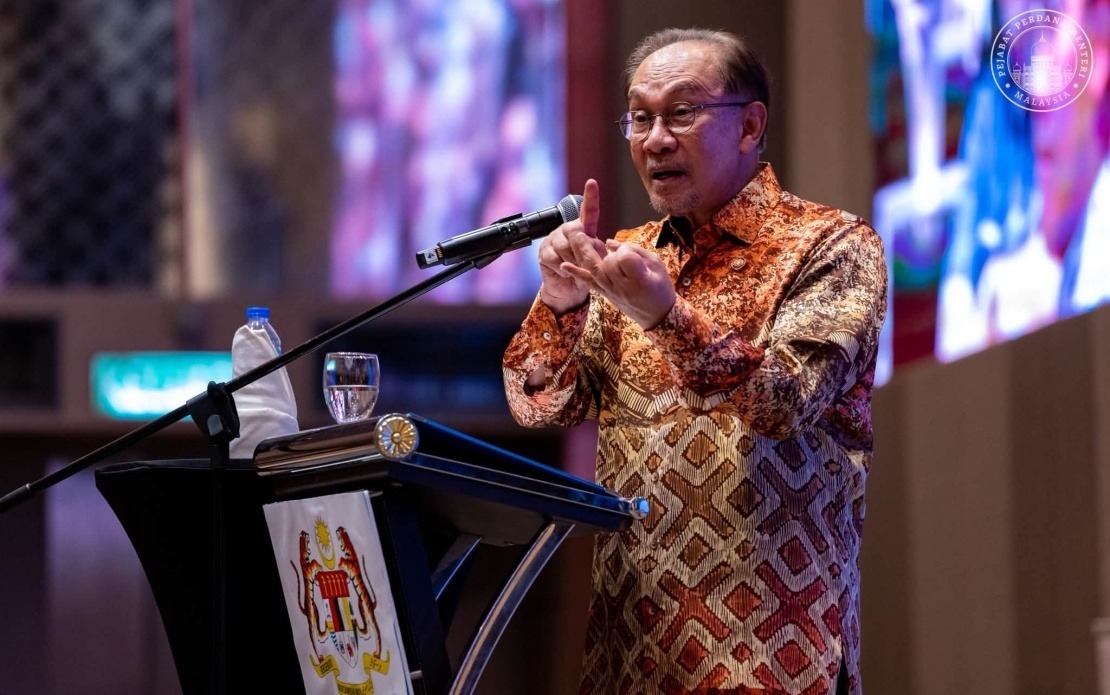
Prime Minister Datuk Seri Anwar Ibrahim has pledged that the government will exert its full efforts within available resources to assist young Malaysians in navigating the mounting pressures and challenges confronting their generation. The commitment emerged following direct engagement with youth representatives at sessions held in Klang, Selangor, including the opening ceremony of the 2026 International Youth Assembly (HAMKA), where the Prime Minister gained firsthand insights into the concerns troubling the nation's younger demographic.
The government's undertaking reflects recognition that Malaysia's youth population faces an increasingly multifaceted landscape where traditional certainties have eroded. Contemporary young Malaysians must contend with technological disruption, economic uncertainty, polarisation in public discourse, and competing narratives about identity and national direction. Against this backdrop, Anwar's commitment signals that policymakers are attuned to these pressures and positioned to craft responses, though the Prime Minister acknowledged the realistic constraint that government capacity remains finite.
Central to Anwar's message was an emphasis on how disagreement and intellectual contestation ought to unfold in Malaysian society. He underscored that while divergent viewpoints and clashing ideas are inevitable among young people, such differences must be mediated through reasoned argument, knowledge-grounded discussion, and civil conduct rather than through sentiment-driven appeals, hostility, or sectarian interests. This framing addresses a genuine concern among educators and social observers: that Malaysian youth increasingly encounter polarising content and tribalistic messaging on social media and in informal networks, eroding their capacity for nuanced thinking.
By listening directly to young people during the Temu Anwar session and HAMKA's opening, the Prime Minister positioned himself as responsive to youth concerns rather than prescriptive. This consultative approach contrasts with top-down governance models and may resonate with younger voters who expect their leaders to demonstrate genuine engagement with generational anxieties. The sessions themselves functioned as both information-gathering and legitimacy-building exercises, allowing the government to signal responsiveness while gathering intelligence on emerging youth priorities.
The International Youth Assembly, with its 2026 iteration now formally launched, carries symbolic weight in Malaysia's engagement with the younger generation. The assembly provides a platform for youth from multiple nations to exchange ideas and build networks, positioning Malaysia as a convener in regional youth dialogue. For participating Malaysian youth, such events create opportunities to articulate grievances and aspirations directly to national leadership, potentially influencing policy trajectories on education, employment, and social welfare.
Anwar's invocation of Abdul Malik Karim Amrullah, the historical Islamic scholar and litterateur after whom the assembly is partially named, functioned as intellectual genealogy. By linking contemporary youth assembly initiatives to a figure renowned for intellectual courage, rhetorical prowess, and commitment to reasoned argument, the Prime Minister drew a line connecting modern Malaysian youth to a tradition of principled scholarship and civic engagement. This historical reference suggests that current youth are heirs to a legacy of thinkers who valued knowledge acquisition and fearless expression of ideas within frameworks of ethical conduct.
The emphasis on Amrullah's influence on younger generations across his era suggests a template for how leadership might relate to youth: through fostering intellectual curiosity, encouraging bold articulation of viewpoints, and maintaining openness to novel ideas. These qualities, Anwar implied, remain essential for contemporary young Malaysians navigating a world of competing information sources, algorithmic curation, and ideological pressures from multiple directions. The assembly's naming thus becomes pedagogical, reminding participants of what intellectual engagement at its best entails.
For Malaysian youth specifically, the government's commitment carries practical implications across multiple domains. Young people express consistent concern about employment prospects in an evolving economy where traditional career pathways have become less predictable. Educational systems struggle to keep pace with technological change and labour market demands. Mental health challenges among youth have intensified post-pandemic. Access to affordable housing remains deeply challenging for young adults attempting to establish independent households. These substantive issues lie behind the abstract commitment to navigating complexity.
The government's acknowledgment of limited capacity—framed delicately as acting within "available capacity"—offers realism about constraints. Federal budgetary pressures, competing demands from other constituencies, and the structural challenges of coordinating across federal and state governments all limit what any administration can deliver. Yet Anwar's framing suggests prioritisation of youth-focused initiatives within these constraints, positioning young people as sufficiently central to national interest that their concerns warrant scarce government resources.
Regionally, Malaysia's engagement with youth through platforms like HAMKA reflects broader Southeast Asian recognition that demographic transitions and youth bulges carry both opportunity and risk. Countries managing large youth populations effectively can harness demographic dividends through improved education, employment, and civic participation. Those failing to address youth concerns risk social instability, mass migration, and political disengagement. Malaysia's convening role at HAMKA positions it as a thoughtful participant in regional youth dialogue, potentially differentiating its approach from more authoritarian governance models.
The emphasis on guided discourse—differences mediated through knowledge and argument rather than sentiment and hatred—addresses specific Malaysian contexts. Communal sensitivities, religious interpretation, and identity politics create environments where young people encounter inflammatory content alongside legitimate civic debate. Anwar's insistence that intellectual frameworks and civil conduct should prevail reflects awareness that Malaysia's social cohesion depends substantially on how youth learn to engage across difference. This is not merely a matter of civility; it concerns whether democratic institutions can function effectively when younger citizens reach voting age.
Moving forward, translating governmental commitment into concrete programmes requires specificity. Which issues raised during youth consultations warrant immediate policy attention? How will government proposals be designed with meaningful youth participation rather than merely consulting and then deciding from above? What resources will genuinely be allocated to youth-focused initiatives, and how will their effectiveness be measured? These practical questions will determine whether the Prime Minister's pledge evolves into tangible support or remains primarily symbolic reassurance.

