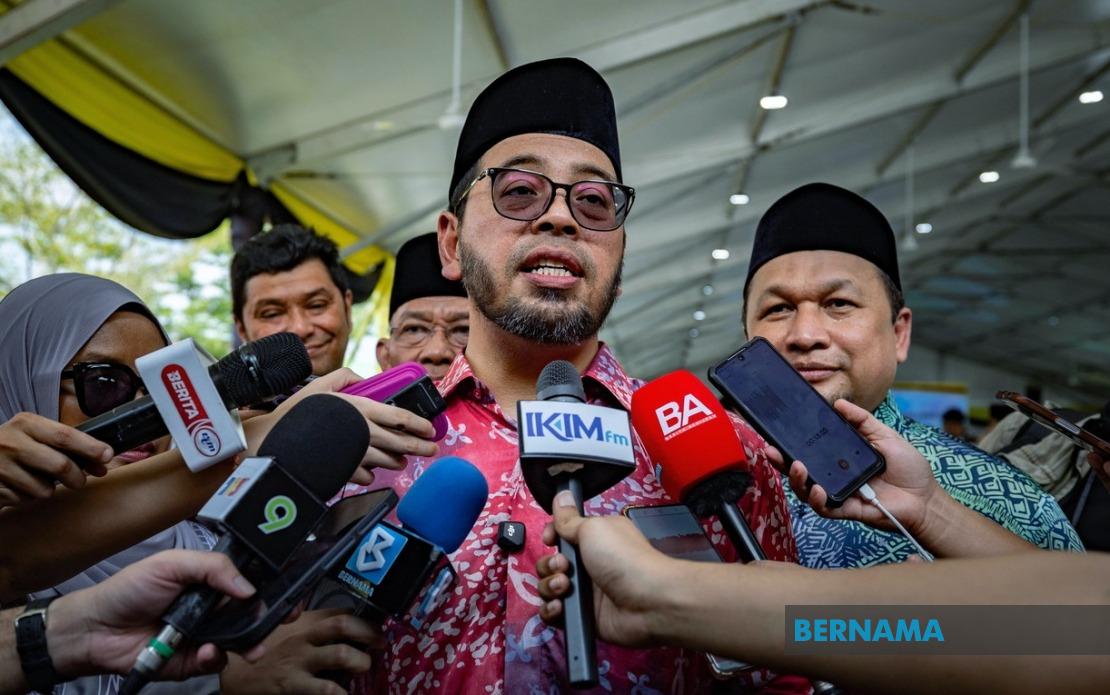
The Malaysian federal government is doubling down on its commitment to Islamic educational institutions, viewing them as essential counterbalances to economic and infrastructural development. Religious Affairs Minister Dr Zulkifli Hasan articulated this stance during the 2026 Perak Pondok and Religious Schools Gathering in Chemor, arguing that a nation's true measure lies not in financial metrics alone but in the calibre of its citizens and the values guiding their development. This positioning reflects a deliberate policy shift that elevates religious and traditional Islamic education from peripheral status to central importance in Malaysia's broader development narrative.
The gathering, officially inaugurated by Prime Minister Datuk Seri Anwar Ibrahim, drew approximately 3,000 participants including pondok representatives, religious school staff, KAFA instructors, civil society figures, and community members. The scale of attendance underscores growing official recognition that these institutions, long sustained through grassroots efforts and philanthropic channels, deserve structured government support and strategic integration into national education frameworks. For Malaysia's policymakers, the event served as both a symbolic endorsement and a practical platform for delivering aid and resources to communities often sidelined in mainstream educational discourse.
Dr Zulkifli emphasised that collaboration between federal and state authorities, including State Islamic Religious Departments and Councils, remains fundamental to ensuring Islamic education evolves systematically while maintaining relevance to contemporary needs. This multilayered governance approach acknowledges the constitutional division of religious affairs between federal and state governments, a longstanding feature of Malaysian federalism. By binding these entities together around shared objectives, the administration signals intent to overcome jurisdictional fragmentation that has historically impeded coordinated policy implementation in religious education.
The government's framing of religious institutions as partners rather than recipients carries significant implications for institutional autonomy and programme design. Rather than imposing top-down curriculum reforms, the approach suggests collaborative refinement of educational standards, quality assurance mechanisms, and pedagogical methods. For pondok leaders and religious school administrators, this partnership language may translate into greater flexibility in institutional management alongside new expectations for accountability and alignment with national educational standards.
Concrete support materialised through multiple channels during the event. Minister Zulkifli distributed MADANI Aid Baskets to twelve representatives of 250 beneficiaries, symbolising government assistance reaching into disadvantaged households within religious education communities. Beyond immediate poverty relief, the government pledged sponsorship for student fees and the Fast Track Sijil Pelajaran Malaysia programme, signalling investment in enabling Islamic school graduates to access mainstream qualification pathways and employment opportunities. Such measures address a persistent challenge for religious education institutions: ensuring graduates possess credentials recognised across Malaysia's broader employment market.
The philosophical underpinning of this initiative, framed around Malaysia MADANI principles, emphasises human welfare and human capital development as cornerstones of national progress. This articulation represents an attempt to integrate Islamic education policy with the government's wider development aspirations, moving beyond treating religious schooling as a discrete subcategory of education policy. For stakeholders across Malaysia's religious education sector, alignment with MADANI provides both ideological legitimacy and practical access to budgetary allocations and programme resources.
Yayasan Dakwah Islamiah Malaysia (YADIM), the organising body, positioned the gathering as part of ongoing efforts to strengthen Islamic institutions through sustained government backing. The forum component featured prominent religious scholars including Kelantan-based Sheikh Wazir Che Awang Al-Makki and former Perak Mufti Datuk Seri Wan Zahidi Wan Teh, emphasising the intellectual and spiritual dimensions of religious leadership in national development. These platforms allow senior Islamic figures to articulate their vision of religious education's role in character formation and social cohesion, elevating discourse beyond bureaucratic implementation to encompassing philosophical and theological dimensions.
The event's focus on KAFA teachers represents implicit acknowledgement that these instructors—often juggling religious classes with secular employment—require recognition and support to sustain their contributions. KAFA networks, comprising part-time Islamic classes for Muslim children, constitute a significant supplement to formal religious schooling, particularly in urban areas where dedicated pondok and madrasah spaces remain limited. Government attention to KAFA instructor welfare signals recognition that Malaysia's Islamic educational ecosystem depends heavily on these voluntary and semi-voluntary educators.
For Southeast Asian observers, Malaysia's approach to religious education integration offers instructive lessons about balancing secular governance frameworks with religious institutional engagement. Rather than viewing religious schools as competitors to state systems or as vehicles for ideological indoctrination, the Malaysian model aspires to position them as complementary institutions serving specific community needs and values. This inclusive approach contrasts with more securitised or marginalising policies adopted elsewhere in the region, though it does presume sustained political commitment and cross-party consensus—factors not always guaranteed in Malaysia's occasionally fractious political environment.
The practical implications for pondok and religious school operators involve navigating new relationships with government agencies while maintaining institutional distinctiveness. Increased government investment may bring subtle expectations regarding curriculum alignment, teacher qualifications, and student assessment methodologies. Institutions must balance acceptance of support with preservation of the pedagogical autonomy and spiritual orientation that distinguish them from mainstream schools. This tension, likely to intensify as government engagement deepens, will shape Islamic education's evolution over the coming years.
Perak's selection as host for this gathering carries geographic and political significance, representing a state where religious education institutions maintain substantial presence and where state government under Datuk Seri Saarani Mohamad has demonstrated receptiveness to collaborative approaches with federal authorities. The participation of Chief Secretary to the Government Tan Sri Shamsul Azri Abu Bakar underscored administrative machinery engagement, indicating this initiative extends beyond ministerial rhetoric into operational implementation across the civil service.
Looking forward, the sustainability of these partnerships depends on consistent funding mechanisms, clarity regarding expectations and performance metrics, and maintained political will across successive administrations. For Malaysia's religious education sector, the 2026 gathering represents a milestone in formal recognition and government commitment, yet also an opening chapter in a longer story of integration and adaptation. How these institutions evolve in response to increased government engagement will significantly influence both the character of Islamic education in Malaysia and the broader relationship between state authority and religious institutions in the decades ahead.

