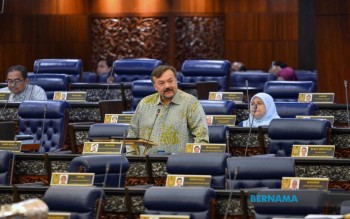
Malaysia's government has deployed more than RM500 million in micro-financing facilities to support over 30,000 small entrepreneurs between May 15 and June 26, 2026, according to Finance Minister II Datuk Seri Amir Hamzah Azizan. The disbursement represents a significant acceleration of the government's broader Micro Financing Facility Programme, which carries a total allocation exceeding RM5 billion. Speaking during Minister's Question Time in the Dewan Rakyat, Amir Hamzah outlined the initiative as a critical response to pressures facing small traders and hawkers navigating an environment of elevated business costs and uncertain economic conditions.
The financing has been distributed through a diverse network of lending institutions tailored to reach different segments of the entrepreneurial base. Amanah Ikhtiar Malaysia, Agrobank, Bank Simpanan Nasional, Bank Rakyat, MARA and TEKUN Nasional have collectively channelled the funds, ensuring that entrepreneurs across various regions and business types have access to capital. This multi-agency approach reflects the government's recognition that small businesses operate in distinctly different sectors and require financing solutions adapted to their specific circumstances. The breadth of distribution partners also signals an effort to penetrate markets where traditional banking relationships may be less established, particularly in rural areas where informal traders and agricultural entrepreneurs predominate.
Parallel to the micro-financing programme, the government has activated the RM5 billion MADANI Government Assistance Guarantee Scheme, administered through Syarikat Jaminan Pembiayaan Perniagaan Bhd (SJPP). This scheme functions as a risk-sharing mechanism, enabling banks to lend with greater confidence to MSMEs by guaranteeing a portion of potential losses. Between May 15 and June 20, 2026, SJPP approved RM219 million in financing guarantees supporting more than 300 MSMEs. The scheme has demonstrated particular traction in agriculture, construction, logistics and tourism sectors, industries that have faced heightened volatility in recent years and where access to affordable credit remains constrained.
The government has recognised that simple provision of financing proves insufficient without complementary support mechanisms. SJPP has therefore been tasked with coordinating restructuring and rescheduling arrangements with financial institutions, allowing businesses already in debt to negotiate more sustainable repayment schedules. Additionally, the scheme offers targeted repayment assistance, a form of direct relief designed to bridge temporary cash-flow difficulties. These measures acknowledge that many MSMEs do not require fresh capital so much as breathing room to navigate temporary disruptions, a reality often overlooked in financing programmes that focus exclusively on credit expansion.
Another significant element of the government's support architecture is the SME Stabilisation Relief Facility (SME SRF), launched by Bank Negara Malaysia in mid-May 2026. This RM5 billion facility has approved nearly RM1 billion in financing for over 1,500 MSMEs within its opening month of operation. The facility's rapid uptake suggests that demand for relief financing substantially exceeds traditional credit availability, and that existing barriers to MSME financing remain formidable despite previous policy interventions. The concentration of approvals within core business groups points toward successful targeting, though questions persist regarding whether smaller, informal operators have equitable access to these formal schemes.
The finance minister emphasised that the government retains substantial borrowing capacity for future applications, with approximately RM4 billion remaining undeployed across the various programmes. This availability suggests either that additional waves of applications may yet materialise as awareness spreads among eligible entrepreneurs, or that uptake will require continued marketing and facilitation efforts to reach intended beneficiaries. The persistence of unutilised funds could also indicate that certain financing conditions—collateral requirements, documentation standards, or repayment terms—remain misaligned with the actual circumstances of target enterprises, a structural challenge that capital infusions alone cannot resolve.
For Malaysian readers, these figures assume particular significance within the broader context of regional economic adjustment. ASEAN economies have grappled with moderating growth, inflationary pressures on input costs, and shifts in regional supply chains following geopolitical realignments. Small enterprises, which employ substantial portions of Southeast Asia's workforce and generate considerable economic dynamism in rural areas, have proven especially vulnerable to these headwinds. Malaysia's proactive financing deployment signals official recognition that market mechanisms alone will not ensure small business survival during periods of structural transition, necessitating direct government intervention.
The multi-tiered approach—combining direct micro-financing, guarantee schemes, restructuring support, and dedicated relief facilities—reflects international best practice in supporting small business sectors during economic stress. Rather than adopting a one-size-fits-all strategy, the government has created pathways for businesses at different stages of difficulty and with varying access to formal banking relationships. Micro-entrepreneurs who have operated informally can access AIM or TEKUN financing; established businesses facing temporary distress can restructure existing debt; and those requiring operational cash preservation can pursue stabilisation relief. This differentiation increases the likelihood that support reaches beneficiaries whose needs match available instruments.
The question posed by Datuk Andi Muhammad Suryady Bandy, which prompted the minister's response, reflects persistent parliamentary concern regarding MSME resilience. Global economic headwinds—including currency fluctuations, commodity price volatility, and evolving consumer behaviour—have created a structural urgency around small business support that transcends political cycles. The government's substantial financial commitment, totalling RM10 billion across multiple programmes, represents a strategic wager that preserving the small business ecosystem proves economically and socially preferable to managing unemployment and income inequality that would result from widespread small enterprise failures.
Yet financing accessibility remains merely one dimension of small business viability. Entrepreneurs require not only capital but also market access, skills development, regulatory streamlining, and energy-cost predictability. While the government's financing initiatives address the credit constraint, complementary policies addressing these other dimensions will likely determine whether the capital deployed ultimately generates sustained business growth or merely postpones inevitable closures. The next phase of policy effectiveness will depend on whether financing approvals translate into actual business expansion rather than merely servicing existing debt obligations.

