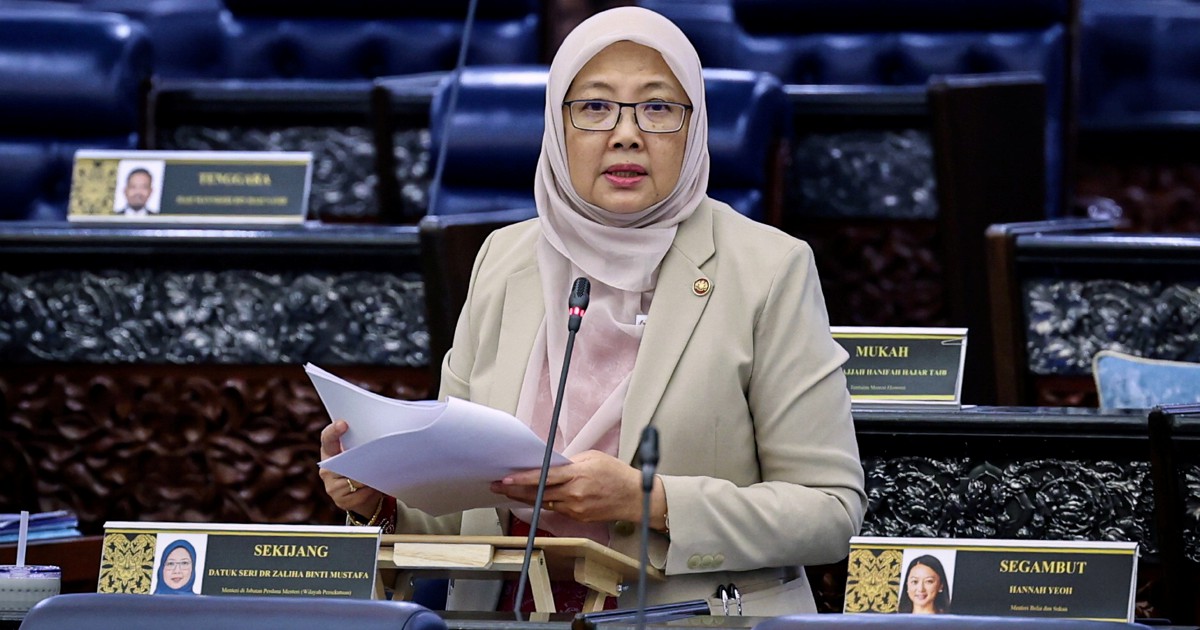
The Government Backbenchers Club has publicly censured opposition Perikatan Nasional MPs for walking out of a special parliamentary sitting focused on examining the Royal Commission of Inquiry report into Lembaga Tabung Haji, with chairman Datuk Dr Zaliha Mustafa voicing disappointment at what she characterised as a failure of legislative duty. The boycott during today's Dewan Rakyat session marked a conspicuous absence from deliberations on findings that carry significant implications for Malaysia's Islamic pilgrimage fund and the millions of Muslims who depend upon it.
The timing of the walkout underscores deeper tensions within the parliamentary opposition as lawmakers struggle to navigate competing strategic interests. By absenting themselves from the debate, PN legislators effectively surrendered the opportunity to scrutinise government handling of Lembaga Tabung Haji matters and hold the executive accountable through parliamentary questioning—traditionally a core function of opposition benches. Zaliha's rebuke suggests the move may have damaged PN's credibility as a serious alternative government, particularly among constituents concerned about institutional oversight and transparent governance.
Lembaga Tabung Haji, which manages hajj savings for Malaysian Muslims and invests surplus funds in securities and real estate, has faced mounting scrutiny following controversies involving governance lapses and financial management. The Royal Commission of Inquiry was constituted to investigate these matters comprehensively, making the parliamentary debate an essential forum for discussing its recommendations and charting corrective actions. The special sitting represented a rare opportunity for comprehensive parliamentary examination of an institution affecting approximately 8.7 million account holders, many of whom are ordinary Malaysians saving incrementally for their religious obligation.
The RCI's investigative work would have unearthed findings requiring thorough legislative debate and cross-party engagement. Government backbenchers, despite their formal alignment with the ruling coalition, often serve as internal watchdogs, questioning executive decisions and pushing for accountability within their own side. Zaliha's intervention reflects this independent-minded posture, suggesting that legitimate concerns about PN's parliamentary conduct transcend partisan divides within the government coalition itself.
Perikatan Nasional's parliamentary representation, comprising primarily Members from PAS and other opposition-aligned parties, has sought to position itself as a guardian of Islamic interests and institutional integrity. The walkout paradoxically undermines this self-fashioned image by suggesting a reluctance to engage substantively with matters affecting Malaysia's Muslim majority. For constituents who voted PN into parliament partly to ensure robust opposition scrutiny, the absence signals either strategic miscalculation or disinterest in deploying available parliamentary mechanisms to challenge government policies.
The incident reflects broader patterns of parliamentary dysfunction that have characterised recent Malaysian politics. Rather than utilising the chamber for rigorous debate, cross-examination, and persuasion, legislators increasingly resort to theatrical gestures—walkouts, boycotts, and performative resistance—that generate headlines but advance legislative work minimally. This dynamic ultimately diminishes parliament's effectiveness as an institution for democratic deliberation and public accountability, outcomes that should concern all Malaysians regardless of political affiliation.
For the Government Backbenchers Club, whose members ostensibly support the coalition yet retain a mandate to represent constituent interests independently, Zaliha's statement represents a reassertion of that parliamentary balance. Backbenchers historically occupy an ambiguous space, capable of channelling grassroots concerns upward while maintaining coalition loyalty. When opposition MPs abdicate parliamentary responsibilities, government backbenchers face increased pressure to compensate, intensifying their oversight role.
The Tabung Haji RCI report itself warrants serious parliamentary engagement. Governance weaknesses, investment decisions, and operational transparency directly affect retirement security for millions of Malaysian Muslims. A comprehensive parliamentary examination, ideally featuring contributions from all major political formations, would strengthen public confidence in the institution and demonstrate that parliament can rise above partisan considerations when fundamental public interests are at stake. PN's absence suggested otherwise.
Going forward, the episode raises questions about PN's parliamentary strategy and whether it intends to operate as a responsible opposition genuinely engaged in governance scrutiny, or as a marginalised caucus performing dissent without substantive legislative contribution. For ordinary Malaysians holding Tabung Haji accounts, the walkout represents a missed opportunity for their elected representatives to demand accountability on matters directly affecting their savings and pilgrimage aspirations. Zaliha's criticism, coming from government ranks, underscores the bipartisan expectation that parliament should function as a serious deliberative body, not a venue for strategic posturing.

