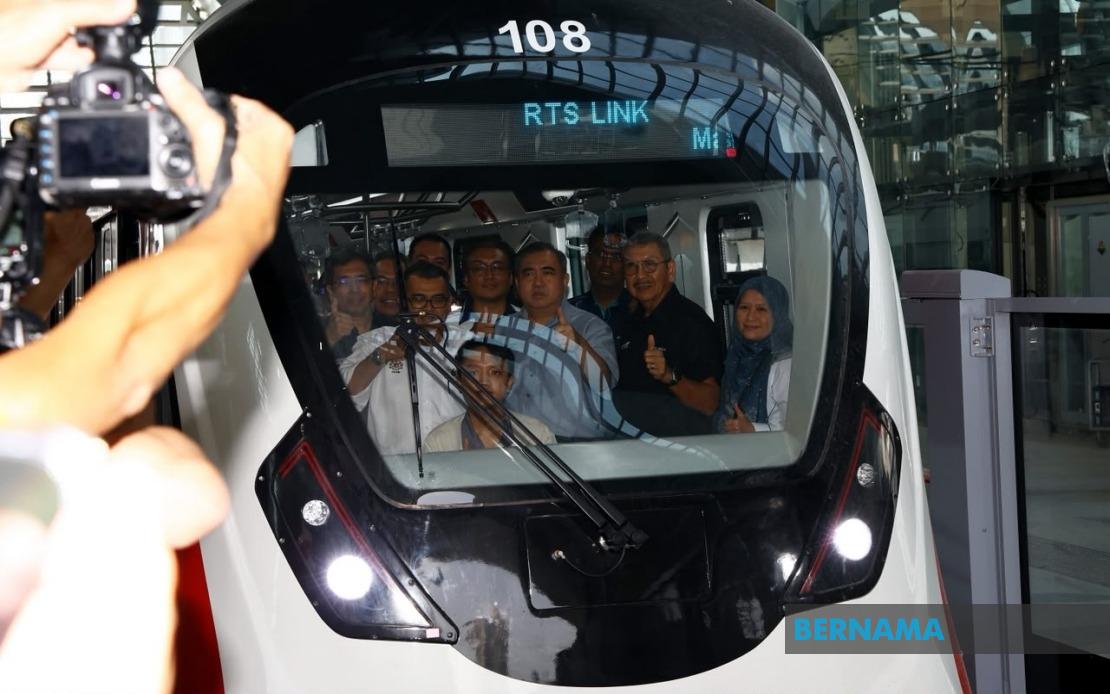
Malaysia is moving forward with a significant infrastructure investment aimed at seamlessly connecting two major rail networks in the Johor Bahru region. Transport Minister Anthony Loke announced that the government has approved a RM60 million bridge project linking the Bukit Chagar RTS Link Station directly to the KTMB Komuter platform, a decision endorsed by the Ministry of Economy and to be executed by the Ministry of Transport. This initiative represents a strategic step in creating a more cohesive and user-friendly public transportation ecosystem that will serve both domestic and cross-border commuters.
The bridge infrastructure carries significant practical benefits for daily commuters. Currently, passengers using the KTMB Komuter service who wish to connect to the RTS Link must navigate through JB Sentral, a circuitous route that adds both time and inconvenience to their journey. The new direct link will eliminate this detour, allowing travellers to walk directly from the Komuter station to the RTS Link facility without additional transfers or backtracking. For regular users, this improvement translates to meaningful time savings and a more efficient commuting experience, particularly important given the expected volume of cross-border traffic once the RTS Link becomes operational.
The project timeline demonstrates the government's commitment to aligning infrastructure completion with the anticipated opening of the RTS Link. Construction of the bridge is expected to take approximately twelve months, positioning it for completion shortly after or concurrent with the RTS Link's scheduled January 1 commencement of operations. This synchronisation is deliberate and essential, ensuring that the integrated transport ecosystem functions optimally from day one rather than requiring phased adjustments. Such coordinated planning reflects lessons learned from previous transit projects and demonstrates improved project management coordination across government agencies.
Beyond the bridge itself, Transport Minister Loke outlined a broader vision for transforming Bukit Chagar into a genuine multi-modal transportation hub. The RTS Link Station will integrate not only with KTMB Komuter but also with JB Sentral, e-hailing services, and expanded bus networks, creating a comprehensive transportation interchange. This integrated approach acknowledges the realities of modern urban mobility, where passengers increasingly expect seamless transitions between different transport modes rather than fragmented services that require separate ticketing, navigation, and payment systems.
The government is simultaneously advancing complementary bus service enhancements through the Stage Bus Service Transformation (SBST) 2.0 initiative. This programme involves deploying at least two hundred additional buses to provide connections between residential areas throughout Johor Bahru and the Bukit Chagar terminal. Rather than viewing buses as a secondary transportation mode, planners are positioning them as essential first and last-mile solutions that feed passengers into the RTS Link network. The bus expansion agreement with the operator is nearing finalisation, pending approval from the Ministry of Finance, with the expectation that expanded bus services will launch in tandem with RTS Link operations to facilitate effective passenger distribution and reduce congestion at the station.
The RTS Link project itself represents a landmark achievement in Malaysia-Singapore bilateral infrastructure cooperation. The rapid transit system is engineered to accommodate up to ten thousand passengers hourly in each direction, connecting Bukit Chagar in Johor Bahru with Woodlands North in Singapore. This capacity level reflects anticipated demand from cross-border workers, students, and travellers who currently rely on road-based options such as buses and private vehicles. The system's ability to handle such volumes efficiently has implications beyond the immediate bilateral corridor, potentially reducing congestion on the Causeway and the Second Link and improving air quality in the border regions.
Construction and physical development of the Bukit Chagar facility has progressed substantially. The building structure, the Customs, Immigration and Quarantine (CIQ) complex, and the RTS Link station itself have all been completed. However, the project has entered the critical testing and commissioning phase, during which system integration testing, fault-free operations, and trial runs must be successfully executed. This phase is not merely procedural; it represents a crucial quality assurance period during which engineers and operators identify and resolve issues before public operations commence. Any deficiencies identified now can be rectified without disrupting passenger services, underlining the importance of thorough pre-launch testing in large-scale transit infrastructure.
For Malaysia, the RTS Link and its supporting infrastructure carry significance beyond Johor Bahru itself. The project demonstrates the country's capacity to deliver complex, cross-border infrastructure partnerships and showcases commitment to modern public transportation systems. In an era when many cities in Southeast Asia are expanding rapid transit networks, Malaysia's successful execution of this project enhances its competitive position and may serve as a model for future regional connectivity initiatives. The integration of multiple transport modes at Bukit Chagar also aligns with broader sustainability objectives, encouraging modal shift away from private vehicles toward public transit.
The RM60 million bridge investment, while substantial, represents only one component of the broader RTS Link ecosystem development. When viewed alongside the bus service expansion, CIQ facilities, and the RTS Link itself, the total investment in creating an integrated, efficient, and modern transport solution runs into several billion ringgit. This represents a significant commitment of public resources, justified by anticipated daily passenger volumes and the long-term economic and social benefits of reduced congestion, improved air quality, and enhanced cross-border connectivity.
For passengers in Johor Bahru and beyond, these developments signal a transition toward a more integrated, user-centric transportation network. Rather than requiring detailed knowledge of multiple separate systems and transfer points, commuters will increasingly find seamless options that combine different modes of transport within unified infrastructure. The bridge project, while seemingly modest in scope, exemplifies the attention to detail and passenger convenience that characterises modern transportation planning. Its approval and planned execution demonstrate that government agencies are actively removing barriers to public transport adoption, a crucial step in building competitive alternatives to private vehicle use in Malaysia's urban regions.

