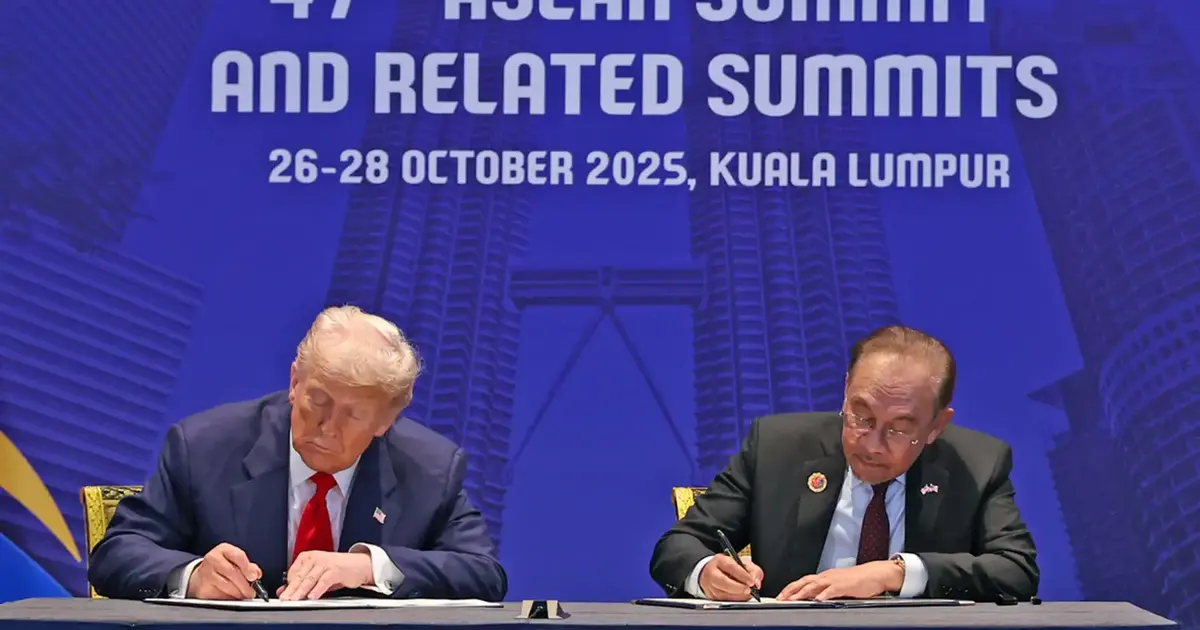
Prime Minister Anwar Ibrahim's administration has escalated its legal posture on the contentious Malaysia-United States reciprocal trade agreement by moving to strike out a lawsuit filed by opposition members of Parliament, intensifying a constitutional dispute over the government's negotiating authority and parliamentary oversight mechanisms.
The application to dismiss the MPs' suit represents a significant procedural maneuver that, if successful, would block the legislative challenge at an early court stage without requiring the government to address the substantive claims raised by the opposition. This tactical approach suggests the administration is confident in its legal position regarding the trade deal's constitutionality and the executive's latitude in negotiating bilateral commerce agreements without prior parliamentary approval.
Parallel to the government's strike-out application, the opposition MPs have simultaneously lodged a separate petition requesting that the Federal Court examine fundamental constitutional questions arising from the trade arrangement. This dual-track strategy indicates the opposition intends to pursue both the immediate legal contestation and a deeper constitutional inquiry into how future international agreements should be processed through Malaysian legislative institutions.
The Malaysia-US reciprocal trade agreement has become emblematic of broader tensions between executive authority and parliamentary accountability in Malaysian governance. Opposition lawmakers contend that major trade deals affecting the nation's economic interests warrant legislative scrutiny and approval before implementation, raising questions about constitutional requirements for international commercial agreements that impose obligations on Malaysia.
Government officials counter that the Prime Minister and the executive possess inherent authority to negotiate and conclude trade agreements without legislative pre-approval, positioning such arrangements as routine matters of foreign policy and commerce within the executive's constitutional domain. This philosophical divide reflects competing interpretations of the Malaysian Constitution regarding the separation of powers and the respective competencies of the executive and legislative branches.
The reciprocal trade agreement encompasses commitments regarding tariffs, market access, intellectual property protections, and regulatory harmonization between the two nations. Malaysian businesses, particularly in manufacturing, agriculture, and services sectors, stand to experience significant competitive and regulatory consequences depending on the agreement's specific terms and implementation timeline. The government has emphasized potential benefits for Malaysian exports and foreign investment inflows, whilst critics worry about vulnerabilities in domestic industries facing American competition.
From a regional perspective, the Malaysia-US deal exists within the broader context of shifting trade dynamics in Southeast Asia following the US strategic pivot toward Indo-Pacific engagement. Other ASEAN members navigate similar questions regarding bilateral trade negotiations and their balance with multilateral frameworks, making the Malaysian constitutional precedent potentially influential across the region. Thailand, Philippines, and Indonesia face analogous pressures to expand bilateral commercial ties whilst managing domestic protectionist constituencies and legislative oversight concerns.
The Federal Court's eventual pronouncement on the constitutional questions could establish important jurisprudence regarding the scope of executive power in negotiating international agreements. If the court determines that certain categories of trade agreements require legislative approval, it would necessitate procedural reforms for future negotiations and potentially complicate the government's existing diplomatic commitments. Conversely, a ruling broadly upholding executive authority would vindicate the current administration's approach but may intensify opposition demands for legislative reforms establishing voluntary consultation mechanisms.
For Malaysian businesses and investors, the legal uncertainty surrounding the trade agreement's constitutional validity creates ambiguity regarding the enforceability and stability of bilateral commitments. Companies making decisions based on the agreement's tariff schedules and market access provisions face potential disruption if courts ultimately invalidate or substantially modify the arrangement. This uncertainty has prompted business groups to urge swift legal resolution to minimize commercial disruption.
The timing of these legal proceedings coincides with Malaysia's broader economic reopening and revitalized trade negotiations following pandemic-related disruptions. The administration's push to conclusively resolve the constitutional questions reflects its interest in demonstrating competent management of international economic relationships and avoiding protracted litigation that undermines investor confidence. Opposition persistence suggests they view the trade deal as a significant political issue resonating with nationalist constituencies and labor groups concerned about foreign competition.
The Anwar government's aggressive litigation strategy signals determination to advance its international trade agenda despite parliamentary opposition, whilst opposition parties demonstrate commitment to constitutional accountability mechanisms. This legal and political confrontation will ultimately test whether Malaysian courts see trade agreements as purely executive matters or whether they recognize legitimate parliamentary interests in commercial arrangements affecting national economic interests and regulatory autonomy.
Beyond the immediate dispute, the case illuminates evolving questions about democratic governance in conducting international commerce. As trade agreements grow increasingly complex and economically consequential, legislatures worldwide grapple with balancing executive efficiency in diplomatic negotiations against citizens' democratic expectations that significant national commitments receive parliamentary consideration. Malaysia's courts will help determine whether the country's constitutional framework tilts toward executive prerogative or parliamentary engagement in ratifying major international economic commitments.