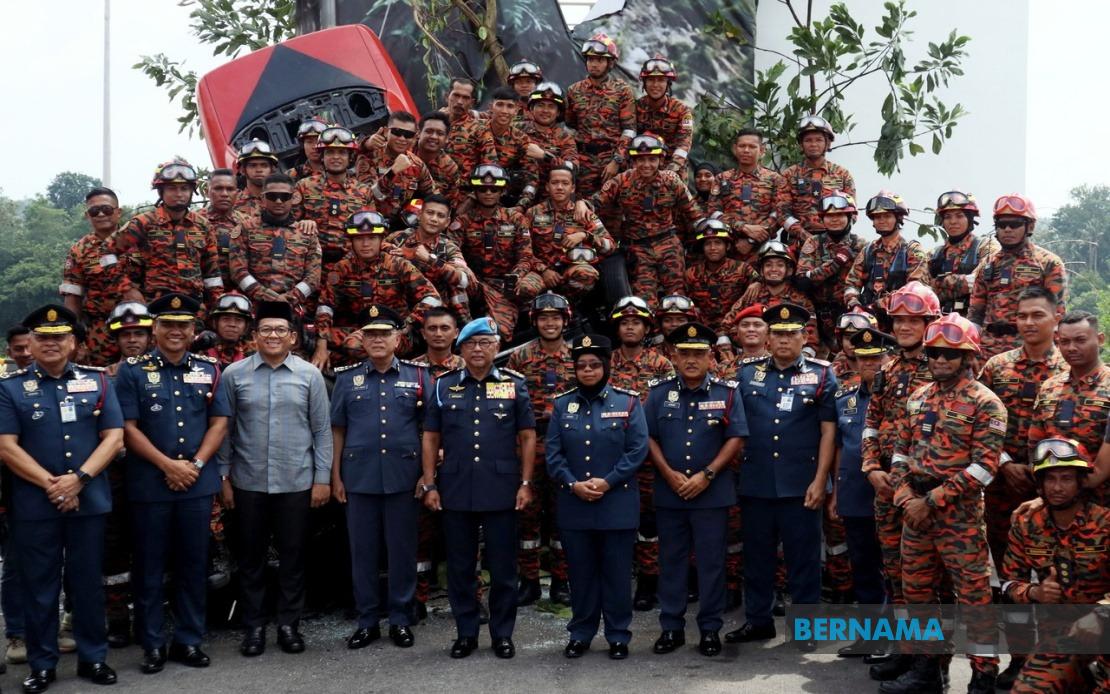
The Federal Government has greenlit an annual development budget of RM278.9 million for the Malaysian Fire and Rescue Department to drive forward 86 infrastructure and operational projects this year as part of the First Rolling Plan of the 13th Malaysia Plan. The allocation, announced during ceremonies in Kuantan, encompasses a balanced portfolio of 27 freshly launched initiatives alongside 59 existing programmes being carried forward throughout the nation, reflecting the government's commitment to strengthening emergency response capabilities across diverse communities.
According to Housing and Local Government deputy minister Datuk Aiman Athirah Sabu, the investment demonstrates sustained focus on expanding and modernizing fire and rescue infrastructure nationwide. The breakdown reveals a strategic distribution of resources across states, with particular emphasis on facility development that extends beyond traditional firefighting operations to encompass broader community safety objectives. This phased approach through rolling plans allows for flexibility in resource allocation while maintaining momentum across multiple fronts.
Pahang state has emerged as a significant beneficiary of this development agenda, with seven facility projects currently advancing across different stages of completion. These initiatives, spanning both the preceding 12th Malaysia Plan and the current cycle, include acquisition of the Gohtong Jaya Fire and Rescue Station building and residential quarters, construction of brand-new stations in Benta and Tioman with accompanying staff accommodation, and comprehensive upgrading of existing facilities in Bentong and Kuantan. Additionally, the reconstruction of the Triang station and preliminary groundwork for the Tanjung Lumpur facility signal an ambitious expansion timeline that could substantially reshape emergency services coverage across the state.
The centrepiece of the Pahang announcement was the official opening of the Sungai Lembing Fire and Rescue Station, a RM6 million facility erected on a seven-acre tract that has already begun service since February 15. As the 29th such station in Pahang, the Sungai Lembing facility addresses emergency coverage for approximately 15,000 inhabitants in the mining heritage town and neighbouring communities. The timing of its operational launch demonstrates the practical results flowing from long-term planning cycles, translating budgetary allocations into tangible infrastructure serving vulnerable populations.
Deputy minister Aiman Athirah articulated an expanded vision for fire stations transcending conventional emergency response roles. The Sungai Lembing station exemplifies a conceptual shift toward transforming these facilities into integrated community safety hubs capable of delivering education, imparting technical skills, and fostering public awareness around fire prevention and rescue procedures. This multipurpose orientation aligns with contemporary approaches to public infrastructure, where government buildings increasingly function as platforms for knowledge dissemination and civic engagement rather than operating in isolation from the communities they serve.
The initiative gained additional prominence through the involvement of Deputy Economy Minister Datuk Mohd Shahar Abdullah, whose parliamentary constituency encompasses Paya Besar. His emphasis on integrating the fire station into Sungai Lembing's broader regeneration narrative reveals how security infrastructure intersects with regional development strategies. The heritage town faces a comprehensive transformation agenda encompassing cinema restoration, ecotourism initiatives, digital museum construction, tunnel upgrades, and advancement toward UNESCO World Heritage Site designation—an ambitious portfolio that demands robust emergency services as a foundational element.
Mohd Shahar's framing carries particular weight for Malaysian readers, underscoring that development ambitions require simultaneous investment in safety systems. Without functional fire and rescue capacity, heritage tourism initiatives risk generating liability rather than prosperity, and modern amenities lose credibility if emergency response infrastructure lags behind. The construction of Sungai Lembing station therefore represents not merely a single facility but a prerequisite for sustainable community development, legitimizing the government's dual commitment to heritage preservation and public safety.
For Southeast Asian context, Malaysia's structured approach through rolling five-year plans represents a relatively mature infrastructure governance model. Many neighbours grapple with fragmented investment cycles and inconsistent resource distribution, whereas the Malaysian system provides visibility for long-term facility planning across multiple years and rolling reassessments. This predictability enables departmental capacity building and workforce planning, addressing chronic challenges facing fire services throughout the region where staffing and equipment provisions often struggle to keep pace with urban expansion and population growth.
The RM278.9 million annual ceiling merits examination alongside Malaysia's broader development spending. For a country of 34 million people, the allocation translates to approximately RM8.20 per capita annually for fire and rescue infrastructure—a modest figure suggesting that despite apparent commitment, the department remains relatively underfunded compared to other critical services. This raises questions about adequacy, particularly as urbanization accelerates and fire risk profiles become increasingly complex due to industrial proliferation and high-rise construction throughout major centres.
The geographic distribution of projects indicates central government recognition of disparities requiring remediation. Pahang's concentration of seven concurrent facility projects suggests previously identified service gaps or political responsiveness to local requirements. Whether this distribution reflects actual risk assessment, population ratios, or electoral considerations remains unexamined in official statements, yet resource allocation transparency continues to influence public confidence in government impartiality.
Officials present at the Sungai Lembing ceremony included Pahang Menteri Besar Datuk Seri Wan Rosdy Wan Ismail and State Legislative Assembly Speaker Datuk Seri Mohd Sharkar Shamsuddin, affirming state-level political alignment with the federal investment. This coordination, while routine, reflects the cooperative federalism necessary for infrastructure success, as state governments often hold land and planning authority while federal allocation provides funding. Such institutional coordination separates Malaysian outcomes from less integrated governance models elsewhere in Southeast Asia.
Looking forward, the trajectory of fire and rescue development under the 13th Malaysia Plan will merit monitoring, particularly regarding completion rates for the 27 new projects and whether rolling plan adjustments respond to emerging pressures. Climate change-driven risks, industrial hazards in economic corridors, and rapid urbanization will test whether current spending levels adequately equip the JBPM for evolving challenges. The Sungai Lembing station exemplifies how government infrastructure investments extend beyond engineering specifications to embody policy priorities regarding regional development, emergency preparedness, and community resilience—themes increasingly central to development discourse throughout the region.

