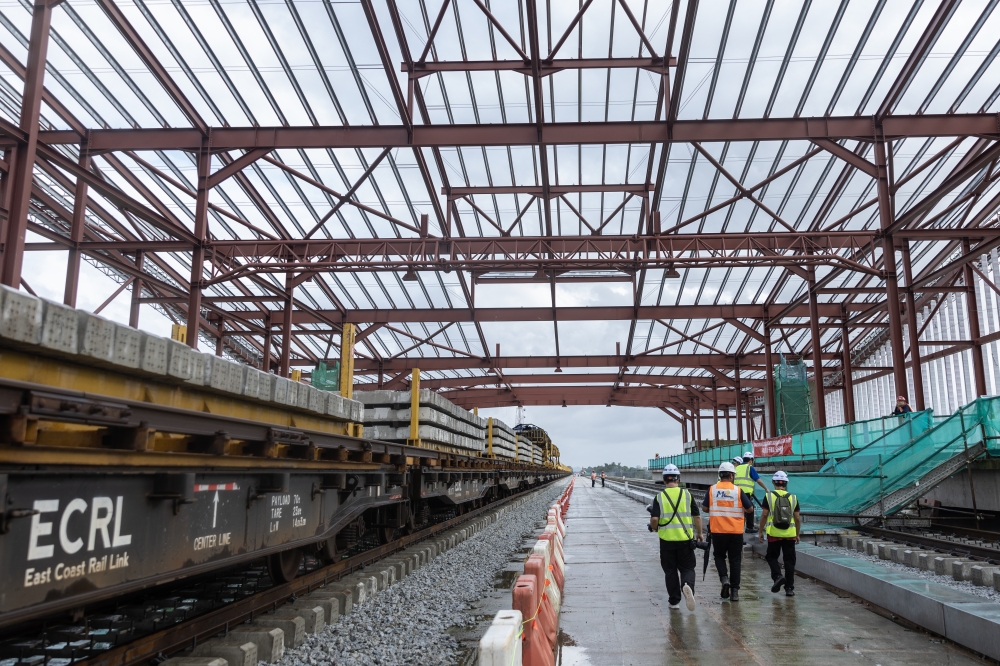
The Malaysian government has unveiled an ambitious RM207 million investment portfolio spanning 46 separate projects across Pasir Puteh parliamentary constituency, seeking to position the Terengganu region as a strategic economic hub along the East Coast Rail Link (ECRL) corridor. The comprehensive development plan reflects Putrajaya's determination to translate the massive regional transport infrastructure into tangible socioeconomic benefits for constituents, bridging the gap between headline projects and local prosperity.
Pasir Puteh, a predominantly rural constituency in Terengganu, stands to gain substantial infrastructure improvements through this coordinated initiative. The project portfolio encompasses diverse sectors including transport, education, healthcare, water management, and community facilities, suggesting a holistic approach to regional development rather than narrow infrastructure focus. By structuring the investments across multiple domains, policymakers aim to create multiplier effects that strengthen interconnections between different economic and social systems within the constituency.
The ECRL represents one of Southeast Asia's most significant regional transport undertakings, connecting Port Klang in Selangor through Pahang, Terengganu, and Kelantan to the Thai border. For constituencies like Pasir Puteh positioned along this corridor, the railway catalyst creates unprecedented opportunities for industrial clustering, logistics networks, and commercial activity that traditionally concentrate near established coastal ports. Government planners evidently recognize that without concurrent local development, these transport advantages risk remaining underutilized, with investment patterns flowing toward larger established urban centres instead.
The scale of investment—RM207 million across 46 projects—averages approximately RM4.5 million per initiative, suggesting a mix of major infrastructure anchors and smaller community-level improvements. This balanced approach acknowledges that sustainable regional development requires both flagship projects that attract major investors and foundational improvements in schools, clinics, and local services that enhance quality of life for existing residents. Without the latter component, infrastructure investments often generate migration outflows as capable residents seek opportunities elsewhere.
Terengganu's historical position as a relatively peripheral region in Malaysia's development hierarchy makes this allocation particularly significant. The state has long struggled with lower per capita incomes and limited industrial diversification compared to Peninsular Malaysia's western corridor. ECRL connectivity, combined with deliberate government investment, potentially offers pathways for Terengganu to capture logistics, light manufacturing, and port-linked services that drive contemporary regional economies. Pasir Puteh's proximity to the corridor positions it advantageously, though success depends on execution quality and coordination across multiple government agencies.
The project approvals signal renewed focus on regional equity within Malaysia's development framework. Federal spending decisions inevitably involve political calculations and electoral considerations, yet investments that improve basic services and infrastructure in underserved areas generate measurable improvements in living standards regardless of underlying motivations. Rural constituencies benefit from such initiatives through enhanced educational facilities, improved healthcare access, and better transport connections that reduce isolation and enable commercial participation.
Implementation challenges remain substantial. Coordinating 46 separate projects requires sophisticated project management, inter-agency cooperation, and sustained funding commitments across multiple budget cycles. Malaysian development initiatives have occasionally suffered from delayed execution, cost overruns, or incomplete delivery when coordination breaks down or political priorities shift. Pasir Puteh residents and observers would reasonably expect transparent timelines, clear accountability mechanisms, and regular progress reporting to ensure this substantial allocation translates into actual improvements rather than aspirational planning.
The timing of these approvals intersects with Malaysia's broader infrastructure modernization agenda. The ECRL itself, after years of construction and financing negotiations, enters an operational phase where its economic impact depends significantly on complementary investments at corridor nodes. Pasir Puteh's development package represents a deliberate attempt to maximize this return on the larger regional transport investment, creating ecosystems where the railway functions as a productive economic instrument rather than simply a transit corridor.
Regional observers across Southeast Asia watch Malaysian regional development initiatives closely, as they offer models—positive or cautionary—for managing infrastructure investment in less densely populated areas. Successful execution in Pasir Puteh could demonstrate viable pathways for spreading development benefits beyond major urban cores, addressing concerns about geographic inequality that affect numerous emerging economies. Conversely, incomplete or poorly managed implementation would reinforce skepticism about the feasibility of achieving genuine balanced regional development.
For Malaysia specifically, the Pasir Puteh initiative reflects confidence in the ECRL's economic fundamentals and acknowledgment that transport infrastructure alone insufficient without complementary local development. The RM207 million commitment essentially represents a bet that coordinated investment across multiple sectors can unlock latent potential in constituencies positioned along major corridors. Whether this strategic approach yields the anticipated returns will likely influence future regional development policy and funding allocation decisions affecting other underperforming constituencies throughout Malaysia.

