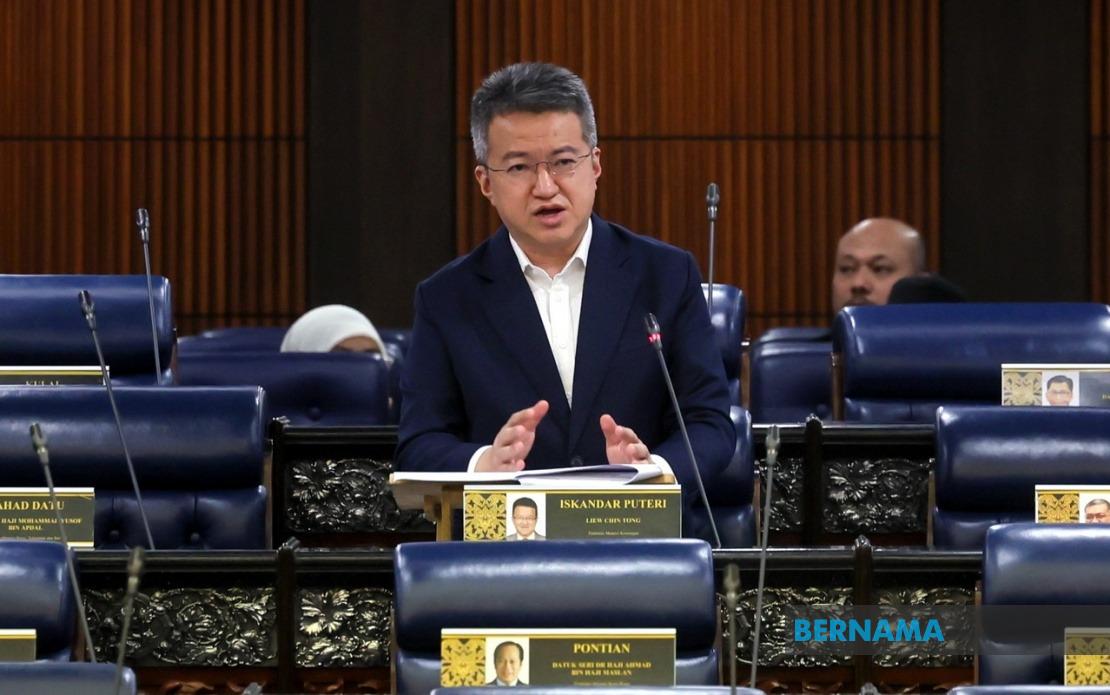
The Malaysian government has allocated RM15.77 million to the Malaysian Human Rights Commission (SUHAKAM) for 2025, marking a significant budgetary increase that underscores the administration's commitment to strengthening the nation's human rights infrastructure. Deputy Finance Minister Liew Chin Tong announced the funding decision during parliamentary proceedings, noting the allocation represents a RM2.2 million boost compared to the 2024 budgetary provision of RM13.55 million. The expanded budget comes as SUHAKAM continues to broaden its mandate and operational scope across the country.
The 2025 grant encompasses not only SUHAKAM's core operations but also extends to supporting the Office of the Children's Commissioner (OCC), a division that has gained increasing prominence in Malaysia's human rights landscape. This integrated funding approach recognises the interconnected nature of human rights protection and specialised oversight functions. The children's commissioner's office, established to address the particular vulnerabilities and rights of Malaysia's younger population, represents a growing institutional focus on safeguarding marginalised groups within the country.
The composition of SUHAKAM's operational budget reveals the multifaceted nature of the commission's work. Funds allocated for 2024 covered essential expenditures including the fixed allowances and emoluments for commissioners, rent and utility costs for office facilities, and the implementation of the institution's annual programmes and activities. These varied expense categories demonstrate that operating an effective human rights body requires both structural investment in physical and human infrastructure as well as resources for active investigative and awareness work. The commission's ability to conduct its mandate depends heavily on maintaining adequately staffed and equipped offices throughout Malaysia's diverse regions.
Liew's parliamentary statement emphasised the consistency of government support for SUHAKAM since its establishment, framing the increased allocation as evidence of sustained institutional backing. This continuity is significant in the Malaysian context, where independent commissions sometimes face budgetary uncertainty or political pressure. By reaffirming financial commitment through the budget allocation process, the government signals confidence in SUHAKAM's institutional role as an independent watchdog for human rights compliance across government agencies and the private sector. The transparent parliamentary debate over SUHAKAM's budget also serves as a mechanism for legislative oversight and public accountability regarding how Malaysia's human rights machinery is resourced.
The budgetary increase must be contextualised within Malaysia's evolving human rights challenges and international obligations. The nation faces ongoing scrutiny regarding issues such as migrant worker protections, police conduct, detention practices, and freedom of expression. An adequately funded SUHAKAM becomes essential for investigating complaints, conducting inquiries, and issuing recommendations to government bodies. The RM2.2 million increment, while seemingly modest in absolute terms, may reflect acknowledgment that meeting these demands requires expanded capacity, though observers might debate whether the increase sufficiently addresses the volume of human rights concerns in a diverse nation of 35 million people.
Simultaneously, Deputy Finance Minister Liew addressed parliamentary concerns regarding social protection for Malaysia's burgeoning informal and gig economy workforce. The i-Saraan programme, which encourages voluntary contributions to the Employees Provident Fund (EPF), continues to receive government backing through the 2026 budget framework. This initiative offers workers in unstructured employment sectors a matching incentive equivalent to 20 per cent of their annual contributions, capped at RM500 annually or RM5,000 over their lifetime. The programme addresses a critical gap in Malaysia's social security architecture, where millions of workers lack the employment stability necessary to access conventional pension schemes.
The government's expansion of support mechanisms for informal workers represents a practical engagement with demographic and economic realities in Malaysia. The gig economy has expanded substantially over recent years, encompassing ride-sharing drivers, delivery couriers, and freelance service providers who operate outside traditional employment frameworks. These workers face acute retirement security vulnerabilities, having contributed neither to EPF nor other institutionalised savings mechanisms. By extending targeted incentives, the government acknowledges both a moral obligation to ensure dignified retirement for all citizens and a pragmatic understanding that unprotected elderly populations create broader social and economic challenges.
A new initiative announced for 2026, the i-Saraan Plus programme, specifically targets platform-based e-hailing and ride-hailing workers. This sector-specific approach recognises the particular characteristics of transport-network company workers, who often face irregular incomes and minimal employment protections. The enhanced matching incentive of up to RM600 annually or RM6,000 over a lifetime reflects government recognition that this workforce segment requires more robust encouragement to participate in retirement savings schemes. The differential incentive structure suggests policy-makers understand that uniform contribution rates may prove insufficient for lower-income workers with unstable earnings patterns.
The Ministry of Finance is simultaneously examining broader mechanisms to expand contribution coverage across informal sector workers, indicating that current voluntary participation rates may remain unsatisfactory. This exploratory approach suggests the government recognises the limitations of incentive-based programmes and seeks mechanisms that might incorporate more workers into formal retirement protection systems. Whether such mechanisms might eventually include mandatory contributions, automatic enrolment, or other structural approaches remains unclear, but the ongoing examination signals discomfort with status quo coverage levels.
For Malaysia, these budgetary and policy announcements carry significance extending beyond immediate financial allocations. The SUHAKAM funding increase reflects institutional commitment to human rights monitoring at a time when regional democracies face varying pressures. The expansion of informal worker protections addresses a social cohesion challenge that affects millions of Malaysians and, if left unaddressed, could create intergenerational poverty. Together, these commitments suggest a government attempting to balance independent institutional oversight with social protection expansion, though the adequacy of resources for both objectives remains subject to legitimate debate among policymakers, economists, and civil society observers across the region.

