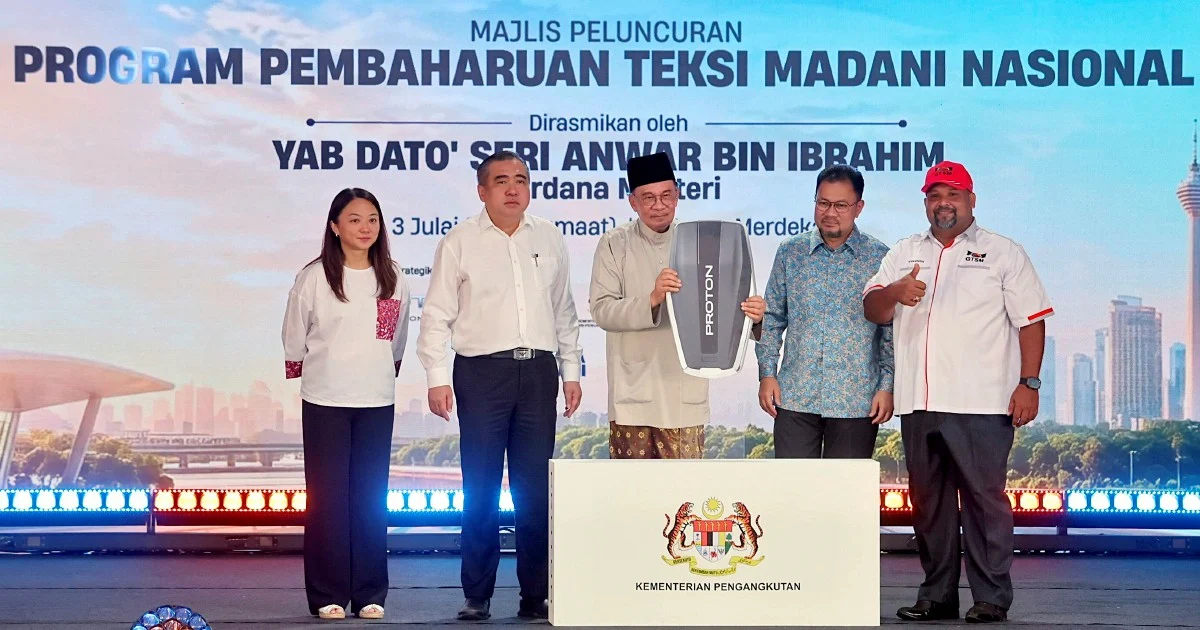
Prime Minister Datuk Seri Anwar Ibrahim has announced that the government is injecting an additional RM10 million into a matching grant programme aimed at helping taxi operators replace their ageing vehicle fleets. The financial commitment represents a concerted effort by the administration to modernise Malaysia's taxi transportation sector, which has long struggled with the operational and safety challenges posed by increasingly elderly vehicles on the road.
The matching grant scheme is structured to provide government support that complements contributions from taxi operators themselves, creating a shared-investment model intended to make vehicle replacement more financially accessible for individual drivers and small operators. By requiring operators to contribute their own resources alongside government funding, the programme aims to ensure genuine commitment to upgrading while distributing the financial burden more equitably between the public and private sectors.
The taxi industry in Malaysia has faced mounting pressure to modernise ageing fleets that often exceed fifteen to twenty years of operational use. These vehicles frequently require expensive maintenance, consume more fuel, and emit higher pollution levels compared to newer models. The programme directly addresses concerns raised by industry stakeholders regarding the technical and financial viability of replacing vehicles without substantial government intervention.
The RM10 million allocation follows ongoing discussions between the government and taxi associations regarding the challenges faced by individual drivers and small fleet operators who lack the capital resources to purchase new vehicles outright. Many taxi operators have expressed concerns that without government support, they would be unable to comply with potential stricter vehicle age regulations or environmental standards that may be introduced in the coming years.
For Malaysian passengers, the initiative carries implications beyond mere vehicle aesthetics. Newer taxis typically feature improved air-conditioning systems, more reliable safety features including modern braking technology, and generally enhance the user experience for both comfort and security. The programme thus serves the dual purpose of supporting the livelihoods of taxi workers while incrementally improving service quality for the commuting public.
The scheme also aligns with Malaysia's broader sustainability objectives and its commitments under various environmental frameworks. Ageing vehicles contribute disproportionately to urban air pollution and greenhouse gas emissions, and systematic fleet renewal represents a pragmatic approach to reducing the transport sector's environmental footprint without imposing sudden, economically destructive regulations on operators already operating on thin margins.
Regionally, Malaysia's experience with subsidised vehicle replacement programmes may offer lessons for other Southeast Asian nations grappling with similar challenges in their own taxi and public transport sectors. Countries like Indonesia, Thailand, and the Philippines operate vast informal and formal taxi networks facing comparable modernisation pressures and cost barriers.
The matching grant approach employed here represents a middle path between complete government subsidy and leaving operators to navigate market forces alone. It requires transparency in vehicle selection, pricing, and ownership registration to prevent misuse of funds or fraudulent claims. Implementation details regarding eligibility criteria, the percentage of government matching contribution, and application procedures will be critical to determining the scheme's effectiveness and uptake among the target beneficiary population.
For Malaysia's broader economic outlook, supporting the taxi industry carries significance beyond transportation policy. Hundreds of thousands of Malaysians depend directly or indirectly on taxi operations for their livelihoods, and maintaining the industry's viability helps preserve employment and economic participation among urban workers. The RM10 million commitment, while modest in absolute terms, signals government recognition of these concerns and willingness to provide targeted support.
The timing of this announcement reflects an administration attempting to balance multiple policy priorities simultaneously. While managing broader economic challenges and fiscal constraints, the government continues to direct resources toward supporting specific sectors and worker groups affected by structural economic changes. The taxi industry represents one such constituency that has felt margin compression from ride-sharing competitors, fuel price fluctuations, and rising vehicle operating costs.
Operators and industry associations will likely scrutinise the detailed implementation framework for this scheme closely. Questions regarding loan administration, interest rates for any credit components, vehicle specification requirements, and the timeline for disbursement will determine whether the allocation achieves its intended impact of meaningfully accelerating fleet modernisation. The scheme's success may also influence government thinking on similar support mechanisms for other transport sectors facing comparable challenges.
Moving forward, this programme should be monitored for lessons that might inform future policy interventions in Malaysia's transport and infrastructure sectors. Whether the RM10 million proves sufficient to catalyse meaningful fleet renewal, how equitably the benefits distribute across different operator categories and geographic regions, and whether the scheme spawns positive economic multiplier effects through the automotive supply chain will all merit evaluation as the programme matures.

