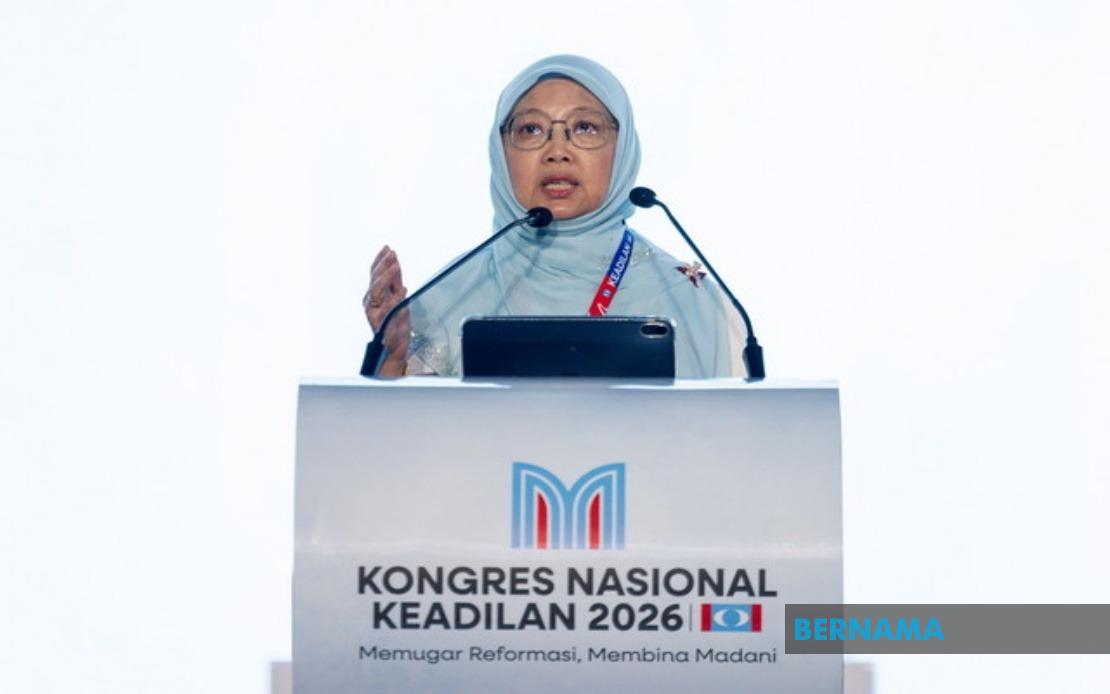
The entrance to government is not a victory lap for Malaysia's reformasi movement—it is the moment when political rhetoric collides with the complex machinery of state. This was the sobering message delivered by PKR vice president Datuk Seri Dr Zaliha Mustafa during her closing address at the party's 2026 National Congress in Melaka, a reminder that ideological commitment and administrative competence are not the same thing. For a party that has spent nearly three decades in opposition articulating visions of systemic change, the shift from advocate to implementer demands a fundamental recalibration of strategy and expectations.
Zaliha's framing of governance as a test rather than a prize reflects a tension that has long simmered within reform-minded political movements across Southeast Asia. The 27-year struggle that brought PKR to share power was animated by a compelling narrative: the current system is broken, the institutions are captured, and change is both necessary and inevitable. Yet once that movement achieves electoral success and enters government, the nature of the challenge transforms entirely. The easy part—defining what is wrong—gives way to the infinitely harder task of reorganising state apparatus, managing competing interests, and delivering tangible outcomes within constitutional and financial constraints.
The PKR vice president emphasised that the party's core mission cannot be reduced to a simple transfer of personnel from opposition benches to ministerial offices. That reframing is crucial for understanding contemporary Malaysian politics, where voters have grown sceptical of claims that merely replacing one set of leaders with another will cure systemic ailments. Zaliha argued that true reformasi demands a wholesale reconceptualisation of how the country is administered—a distinction that resonates particularly with urban, educated constituencies that have increasingly voted on the basis of institutional performance rather than factional loyalty. The implication is that PKR must now prove it can design and execute policies that genuinely alter power relationships and resource distribution, not merely shuffle the beneficiaries of existing structures.
Central to this agenda are several interconnected institutional challenges. Strengthening the independence and capacity of public institutions requires sustained political will and technical expertise; combating systemic corruption demands mechanisms that work against the short-term interests of those in power; and ensuring equitable access to justice necessitates reform of the legal system, law enforcement, and bureaucratic procedures. These are not tasks that yield to rhetoric or symbolic gestures. They require legislative drafting, resource allocation, training of personnel, and—critically—the willingness of the governing coalition to constrain its own authority in service of abstract principles. For a coalition that includes partners with varying reform commitments, this creates obvious friction points.
Zaliha acknowledged that PKR members themselves must be willing to hold their own leadership to account, a principle that remains more honoured in the breach than in practice within Malaysian political culture. The suggestion that the party might publicly critique and correct its own ministerial appointees represents an aspirational standard that few parties have successfully maintained over time. Yet without some mechanism for internal accountability and course correction, the distinction between reformasi and mere factional rotation collapses entirely. This speaks to a deeper question about whether reform-oriented parties can build organisational cultures genuinely committed to scrutiny and transparency, or whether such commitments inevitably dissolve once office brings patronage resources and personal stakes.
The question of pacing reform deserves particular attention in the Malaysian context. Zaliha invoked Khalifah Umar Abdul Aziz, a historical figure venerated in Islamic political thought for his early reforms, to argue that meaningful change need not be instantaneous. This reflects a sober acknowledgment that wholesale institutional transformation often destabilises societies and generates fierce elite resistance. Yet the argument for gradualism also conceals genuine dilemmas. Some constituencies within PKR's support base have grown impatient with incremental approaches; others worry that delayed reform simply allows entrenched interests to regroup and reassert control. The balance between strategic patience and the risk of indefinite postponement remains contentious.
Zaliha's insistence on the party improving its communications strategy exposes another dimension of the governance challenge. Political movements have historically succeeded or failed partly on their ability to shape public understanding of their achievements. In Malaysia's current media environment, where social media platforms fragment audiences and opposition voices maintain considerable reach, the task of establishing narratives around government performance has become far more complex. The PKR vice president's observation that policies do not automatically translate into public comprehension or support suggests the party recognises that technical competence, divorced from effective communication, may yield invisible victories—reforms that occur but fail to shift public perception.
The emphasis on controlling digital narrative space is particularly significant for a ruling coalition facing both a resurgent opposition and increasingly sophisticated disinformation campaigns. PKR's 2026 congress occurred in a period of polarised political competition where the framework for understanding government action is fiercely contested. The party's apparent lack of narrative dominance in online spaces suggests vulnerabilities that could undermine public confidence in its reform agenda, regardless of actual policy outcomes. This invokes a broader Malaysian political reality: that elections are increasingly won and lost on the terrain of information and perception management, not merely on substantive policy differences.
The challenge of translating electoral victory into durable institutional change ultimately tests whether PKR can sustain the disciplined, patient, technically competent governance that genuine reformasi requires. Zaliha's speech suggested awareness of this heightened burden, but awareness and capacity are not equivalent. The party must navigate tensions between its ideological base, pragmatic coalition partners, sceptical bureaucratic structures, and an electorate that has grown cynical about reform promises. For Malaysian voters and the broader Southeast Asian region watching how a reform-oriented coalition manages the transition from advocacy to governance, the next several years will provide important evidence about whether political movements can successfully translate aspirational change agendas into institutional reality—or whether such movements, once empowered, reproduce the patterns they initially opposed.

