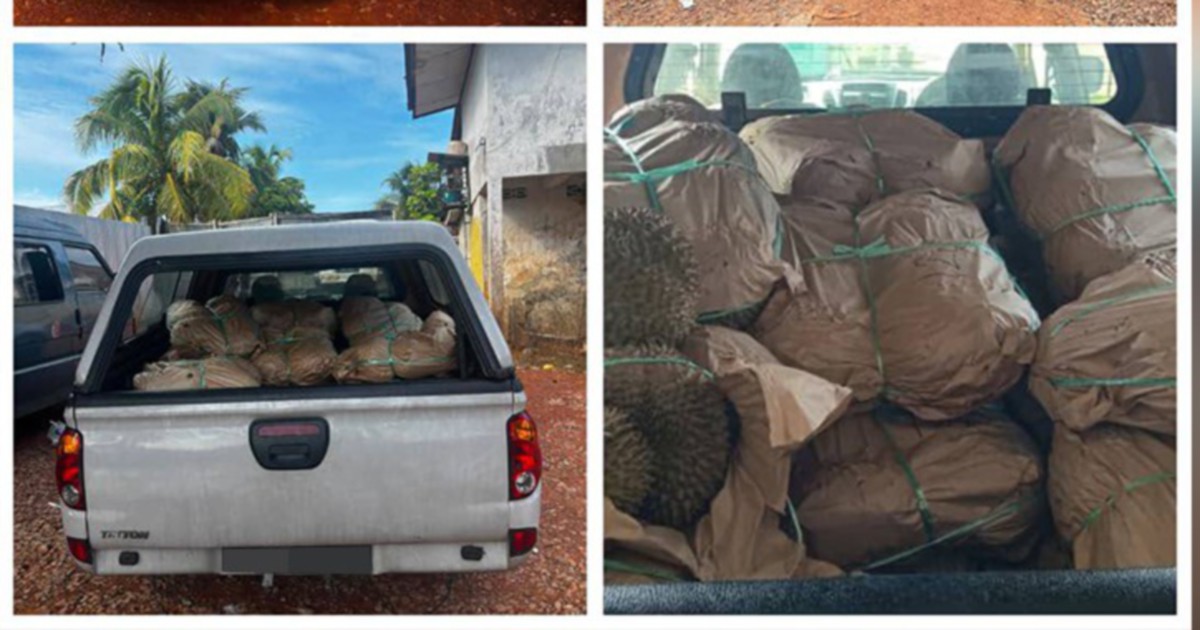
The General Operations Force (GOF) has intensified its border security operations along Malaysia's eastern frontier, resulting in the arrest of a 20-year-old driver and the confiscation of a substantial durian smuggling haul at Rantau Panjang yesterday. The seizure, which included 350 kilogrammes of the prized fruit and a four-wheel-drive vehicle valued at more than RM50,000, underscores the ongoing challenge authorities face in combating cross-border contraband activities in the region.
The operation targeted the Abe Li Posmen illegal jetty, a known smuggling point where illicit goods frequently change hands between neighbouring countries. The GOF's intervention at this location reflects heightened vigilance against the movement of undocumented cargo through informal border crossings, which have become increasingly problematic for customs and excise authorities seeking to protect domestic industries and government revenue.
Durian trafficking represents a persistent headache for enforcement agencies across Southeast Asia, driven by the fruit's exceptional market value and the substantial price differential between Malaysia and neighbouring nations. Smugglers exploit these disparities to circumvent official channels, depriving the government of customs duties and excise taxes while potentially compromising food safety standards. The confiscated cargo in this instance would have generated considerable profit for smuggling networks operating across the porous maritime borders.
The suspect's age—at just 20 years old—highlights a troubling pattern whereby criminal syndicates recruit younger individuals to conduct front-line smuggling operations, thereby insulating senior organisers from direct legal exposure. This recruitment strategy has become increasingly common in Southeast Asian smuggling rings, which leverage socioeconomic vulnerabilities and personal circumstances to enlist drivers and couriers willing to assume the substantial criminal risks involved.
Rantau Panjang, located in Kelantan, sits strategically along Malaysia's northeastern border region where maritime traffic presents unique surveillance challenges. The Abe Li Posmen jetty's classification as an illegal landing point indicates that it operates entirely outside official customs and immigration frameworks, making it an attractive staging ground for smuggling syndicates. Authorities have repeatedly targeted such locations, yet their continued operation suggests that demand for illicit cross-border trade remains robust.
The vehicle's seizure alongside the durian cargo signals that enforcement operations are now targeting the transportation infrastructure supporting smuggling networks, an approach designed to disrupt entire logistical chains rather than merely apprehending individual couriers. By confiscating the four-wheel-drive, authorities impose genuine financial consequences on the criminal enterprises financing these operations, potentially making future ventures less economically viable.
From a revenue perspective, duty evasion through agricultural smuggling represents a significant drain on government finances. Durians command premium prices in international markets, and when substantial quantities bypass official export channels, the state loses not only tariffs but also tax revenue from legitimate commercial transactions. The RM50,000 valuation places this single seizure within a material range, though authorities acknowledge that this represents merely one intercept among countless daily smuggling attempts across the country's extensive maritime borders.
The arrest and seizure also reflect broader concerns about organised crime networks operating across the Thailand-Malaysia border region. These organisations typically employ sophisticated coordination mechanisms, pre-arranged logistics, and financial systems that make individual prosecutions insufficient deterrents. The GOF's continued enforcement presence attempts to raise operational costs and risks, though success requires sustained investment in border surveillance infrastructure and intelligence-sharing mechanisms with neighbouring countries.
For Malaysian consumers and legitimate durian traders, these enforcement actions theoretically protect market integrity and ensure that domestically-sourced fruit commands appropriate pricing based on quality and provenance rather than illicit imports undercutting legitimate supply chains. However, the persistence of smuggling suggests that informal demand for cheaper durians continues to outpace official supply, creating ongoing commercial incentives for criminal activity that enforcement agencies struggle to fully suppress.
The incident serves as a reminder that cross-border smuggling extends far beyond high-profile narcotics operations into seemingly mundane agricultural commodities. However, the cumulative impact of such activities—lost government revenue, compromised food safety oversight, and funding for organised crime networks—makes agricultural contraband a priority for law enforcement planning. The GOF's continued operations at locations like Abe Li Posmen indicate that authorities recognise these threats and are allocating resources accordingly, though the ongoing prevalence of smuggling suggests that challenges persist.

