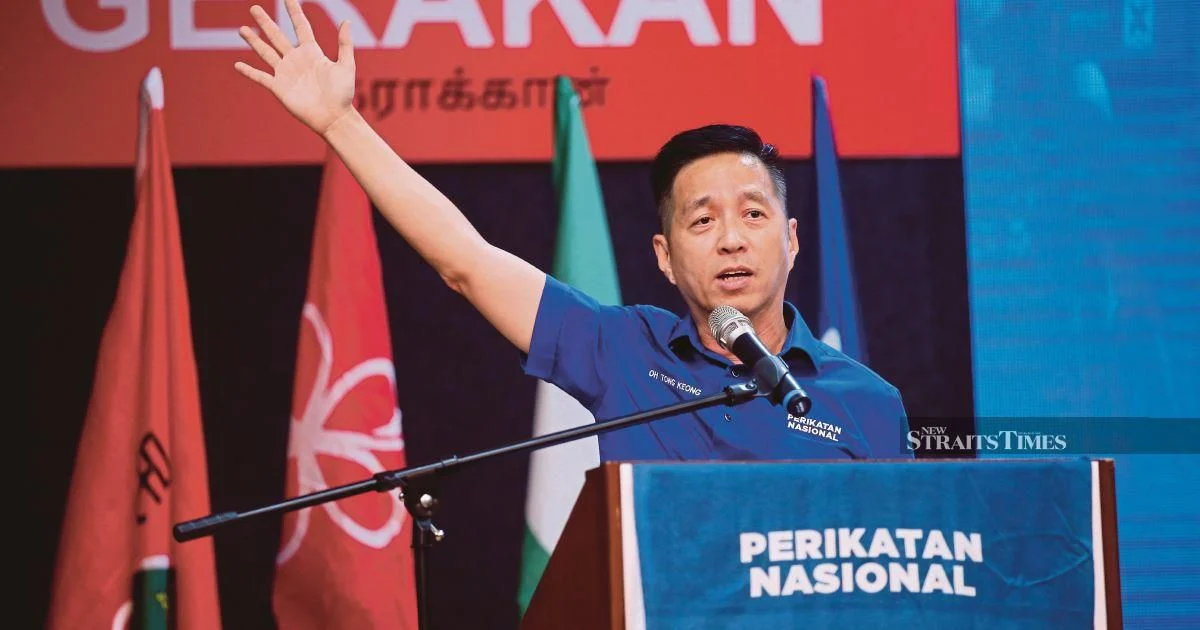
Gerakan has made a strategic decision to step away from direct competition in the Johor state election, redirecting its resources toward bolstering component parties aligned with the Perikatan Nasional coalition. Party election director Oh Tong Keong announced the move, marking a significant tactical shift for the long-established Malaysian political party.
The decision reflects evolving coalition dynamics in Malaysian state politics, where parties increasingly recognise the value of consolidating influence through allied organisations rather than pursuing independent electoral campaigns. By withdrawing from Johor's competitive landscape, Gerakan signals its commitment to the broader PN agenda while potentially securing more favourable positioning for future negotiations within the coalition structure.
Johor has emerged as a politically contested territory in recent Malaysian electoral cycles, with multiple coalitions vying for influence in the economically significant state. The withdrawal of Gerakan represents a recalibration of forces as PN component parties, likely including groups such as UMNO and PAS, position themselves for maximum electoral impact. Gerakan's choice to step back rather than dilute PN support across multiple parties underscores pragmatic coalition management during critical electoral periods.
This move carries implications for smaller political organisations seeking to maintain relevance within larger coalition frameworks. Gerakan, which has deep historical roots in Malaysian politics dating back to the country's early independence era, must constantly balance its legacy standing against the realities of contemporary coalition politics. By focusing on supporting rather than competing, the party acknowledges the competitive pressures facing non-dominant coalition members in state-level contests.
The Johor electoral environment presents particular challenges given the state's significance as an economic powerhouse and its substantial parliamentary representation. Major coalitions view Johor as essential territory, making it difficult for smaller parties to carve out meaningful support bases without fragmenting wider coalition efforts. Gerakan's withdrawal streamlines PN's electoral machinery by preventing inter-coalition vote splitting and concentrating anti-opposition sentiment behind primary candidates.
Regionally, this development matters for Southeast Asian politics observers tracking Malaysian coalition stability. Johor's election outcomes have historically influenced national political trajectories, and maintaining coalition cohesion during contests is essential for government stability. Gerakan's cooperative approach demonstrates how coalition partners navigate electoral mathematics, even when such decisions require stepping back from direct political competition.
The party's strategic recalibration also provides insight into how established political organisations adapt to shifting voter preferences and demographic changes. Rather than doubling down on traditional bases, Gerakan recognises that supporting coalition partners through non-electoral channels may yield greater influence over policy directions and cabinet positioning than pursuing scattered victories across multiple constituencies.
For Malaysian voters in Johor, the withdrawal may simplify the electoral choice by reducing the number of competing parties and clarifying coalition boundaries. This consolidation can make campaign messaging clearer and potentially increase turnout among coalition supporters who understand the stakes of united opposition to anti-government forces.
Oh Tong Keong's public announcement signals Gerakan's acceptance of a supporting role within PN structures during this electoral cycle. Such transparency about strategic decisions helps manage internal party expectations and demonstrates leadership commitment to coalition discipline—factors that strengthen broader political alliances facing coordinated opposition campaigns.
The implications extend beyond Johor's immediate boundaries. If Gerakan's approach succeeds in delivering PN electoral success while maintaining party unity, the model may influence future state election strategies across Malaysia. Other coalition partners facing similar competitive pressures might adopt comparable withdrawal strategies, further consolidating power within major political blocs.
From a governance perspective, Gerakan's decision reflects lessons learned from earlier electoral cycles where fragmented coalition efforts produced suboptimal results. By concentrating support behind PN's primary candidates, the party contributes to more efficient resource allocation and focused campaign messaging that resonates more effectively with voters than dispersed multi-party efforts.
The withdrawal also offers Gerakan opportunities to strengthen its position within PN decision-making structures. Supporting partners during critical contests builds political capital that parties can leverage when negotiating ministerial portfolios, policy priorities, and committee assignments. This transactional dimension of coalition politics often proves more valuable to medium-sized parties than direct electoral representation.
Looking forward, this decision may prompt other regional parties across Malaysia to reconsider their electoral strategies. As political competition intensifies and voter preferences become more polarised along coalition lines, parties may increasingly recognise that strategic withdrawal and consolidation offer viable paths to maintaining influence and relevance in Malaysia's complex political landscape.

