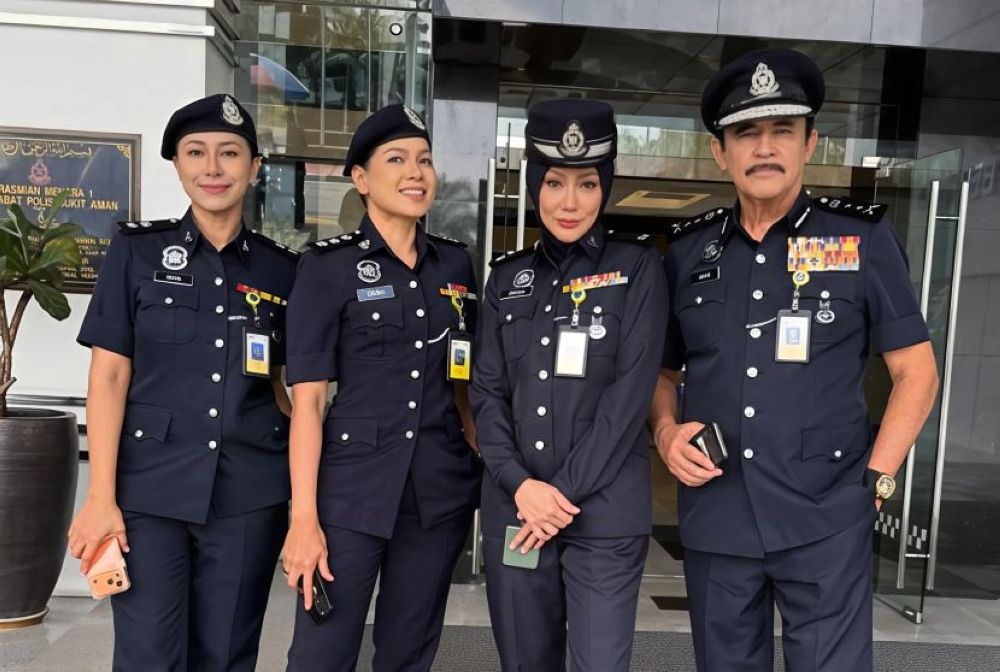
Gerak Khas 2.0 will proceed without one of its cast members after producer Datuk Yusof Haslam made the decisive move to remove an actress from the 26-episode drama in the wake of her July arrest on drug-related charges. The decision came just days after the series premiered, marking a significant disruption to what was otherwise a nearly completed production. Haslam confirmed that approximately 90 percent of filming had already wrapped, leaving only a fortnight of principal photography ahead when the actress's legal troubles surfaced.
The actress in question was detained during a police raid conducted by officers from the Dang Wangi district headquarters on July 7. Following her arrest, she tested positive for three distinct drug types, a result that immediately triggered a reassessment of her involvement in the project. The production company acted swiftly to protect what it considered the integrity of both the drama and its institutional partner, the Royal Malaysia Police.
What made Haslam's decision particularly striking was the relatively modest scope of the cutbacks required. The actress still featured in scenes scheduled for episodes 23 and 24 of the 26-episode run, meaning the production team needed to excise only her final appearances from the completed footage. For a drama already in its final production stages, removing those scattered sequences proved far less disruptive than it might have been had the arrest occurred earlier in the shoot. Nevertheless, the symbolic weight of the action remained significant—a public, unmistakable statement about accountability within the entertainment industry.
Haslam's public stance reflected little sympathy for the circumstances surrounding the arrest or any subsequent pleas from the actress. He firmly rejected entreaties or explanations, conveying a message of finality to the performer. "There's no need to beg or come up with all sorts of excuses," he stated bluntly, adding that he had informed her directly: "it's too late." This uncompromising position underscored a philosophy about consequences and professional standing that extended beyond the individual to encompass broader lessons for the entire production ecosystem.
The producer's rationale centred on a straightforward principle: once reputational damage occurs through personal misconduct, redemption becomes difficult regardless of prior contributions or professional accomplishments. "Take this as a lesson in life," Haslam reflected. "Once you make a mistake, people will forget all the good things you've done before." This observation carried particular weight in Malaysia's media landscape, where public figures face intense scrutiny and where associations with criminal activity can irreversibly alter public perception.
Haslam revealed that he had previously warned the actress on two separate occasions about the necessity of maintaining discipline and avoiding activities that could compromise the drama's reputation or the image of the PDRM. These prior admonitions suggest that the production team had identified behavioural risks before the arrest, adding another layer to the decision to remove her entirely. Despite those explicit warnings, circumstances spiralled into territory the producer deemed incompatible with continued involvement in the project.
The removal of this cast member also served as a cautionary statement directed at the broader ensemble and crew. Haslam underscored that he had consistently stressed the importance of ethical conduct throughout the production process, emphasising that involvement in nightlife venues or other activities potentially damaging to the show's institutional partnerships remained strictly out of bounds. He acknowledged, however, the inherent limitations of such oversight, drawing a parallel to parenting: even vigilant supervision cannot guarantee that individuals will make responsible choices when beyond direct observation.
The cast of Gerak Khas 2.0 remains substantial and accomplished, featuring established figures including Hans Isaac, Erra Fazira, C. Kumaresan and Salina Saibi. The drama involved multiple actresses portraying police inspectors throughout its narrative, including Tisha Shamsir, Nabiha Aimi and Emily Elizabeth. The removal of one performer, while significant, did not fundamentally compromise the ensemble structure that drives the storyline.
For Malaysian viewers, the episode illuminates recurring tensions within the domestic entertainment sector regarding the intersection of professional accountability and personal conduct. Unlike international film and television industries, where continuations and reboots routinely involve complex negotiations around creative control and institutional reputation, Malaysian productions often operate within more constrained frameworks where associations with law enforcement and public perception prove especially consequential. A drama explicitly tied to the PDRM occupies particularly sensitive terrain.
The incident also reflects evolving standards around substance-related misconduct in Malaysia's media sphere. While entertainment figures have previously weathered scandals through public apologies, rehabilitation narratives, or strategic media management, Haslam's approach suggested a hardening of industry attitudes. The refusal to consider any form of professional redemption arc—even as production remained flexible enough to accommodate technical cuts—signals that certain transgressions now trigger reflexive exclusion rather than rehabilitation pathways.
Looking forward, Gerak Khas 2.0 will reach audiences in its edited form, with the actress's final scenes removed in post-production. The drama's narrative and dramatic coherence will likely survive the excision, given that principal photography was already substantially complete. What remains uncertain is whether audiences will perceive narrative gaps in the final broadcast, or whether editorial adjustments will render the removal invisible to viewers unaware of the backstory. Either way, the production serves as a contemporary case study in how Malaysian producers navigate institutional partnerships, public expectations, and the messy realities of professional entertainment.
Haslam's handling of the situation reflected a producer exercising considerable power over a performer's career trajectory, with little recourse available to the affected party once the decision had been made. Whether this approach achieves its apparent objectives—protecting institutional reputation, delivering a lesson to industry participants, and satisfying public expectations around accountability—will ultimately depend on audience reception and broader industry responses to the precedent it establishes.

