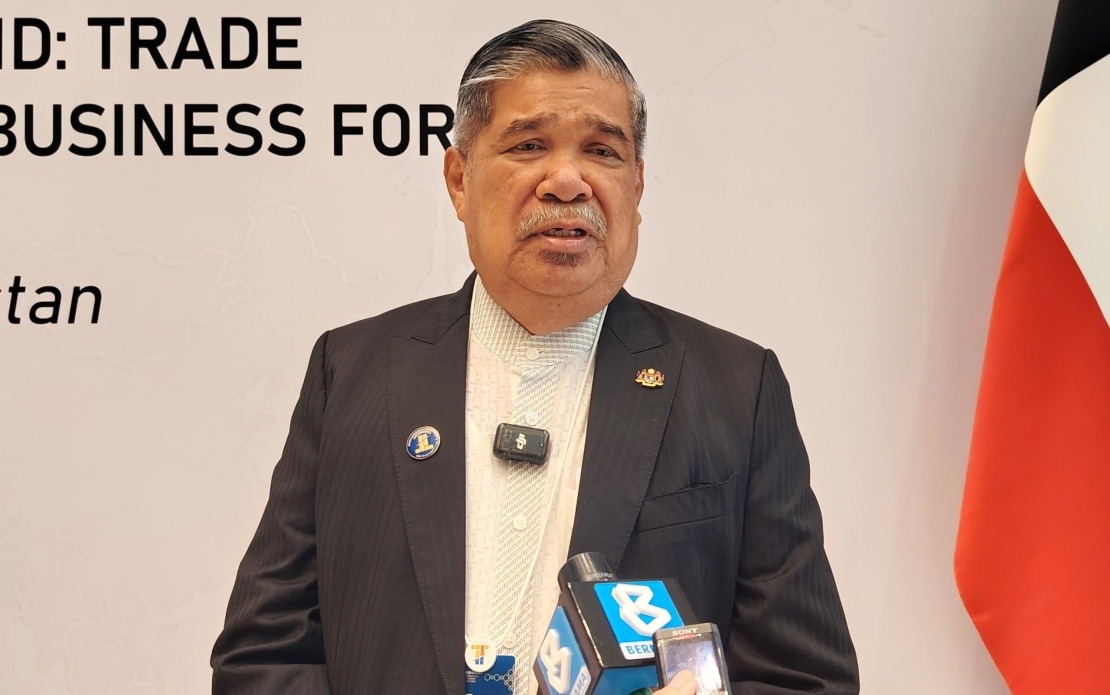
Mounting tensions across the globe, particularly the Middle East conflict combined with severe weather patterns, have thrust food security to the forefront of Malaysia's strategic agenda, according to Agriculture and Food Security Minister Datuk Seri Mohamad Sabu. Speaking at the launch of Labuan's Road to MAHA 2026 programme in the federal territory on July 25, Mohamad stressed that the nation can no longer treat food self-sufficiency as a peripheral concern. Instead, he framed it as a foundational element of national resilience in an increasingly unstable world where military conflicts, climatic disruptions and logistical breakdowns pose direct threats to the availability of staple foods and essential provisions.
The minister's remarks reflect a sobering assessment of how rapidly global shocks translate into domestic vulnerabilities. Wars, extreme weather events stemming from phenomena like El Niño, and fractures in international supply networks have demonstrated repeatedly that distant events can swiftly disrupt a nation's access to affordable, reliable food. For Malaysia, which imports significant quantities of agricultural products and raw materials, the lesson is particularly acute. The government's response has been to elevate food security from a secondary economic concern to a matter of national survival, warranting policy attention comparable to defence or energy independence.
The Malaysia Agriculture, Horticulture and Agrotourism Exhibition (MAHA) 2026, scheduled for August 28 to September 6 at the Malaysia Agro Exposition Park Serdang (MAEPS), will serve as a flagship platform for this recalibrated approach. The event carries the thematic banner 'Value Creation for Food Security' and will centre on technological modernisation as the pathway forward. Rather than relying on traditional farming methods alone, the exhibition aims to showcase cutting-edge innovations including automation systems, robotic harvesting equipment, Internet of Things (IoT) sensors and artificial intelligence applications. These technologies, deployed across the agricultural value chain, promise to boost productivity per hectare, reduce waste, improve crop yields and ultimately strengthen the nation's capacity to feed itself despite external pressures.
Labuan presents a microcosm of Malaysia's broader food security challenge. The federal territory, while strategically significant, remains heavily reliant on external sources for sustenance. Approximately 90 per cent of Labuan's food supply originates from Sabah, while local production contributes a mere 10 per cent to total consumption. This asymmetric dependency became acutely visible during the COVID-19 pandemic, when lockdowns and border restrictions exposed the fragility of supply chains stretching across state lines. The disruptions revealed weaknesses not only in logistics but in the island's underlying agricultural infrastructure and local capacity for production. In response, the government formulated the Labuan Food Security Strategic Plan 2026-2030, a targeted intervention designed to reverse this dependency through expanded local cultivation, streamlined distribution networks and the adoption of modern farming technologies tailored to the territory's specific environmental and spatial constraints.
The nationwide Road to MAHA 2026 series functions as an awareness-raising and mobilisation campaign preceding the main exhibition. By conducting a series of events across Malaysia, the Ministry of Agriculture and Food Security, in partnership with the Federal Territories Department, seeks to generate public enthusiasm and participation in advance of the August-September showcase. These preparatory activities also serve to engage stakeholders across the agri-food ecosystem, from producers and processors to retailers and consumers, fostering a shared understanding of the transformation underway. The culminating exhibition itself is projected to draw four million visitors and generate RM58 million in direct sales, underscoring the scale of opportunity within Malaysia's agricultural sector when properly mobilised and promoted.
A critical element of the government's food security strategy involves attracting a new cohort of entrepreneurs to agricultural pursuits. Mohamad explicitly called for young Malaysians to consider careers in farming and agribusiness, acknowledging that the sector has traditionally struggled to appeal to graduates and school-leavers in an economy offering alternative white-collar pathways. However, the convergence of technological advancement, rising global food prices, and genuine business opportunity within agriculture has begun reshaping perceptions. The term 'agropreneurs' encapsulates this vision of agriculture as a dynamic, innovation-driven sector capable of generating substantial income and contributing meaningfully to national development. By cultivating interest among younger generations, the government hopes to inject fresh talent, novel business models and technological enthusiasm into an industry that will remain foundational to Malaysia's prosperity and security regardless of broader economic transformations.
The government's commitment to food security persists despite formidable headwinds. Global economic uncertainty, energy price volatility and mounting climate-related hazards all threaten agricultural viability and affordability. Yet Malaysian policymakers have signalled that these very pressures necessitate, rather than defer, decisive action on food self-sufficiency. The integration of modern technology into farming represents one lever; diversification of supply sources and production locations represents another. Investment in rural infrastructure, research into climate-resilient crop varieties and capacity-building among farmers constitute additional elements of a multifaceted approach.
For Malaysia and the broader Southeast Asian region, the implications extend beyond domestic borders. As a prosperous developing economy with significant trade exposure, Malaysia's food security decisions influence regional supply dynamics and may set precedents for neighbouring countries facing similar vulnerabilities. A Malaysian success in leveraging technology and strategic investment to enhance agricultural productivity could offer lessons for regional peers. Conversely, shortfalls in local production would intensify competition for globally scarce food resources, potentially driving prices upward across Southeast Asia and deepening food insecurity in less affluent populations.
The framing of food security as non-negotiable strategic priority rather than discretionary policy choice signals a maturation in Malaysian governance thinking. It acknowledges that prosperity and stability ultimately rest on fundamentals—the capacity to feed a population reliably and affordably. While technology, investment and institutional reform can strengthen this foundation, the underlying principle is straightforward: a nation dependent on others for its daily bread surrenders a portion of its autonomy. By prioritising food security now, Malaysia is constructing resilience against future shocks that cannot yet be foreseen but whose inevitability is virtually certain.

