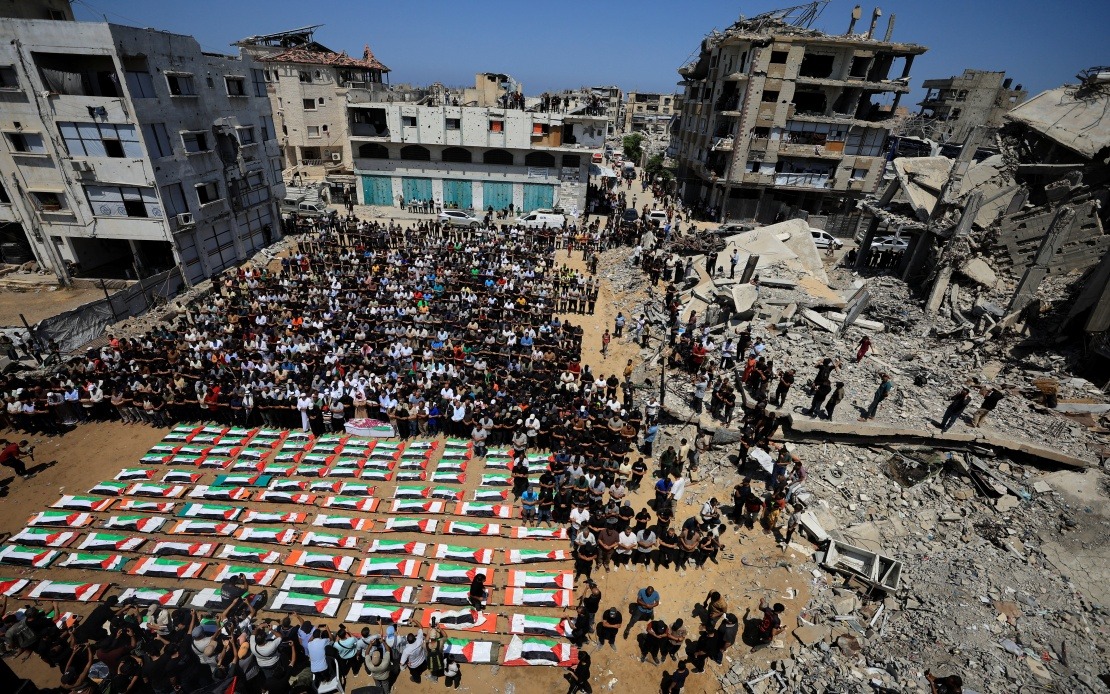
The protracted negotiations over Gaza's second-phase ceasefire have become a source of anguish for ordinary Palestinians whose survival and future depend on its success. Saeed Helles, a 55-year-old father of five, exemplifies the desperation many face as he watches his 13-year-old daughter Saja battle cancer while stuck in a Gaza City hospital. For weeks, he monitored the diplomatic developments with cautious optimism, believing that Hamas's acceptance of the mediators' proposal would finally unlock the path to peace and allow his daughter to reach Egypt for life-saving treatment. That fragile hope has repeatedly crumbled as conflicting statements from negotiating parties have cast doubt on whether the second phase will actually be implemented, leaving medical cases like Saja's in limbo.
The emotional toll of this uncertainty weighs heavily on families throughout Gaza. When Helles heard that progress was being made, he immediately began preparing his daughter's travel documents, allowing himself to believe that the ordeal might soon end. Yet each new development in the negotiations brings fresh complications and delays. As he pointed out, his daughter's medical condition cannot pause while diplomats haggle over implementation details—each passing day diminishes her chances of recovery. The pattern has become cruelly familiar: moments of relief are quickly followed by crushing disappointment, leaving families caught in a psychological limbo where hope and heartbreak alternate with punishing regularity.
The broader humanitarian crisis affecting Gaza's medical system underscores the urgency behind these stalled negotiations. According to Mohammed Abu Nada, medical director of the Gaza Cancer Centre, approximately 11,000 cancer patients are currently experiencing severe shortages of essential medicines. Among these, around 4,000 patients who have been medically referred for treatment outside Gaza remain trapped within its borders due to ongoing restrictions at the crossing points. The human cost of this blockade is staggering: Abu Nada warned that roughly three cancer patients die daily due to inadequate treatment availability. Any further delays in reopening border crossings would catastrophically deepen an already critical humanitarian emergency, potentially claiming thousands of additional lives that otherwise might have been saved with timely intervention.
The disagreements between Israel and Hamas over the implementation roadmap have become a central sticking point in the negotiations. Following a meeting between Nickolay Mladenov, described as a high representative for Gaza, and Israeli Prime Minister Benjamin Netanyahu, Israeli officials stated that their forces would withdraw beyond the so-called Yellow Line only after weapons decommissioning was fully completed, including the dismantling of light and heavy weaponry plus underground tunnel networks. Hamas, conversely, has insisted that progress on second-phase discussions—particularly those concerning heavy weapons—depends on Israel first halting its military operations, fully implementing the first phase of the agreement, and withdrawing completely from Gaza. This fundamental disagreement over sequencing has created a diplomatic deadlock that threatens to extend the suffering of millions.
The plight of displaced Palestinians extends beyond medical emergencies to encompass the broader trauma of losing homes and livelihoods. Mariam Qudaih, a 46-year-old mother of four displaced from eastern Khan Younis in southern Gaza, represents the hundreds of thousands who view the second phase not as an abstract political negotiation but as their only realistic path to homecoming. Although her residence has been reduced to rubble, she nonetheless clung to the dream of returning to stand amid the ruins and beginning to rebuild. She had reassured her children that they would soon be able to see their home again, allowing them to fantasize about going back. The recent stalling of negotiations has shattered this fragile optimism, returning her and her family to a state of despair reminiscent of earlier stages of conflict.
The repetitive cycle of negotiating breakthroughs followed by new complications has created a profound psychological burden for displaced families. Each time news emerged suggesting that diplomatic progress was being made, Qudaih allowed herself to believe that her family's return was drawing nearer. Yet predictably, new developments would emerge, pushing hopes back to the starting point and reminding her and countless others that the road to peace and return remained extraordinarily long. For children who have known only displacement and loss, this emotional rollercoaster compounds their already severe trauma. They grow accustomed to false promises and dashed expectations, learning harsh lessons about the fragility of hope when political negotiations drag across months without resolution.
Political analysts observing developments in Gaza have identified troubling implications in the current negotiating framework. Mustafa Ibrahim, a Gaza-based political commentator, emphasized that the latest developments have intensified Palestinian disappointment and frustration, particularly given that military operations continue to unfold simultaneously with diplomatic engagement. More concerning, the explicit linkage that Israel has drawn between its military withdrawal and the completion of disarmament processes raises fundamental questions about whether the mediators' proposed roadmap can actually be implemented as envisioned. Ibrahim argued that by conditioning its withdrawal on verification of weapons decommissioning, Israel has effectively granted itself greater leverage over when and how the second phase actually begins. This asymmetry of power in the negotiating framework threatens to extend Israeli military presence far longer than Palestinians find acceptable.
The regional implications of Gaza's stalled ceasefire negotiations deserve attention from Southeast Asian policymakers and observers. Prolonged conflict in Palestine continues to generate profound resentment across the Muslim world, including throughout Southeast Asia where significant Muslim populations exist in countries like Malaysia, Indonesia, and other ASEAN members. Unresolved humanitarian crises in Gaza have historically motivated political pressure on governments to take principled stances on Palestinian issues, occasionally creating diplomatic complications for countries seeking to maintain balanced international relationships. The failure to achieve durable peace and resolve the second phase also risks allowing hardline voices in both Israeli and Palestinian politics to gain influence, potentially triggering new cycles of escalation that could destabilize the broader Middle Eastern region.
The intersection of medical crisis and political uncertainty in Gaza reveals how warfare's consequences extend far beyond the battlefield into the intimate domains of family life and personal survival. Thousands of cancer patients, children requiring specialized surgeries, and chronically ill individuals who depend on medications unavailable in Gaza represent not merely statistics but individual human beings whose deaths could be prevented through implementation of agreed ceasefire provisions. The continuation of border closures despite supposed ceasefire agreements exposes a fundamental gap between diplomatic language and on-the-ground reality. Negotiators in comfortable settings can afford to debate sequencing and verification procedures, but for Saeed Helles watching his daughter deteriorate, such abstract discussions are unbearable obstacles to her survival.
The prospects for resolving the second-phase negotiations remain deeply uncertain as of now. Both Hamas and Israeli negotiators have indicated willingness to continue discussions, yet the fundamental disagreements over sequencing and implementation timelines persist. International mediators, including those representing various governmental and quasi-governmental entities, continue attempting to bridge these gaps, but their leverage appears limited when both parties hold incompatible views about how the agreement should unfold. The window for medical interventions for patients like Saja Helles continues narrowing with each passing day, creating an urgent ticking clock that political negotiations seem unable to match. Palestinian families and medical professionals increasingly recognize that the second phase, rather than representing the beginning of genuine peace and recovery, may instead mark merely another extended phase of disappointment and suffering if current stalemates persist.

