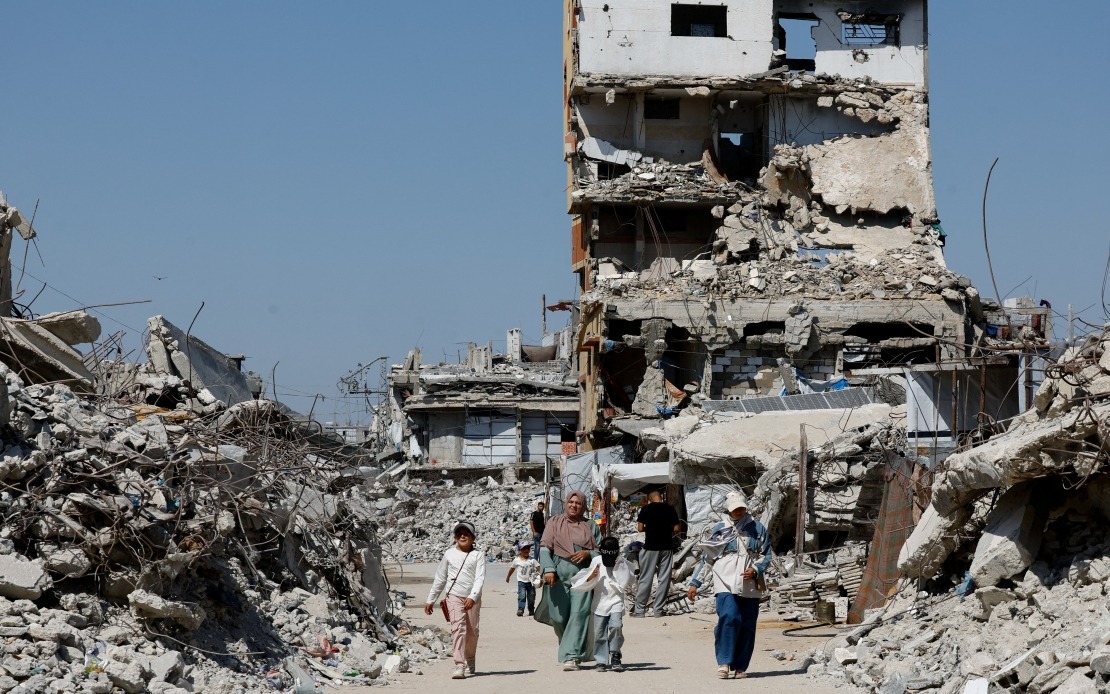
The humanitarian catastrophe unfolding in the Gaza Strip has reached a grim milestone, with the Palestinian Health Ministry confirming that at least 73,417 people have lost their lives since the outbreak of conflict in October 2023. In a troubling sign that violence has not abated despite ceasefire arrangements, the ministry reported that a further ten Palestinians were killed and 25 wounded over the past 24 hours, demonstrating the precarious security situation that continues to grip the blockaded territory.
The ministry's daily statistical update reveals the relentless pace of casualties flowing through Gaza's overwhelmed medical system. During the reporting period, hospitals across the enclave received ten bodies and 25 injured individuals, reflecting what appears to be sustained military operations even under the terms of the October 2025 ceasefire agreement. The circumstances surrounding these specific deaths remain unclear, as the ministry has not detailed whether they resulted from air strikes, artillery bombardment, or ground operations.
What is evident is that Israeli military activity across the territory has not ceased since the ceasefire took effect. According to the Health Ministry's assessment, violations of the October 2025 truce arrangement have resulted in at least 1,283 additional deaths, with another 4,248 individuals wounded in incidents occurring after the ceasefire commenced. These figures underscore the deep fragility of any supposed peace arrangement and suggest fundamental disagreements persist regarding the terms and implementation of the agreement.
The physical toll documented by the ministry represents only part of the broader devastation afflicting Gaza's 2.3 million inhabitants. Beyond the confirmed casualties, significant numbers of victims remain trapped beneath collapsed buildings and abandoned on roads where rescue teams cannot safely access them. The Palestinian civil defence and ambulance services have been severely hampered in their capacity to reach and recover casualties, partly due to the ongoing instability and partly because of the destruction of much of Gaza's infrastructure.
The destruction wrought upon Gaza's physical landscape mirrors the human cost of the conflict. The Health Ministry estimates that approximately 90 percent of the enclave's civilian infrastructure has sustained damage, rendering hospitals, schools, water systems, and residential areas largely non-functional. This widespread devastation extends far beyond immediate loss of life, creating a cascade of secondary humanitarian crises as ordinary people struggle to access clean water, food, medical care, and shelter.
The economic dimension of reconstruction adds another layer to the crisis. United Nations assessments place the cost of rebuilding Gaza's shattered infrastructure at approximately US$70 billion, a staggering sum that dwarfs the economic capacity of any regional authority and will require sustained international financial engagement for years or decades. This figure reflects not merely replacement of physical structures but the requirement to build more resilient systems capable of withstanding future conflicts.
For Malaysian observers and policymakers, the Gaza situation carries profound implications for regional stability and international law. The continuation of violence despite ceasefire agreements raises questions about enforcement mechanisms and the credibility of international peace frameworks. Malaysia, as a nation that has historically advocated for Palestinian rights within international forums, faces renewed pressure to articulate clear positions on humanitarian intervention and the responsibilities of the international community.
The documented toll of 174,360 wounded across the conflict period represents another generation bearing physical and psychological scars. Many survivors will require long-term medical rehabilitation and mental health support, overwhelming systems already devastated by conflict. This accumulation of trauma extends across families and communities, fracturing social cohesion and creating enduring challenges for any future reconciliation efforts.
The apparent continuation of military operations after the October 2025 ceasefire raises fundamental questions about the viability of the agreement itself. If major parties continue to conduct operations despite ceasefire declarations, the mechanism becomes essentially meaningless, and confidence in future diplomatic arrangements erodes. The international community's response to reported violations will establish precedents for how similar conflicts might be managed going forward.
For humanitarian organizations operating within and around Gaza, the situation presents acute operational challenges. Delivering assistance to a population facing both active conflict and massive infrastructure damage requires security guarantees that may not be forthcoming. The convergence of military operations, displacement, disease risk, and extreme poverty creates conditions where secondary mortality from preventable causes may ultimately exceed deaths directly attributable to violence.
The blockade status of Gaza, maintained throughout the period covered by these statistics, has profoundly constrained the territory's capacity to respond to the crisis independently. Dependence on external humanitarian assistance, combined with restrictions on imports of reconstruction materials and fuel, means that recovery cannot proceed swiftly even where political will exists. This structural constraint ensures that humanitarian suffering will persist long after formal military operations conclude.

