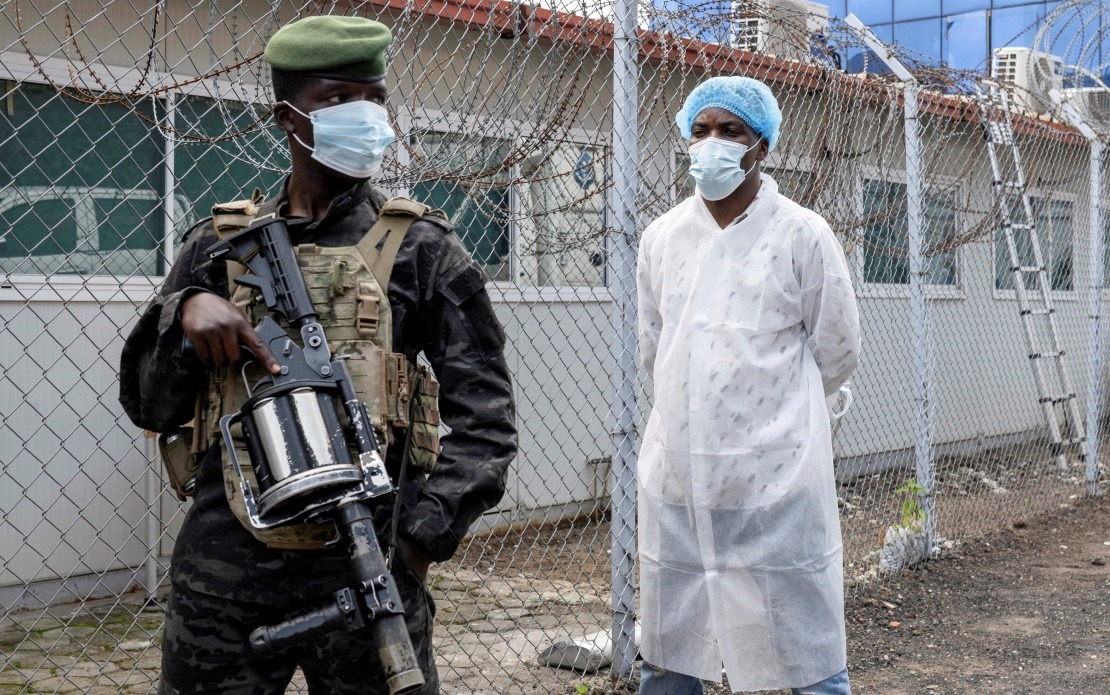
A United Nations migration agency has raised urgent concerns about the role of funeral and burial customs in accelerating the transmission of Ebola across the Democratic Republic of Congo, warning that the practice of transporting deceased victims to their home communities for burial poses severe risks of further contagion. The alert comes as the outbreak, which began on May 15, has now claimed more than 828 lives from over 2,100 confirmed cases, representing a case fatality rate of 37.5 per cent according to the Health Ministry's latest tally.
The geographic spread of the virus has proven particularly challenging for containment efforts. Five provinces have now been affected: Haut-Uele, Ituri, North Kivu, South Kivu and Tshopo. The pace of transmission has accelerated dramatically, with the outbreak expanding by roughly 70 per cent over a two-week period, and frontline health workers reporting an average of more than 40 new cases each day. This trajectory places the current episode among the most rapid spreading incidents in the history of Ebola outbreaks globally.
International Organisation for Migration Regional Director Frantz Celestin highlighted the complex intersection of cultural practice and disease control in his assessment of the crisis. The movement of bodies within the country remains widespread despite public health protocols, with surveillance operations at border crossings and entry points into different health zones having intercepted 105 bodies during containment operations. These intercepts underscore the scale at which communities continue to practise traditional burial customs that place themselves and transport workers at direct risk of infection.
Community resistance represents another layer of difficulty compounding the outbreak's expansion. Burial teams attempting to implement safe funeral protocols face significant opposition from residents, and in several documented cases have been subjected to violent attacks. The obstacles extend to violence erupting during funeral proceedings themselves. Last month in Bunia, the capital of Ituri province, four Red Cross volunteers were seriously injured at a cemetery when violence broke out during an Ebola victim's funeral, with local reports indicating youths attempted to force open the coffin, a behaviour that would expose them directly to viral material.
The challenge reflects broader gaps in public understanding and early disease detection across affected communities. Celestin noted that 60 per cent of reported deaths have taken place in community settings rather than within health facilities, indicating that many individuals progress to advanced illness stages without accessing medical care. This geographic distribution of deaths reflects persistent difficulties in achieving timely access to treatment, surveillance coverage, and the early detection capabilities that would allow for isolation and containment of cases before community exposure occurs.
The strain on healthcare systems and epidemiological control has been acknowledged by international medical organisations operating on the ground. Doctors Without Borders characterised the outbreak as the third-largest and fastest-growing Ebola event recorded to date, remarkable given that it has achieved this status within a compressed two-month window. The organisation has identified the Bundibugyo virus as the causative agent, a strain that differs from the Zaire subtype responsible for previous major outbreaks in West Africa and eastern Congo.
The geographical expansion documented by the World Health Organisation illustrates the difficulty of containing transmission across borders and administrative boundaries. The number of affected health zones expanded from 36 to 42 over a single week, demonstrating the virus's ability to establish transmission chains across new territories even as public health teams work to isolate cases in previously affected areas. Each new health zone represents not only additional cases but also a fresh challenge to mobilising local health infrastructure, training personnel, and establishing burial protocols acceptable to local communities.
For Malaysia and broader Southeast Asia, the situation carries implications for regional preparedness frameworks and cross-border health coordination. While Ebola is geographically distant from the region, the Democratic Republic of Congo's experience demonstrates how quickly haemorrhagic fevers can escape containment when cultural practices, limited health infrastructure, and community mistrust converge. The incident also underscores the importance of investing in disease surveillance networks that can detect emerging threats early, before rapid geographic spread occurs, particularly relevant for nations with significant international connectivity and migration flows.
The crisis illustrates a fundamental tension in infectious disease control: that epidemiological imperatives for safe burial practices sometimes conflict directly with deeply held cultural and religious traditions around honouring the deceased and maintaining family connections to homeland burial grounds. Resolution requires not simply external imposition of safety protocols but engagement with community leaders, religious authorities, and respected voices to develop approaches that respect cultural values while protecting against transmission. The violence directed at burial teams suggests that top-down enforcement without this engagement breeds resistance rather than compliance.
Looking forward, the trajectory of the current outbreak will depend significantly on whether affected communities can be engaged in developing mutually acceptable approaches to funeral practices, whether healthcare facilities can expand capacity to treat cases before they progress to community transmission, and whether surveillance systems can identify chains of transmission with sufficient speed to enable isolation. The UN agency's warning serves as a stark reminder that managing Ebola requires not only medical and logistical capability but also deep understanding of and respect for the social contexts in which outbreaks unfold.

