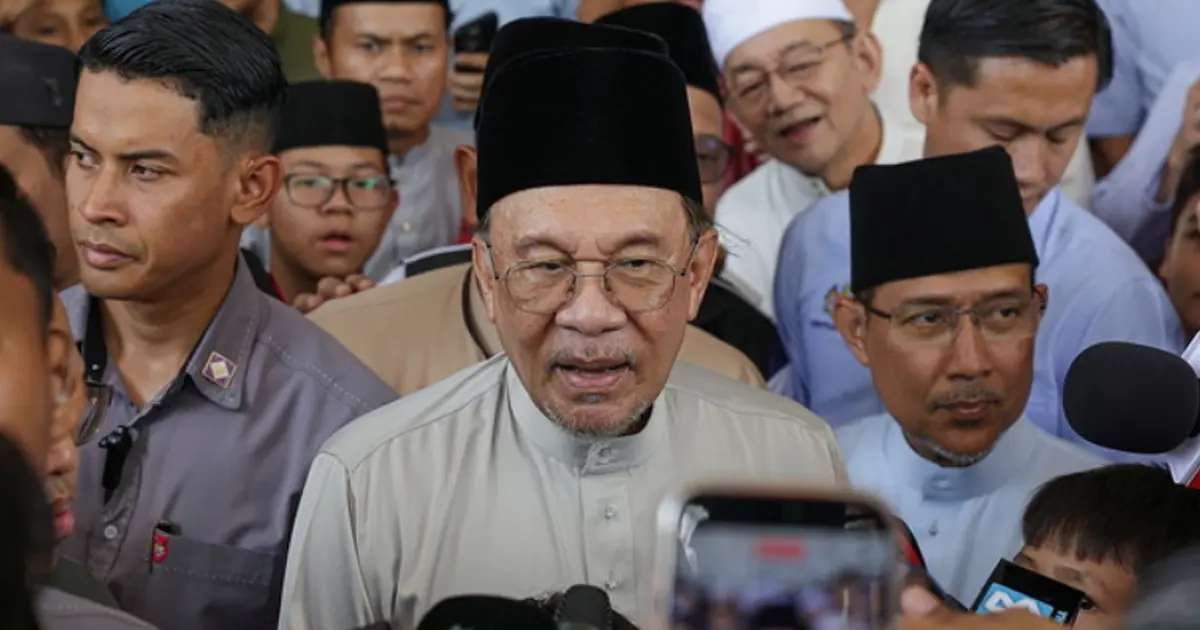
Prime Minister Anwar Ibrahim has announced the full release of the Royal Commission of Inquiry report examining Tabung Haji, the government-linked fund that manages Islamic pilgrimage savings and investments. The Prime Minister explicitly stated that no editorial modifications or censorship measures were applied to the document before its public disclosure, underscoring the government's commitment to transparency regarding the fund's operations and governance.
Tabung Haji has faced considerable scrutiny in recent years, particularly following financial difficulties that prompted government intervention and restructuring efforts. The establishment of the Royal Commission of Inquiry represented a significant step toward investigating the underlying causes of the fund's challenges and identifying accountability measures. The decision to publish the entire report without redactions suggests a departure from historical practices where sensitive government inquiries have sometimes been selectively released or modified prior to public distribution.
The timing of this disclosure carries political significance within Malaysia's current governance landscape. Public confidence in government institutions and state-linked entities has been a persistent concern for Malaysian citizens, especially regarding financial institutions that manage public or semi-public funds. By releasing the unedited RCI report, the administration appears to be signalling a willingness to subject its governance institutions to public scrutiny, a positioning that aligns with reform narratives that have characterized recent political developments in the country.
Tabung Haji's troubles have affected millions of Malaysian Muslims who utilize the fund as their primary savings mechanism for hajj pilgrimage expenses. The fund's financial deterioration in preceding years created widespread anxiety among account holders regarding the security of their accumulated savings. Many contributors depend on Tabung Haji to finance one of Islam's five pillars, making the integrity and stability of the institution a matter of considerable personal and spiritual importance to its members across Malaysia's diverse states and communities.
The Royal Commission investigation likely examines governance failures, management decisions, investment strategies, and potential misconduct that contributed to the fund's weakening financial position. Such inquiries typically scrutinize board decisions, fund allocation patterns, risk management frameworks, and compliance with regulatory standards. The unredacted publication allows stakeholders, including account holders, financial analysts, civil society observers, and opposition politicians, to form independent assessments regarding institutional accountability and the adequacy of proposed remedial measures.
Transparency in publishing government commission reports carries implications beyond the specific institution under examination. The decision establishes precedent for how future inquiries into state agencies and government-linked companies will be handled. Other controversial investigations pending or anticipated within Malaysia's public administration may face renewed pressure from civil society and political actors to be similarly disclosed in complete form, potentially reshaping norms around government accountability and information access.
The revelation also occurs within a broader regional context where government transparency and anti-corruption efforts have become increasingly salient political issues across Southeast Asia. Malaysia's approach to disclosing institutional failings influences perceptions about the country's commitment to governance reforms and may affect investor confidence regarding the management of public and semi-public financial institutions. Neighbouring countries and international observers often benchmark Malaysia's governance practices against regional and global standards.
Stakeholders within Tabung Haji, including the fund's leadership, employees, and regulatory supervisors, will likely respond to the report's findings with specific remedial proposals and restructuring initiatives. The comprehensive disclosure enables these parties to address concerns systematically and demonstrate responsiveness to identified deficiencies. Account holders expecting clarity regarding safeguards protecting their savings will scrutinize the report's conclusions and recommendations, potentially influencing their continued participation in the fund's schemes.
Anwar Ibrahim's explicit confirmation that no censorship or edits were applied represents an important statement about the government's approach to institutional accountability. In political contexts where transparency claims are frequently contested, this direct assertion serves to pre-empt skepticism and accusations of selective disclosure. The Prime Minister's emphasis on the report's unmodified status suggests awareness that public trust in government findings depends substantially on demonstrated independence and editorial integrity of the investigative process and its outcomes.

