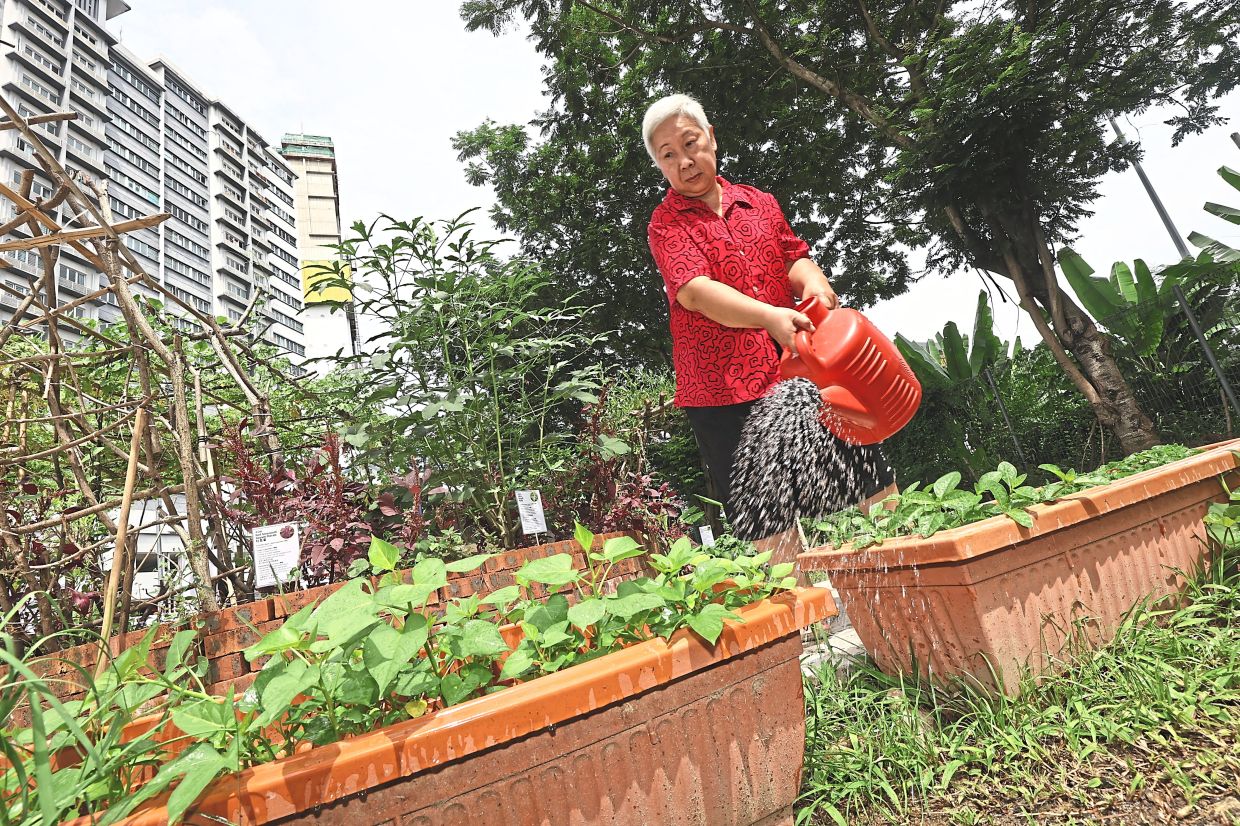
A derelict patch of overgrown land nestled behind 1Razak Mansion in Kuala Lumpur has undergone a remarkable metamorphosis over the past six months, emerging as a thriving community food forest that is already reshaping the daily lives of residents in the high-rise residential complex. What was once little more than an eyesore choked with unwanted vegetation and neglect has blossomed into an orderly garden alive with herbs, vegetables, flowering plants, and fruit-bearing specimens. The official inauguration of the 1Razak Mansion Food Forest represents more than just the completion of a landscaping project; it signals a growing recognition among Malaysian policymakers and community leaders that thoughtful urban design can meaningfully improve quality of life, particularly for ageing populations concentrated in city-centre residential towers.
The initiative gained high-level government backing, with Minister in the Prime Minister's Department (Federal Territories) Hannah Yeoh underscoring the particular relevance of such programmes at 1Razak Mansion, where approximately 80% of residents are senior citizens. Her remarks highlighted a critical policy gap in how Malaysia addresses the needs of its growing elderly demographic. While physical wellness initiatives such as tai chi classes have long been standard offerings in residential communities, the minister stressed that mental and psychological wellbeing deserves equal attention and investment. The food forest project directly addresses this oversight by creating a purposeful activity that simultaneously engages residents physically while providing psychological benefits through contact with nature and a sense of productive contribution to communal life.
Resident Alice Fernandez, 64, articulates with clarity the multifaceted advantages the garden provides to the senior community. For her, the transformed space functions as both a health intervention and an economic asset. The garden reduces household food expenses by enabling residents to harvest fresh produce for personal use, an increasingly important consideration as the cost of living presses on fixed incomes typical of pensioners. Beyond the tangible economics, Fernandez emphasises how the garden combats a pervasive problem affecting many elderly residents in urban apartments: the psychological toll of isolation and purposelessness. Without accessible, engaging activities to structure their days, older residents risk falling into sedentary routines that compound both physical decline and mental deterioration. The garden's proximity to her morning jogging route has woven it seamlessly into her daily rhythm, transforming what was previously an uninviting, unsafe corner into a destination that encourages movement, social interaction, and regular outdoor engagement.
Fernandez's description of the space before its renovation reveals why this transformation matters so profoundly. The abandoned plot, situated near the refuse collection area, was actively avoided by residents due to its unattractiveness and poor upkeep. By beautifying and purposefully developing the site, the project has fundamentally altered traffic patterns and social behaviour within the residential compound. Elderly residents who might previously have lacked motivation to venture outdoors now have compelling reasons to do so regularly. The garden has effectively extended the usable communal space within the apartment complex, creating a destination that is both functional and psychologically restorative, addressing a chronic design deficiency in many high-density Malaysian residential developments where outdoor space is scarce and often neglected.
Thieeben Sivabalasingam, 38, worked behind the scenes managing logistics during the garden's construction phase, positioning him as a witness to the project's remarkable evolution. His account of transporting materials and observing the site's progressive organisation over weeks conveys the substantial coordination and labour required to realise such initiatives. His emotional response upon seeing the completed garden for the first time, standing alongside his young son Aiden, underscores a secondary but important dimension of the project: its capacity to inspire across generations and demonstrate to younger residents the value of community-focused environmental stewardship. Sivabalasingam's observation that the garden provides residents with activities to anticipate and purposes to drive daily motivation speaks to fundamental human psychological needs that are frequently overlooked in discussions of elderly care policy.
The intergenerational appeal of the project extends beyond the residents of 1Razak Mansion itself. Jenny Wong and her husband KC Wong, both retired residents of the neighbouring Razak City Residences, travelled to attend the garden's launch, viewing it as a model worth replicating in their own community. KC's explicit hope that similar initiatives will be introduced at his residential complex indicates that the project is generating visible momentum and demand for comparable programmes throughout the broader residential district. The Wongs represent an important demographic segment—active, engaged retirees with time, energy, and enthusiasm to contribute to community projects—whose talents and interests are frequently underutilised in urban settings where formal structures for such participation are absent.
Dr Billy Tang Chee Seng, the 60-year-old founder of social enterprise PWD Smart FarmAbility, explicitly frames the current food forest as merely the foundation for substantially expanded programming. His vision encompasses educational dimensions that would transform the garden from a simple productive space into a comprehensive learning hub serving multiple community cohorts. The planned construction of a kitchen facility will enable practical culinary education using garden-grown ingredients, creating a direct feedback loop that connects agricultural production to food preparation and consumption. This pedagogical approach holds particular value for senior residents, many of whom retain cooking knowledge accumulated over lifetimes but may lack motivation to maintain these skills without purposeful outlets.
Tang's plan to introduce microscopes for soil and microorganism study represents an even bolder educational aspiration, one that positions the food forest as an informal science education centre. By bringing younger residents into the garden for structured learning activities, the project creates opportunities for intergenerational knowledge exchange and mentoring. Children gain practical understanding of agricultural science and ecological principles through hands-on observation and experimentation, while elderly residents assume teaching roles that elevate their social status and sense of purpose within the community. This design philosophy recognises that sustainable community development requires engaging multiple age groups in mutually beneficial activities rather than siloing different demographic cohorts into age-segregated programmes.
The broader policy implications of this project extend well beyond 1Razak Mansion's boundaries. Malaysia's rapid urbanisation and demographic ageing have created a substantial population of senior citizens concentrated in city-centre residential complexes, many of whom experience social isolation and lack purposeful daily activities. Government and private sector responses to date have focused primarily on healthcare provision and basic welfare support, without adequately addressing the psychological, social, and spiritual dimensions of quality of life for elderly residents. The food forest model demonstrates that relatively modest investments in thoughtful community design can yield outsized returns in resident wellbeing, social cohesion, and environmental sustainability. The project shows how abandoned or underutilised urban spaces can be repurposed to serve multiple objectives simultaneously: food security, physical health, mental wellness, intergenerational connection, environmental stewardship, and skills development.
As Malaysia grapples with the fiscal pressures of an ageing population and the social challenges of rapid urbanisation, projects like the 1Razak Mansion Food Forest offer a replicable model that demonstrates innovative thinking and practical problem-solving. The initiative required minimal capital investment relative to its community impact, relied substantially on donated labour and expertise, and generated enthusiasm among residents and neighbouring communities alike. These characteristics make it exceptionally suitable for scaling across Malaysia's numerous residential complexes housing elderly populations. Government agencies and property developers would be prudent to examine this project carefully and consider how similar interventions might be integrated into urban planning frameworks and residential management practices. The food forest ultimately represents not merely an environmental or horticultural initiative, but a thoughtful response to the fundamental human need for purpose, connection, and engagement across the lifespan.

