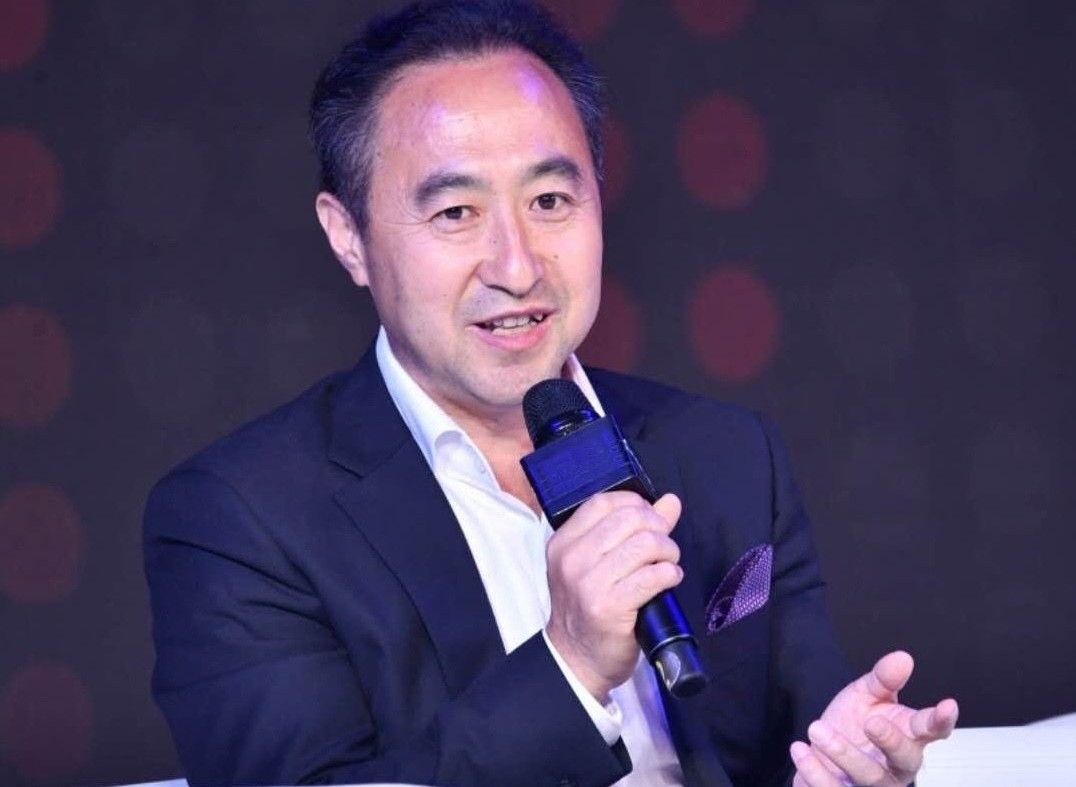
CJ Wang's path to becoming a billionaire began not in boardrooms but in a secondary school classroom, and before that, in the kitchens of his childhood home grinding soybeans by hand. The Chinese entrepreneur, who accumulated a fortune estimated at US$10.4 billion, represents a distinctly modern blend of traditional family values and entrepreneurial audacity. His journey from educator to industrial magnate offers insights into how technological innovation and strategic acquisition can reshape global markets, particularly as emerging-market entrepreneurs increasingly reshape the Western consumer landscape.
Wang was born in 1969 in Yantai, a coastal city in Shandong Province in eastern China, where soy milk preparation was woven into the fabric of daily domestic life. As a child, he participated in the time-consuming ritual of making soy milk, manually rotating his uncle's stone mill—a labour-intensive process that would plant seeds for his future invention. The experience gave him intimate familiarity with both the product and its manufacturing inefficiencies, knowledge that would later prove invaluable when he decided to mechanise the process.
Following in his parents' footsteps proved the natural course after completing his electrical engineering degree at Beijing Jiaotong University. Wang worked as a teacher for several years, a conventional choice reflecting family tradition and social expectations in China during the late 1980s and early 1990s. Yet he harboured ambitions beyond the classroom. In a recent interview with Time magazine—his first with international media—Wang reflected on his early career with candour, acknowledging that teaching had been more inheritance than calling. "It was what my family did so I just naturally fell into teaching. But I always wanted to do something bigger and carve my own path," he explained, revealing the tension between familial obligation and personal ambition that ultimately drove him to resign in 1994.
Wang's entrepreneurial instinct proved prescient regarding Chinese dietary habits. He recognised that soy milk and fried dough sticks would remain breakfast staples for decades to come, creating sustained demand for efficient production methods. This conviction led him to develop the world's first electric soy milk maker—a machine that, whilst imperfect in its initial incarnation, represented a genuine technological breakthrough for household consumers and small food vendors alike. The invention proved commercially viable immediately, and that same year, 1994, Wang founded Joyoung, a kitchen appliance brand that would dominate the Chinese domestic market for household food preparation devices.
The company's growth trajectory was remarkable by any standard. By 2004, Joyoung had sold more than one million soy milk makers, establishing itself as the default choice for Chinese consumers seeking reliable, affordable kitchen technology. The brand subsequently expanded its portfolio across multiple product categories—blenders, rice cookers, and various other appliances—all marketed as dependable solutions for everyday household needs. For more than two decades, Joyoung remained a distinctly regional player, deeply embedded in Chinese consumer consciousness but virtually unknown in Western markets despite its commercial success at home.
Wang's strategic thinking evolved during the late 2010s as Joyoung, already listed on the Shenzhen Stock Exchange, faced the reality of limited international brand recognition. Rather than attempting to build Western market share from scratch through traditional expansion strategies, Wang chose acquisition as his vehicle for global growth. His target was SharkNinja, an established American manufacturer already cultivating a significant following with its vacuum cleaners and blenders. Wang perceived not merely a functioning business but a platform brimming with potential—excellent product design, substantial room for expansion, and crucially, capable leadership in the form of Chief Executive Mark Barrocas, whom Wang requested remain in post following the transaction.
Yet Wang's assessment of SharkNinja also identified substantial weaknesses requiring correction. The product range remained relatively narrow compared to market opportunities. The sales strategy depended excessively on traditional television infomercials, lacking meaningful social media engagement or comprehensive distribution networks. Manufacturing relied heavily on a small circle of Chinese suppliers, constraining operational flexibility and innovative capacity. These inefficiencies, visible to Wang through the lens of operational expertise accumulated at Joyoung, represented correction opportunities rather than fatal flaws. In 2017, Wang's private equity firm acquired a majority stake, integrating SharkNinja into his holding company JS Global Lifestyle Co., which subsequently listed in Hong Kong in 2019.
With Wang providing strategic direction and capital, SharkNinja underwent comprehensive transformation. Product development accelerated dramatically, with new offerings specifically engineered for social media virality, particularly on platforms like TikTok where younger consumers congregate. The company restructured its sales infrastructure, moving beyond infomercial dependency toward digital-first marketing strategies and expanded retail distribution. Supply chain optimisation incorporated Joyoung's established manufacturing relationships and expertise whilst developing stronger internal research and development capabilities. The business eventually divided into two complementary brands: Shark focused on vacuums and beauty products, whilst Ninja specialised in kitchen appliances, each serving distinct market segments with targeted product innovation.
This transformation bore remarkable commercial fruit. SharkNinja evolved into a multibillion-dollar enterprise generating consistent viral product successes, fundamentally altering its market position and investor perception. The company's growth momentum culminated in a 2023 direct listing on the New York Stock Exchange, severing its public company connection to JS Global Lifestyle whilst maintaining operational coherence. By May 2026, Wang controlled approximately 35 percent of SharkNinja and maintained a 52 percent stake in JS Global Lifestyle, consolidating his position as the controlling shareholder of both enterprises. Bloomberg's billionaires index valued his combined holdings at US$10.4 billion as of August 21, 2026.
Wang's financial success manifested in compensation levels reflecting his corporate prominence. In 2024, he received total remuneration exceeding HK$520 million (US$66.3 million) in his capacity as director and major shareholder, positioning him as Hong Kong's second-highest-paid corporate director according to financial data platform Webb-site and reporting by the South China Morning Post. These figures underscore the substantial wealth concentration that occurs when entrepreneurs retain controlling stakes in publicly traded enterprises.
Despite his commercial prominence, Wang maintains a famously private profile. Time magazine characterised him as soft-spoken and guarded, with interests in golf and Macallan whisky dominating his recreational pursuits. He has historically avoided public visibility and extensive media engagement, preferring to allow his companies to generate headlines rather than seeking personal celebrity. However, this reticence shifted during the interview conducted for Time's recent feature. Wang acknowledged deliberately breaking his customary silence, motivated by heightened scrutiny of Chinese investment in the United States amid ongoing trade tensions and geopolitical suspicion.
Wang's strategic communication initiative reflects calculated pragmatism concerning his public positioning. "I just want to be ahead of the curve to proactively tell my story to mitigate any speculation. Because there's just not much out there about me," he told Time, articulating a desire to establish his narrative before critics or competitors could construct alternative accounts of his background and business operations. This approach represents a sophisticated understanding of how biographical narratives influence investor confidence, regulatory treatment, and broader public perception in an era of heightened international economic competition and ideological polarisation.
For Southeast Asian readers observing these dynamics, Wang's trajectory illuminates broader patterns reshaping the region's economic position. Chinese entrepreneurs controlling substantial Western-facing businesses operate within complex geopolitical contexts that increasingly affect their operations and public reception. The distinction between business innovation and national strategic interest has blurred considerably, affecting how markets evaluate acquisitions involving Chinese capital. Wang's proactive narrative construction suggests that future cross-border acquisitions involving Chinese entrepreneurs will increasingly require sophisticated communication strategies addressing not merely financial performance but geopolitical legitimacy in Western markets.

