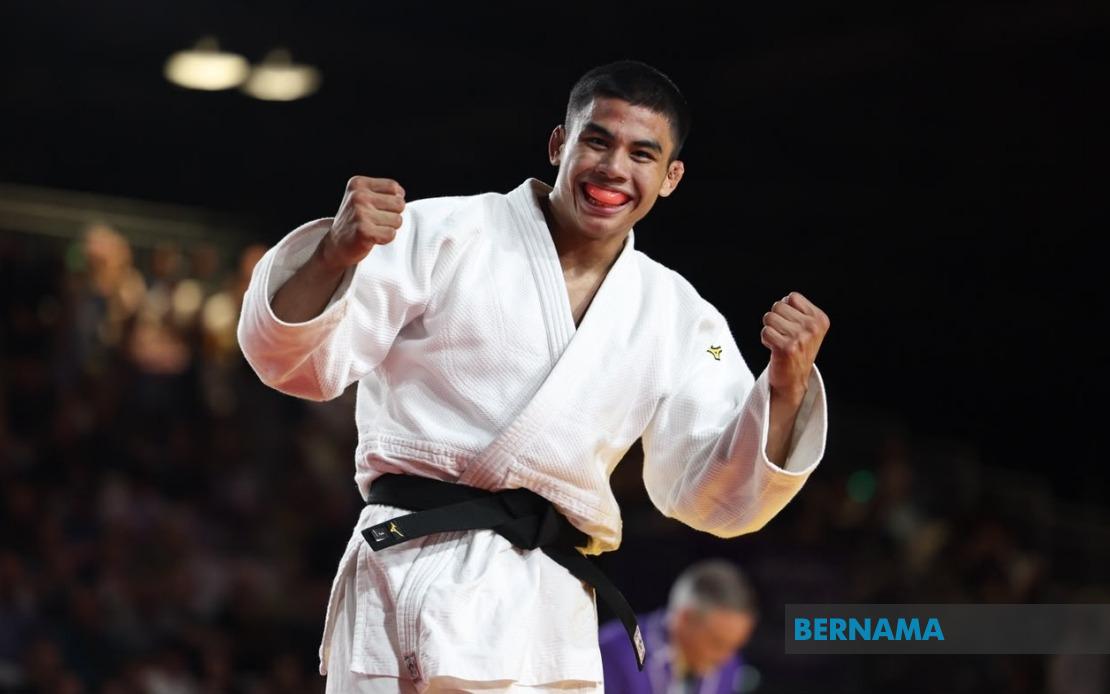
Amir Daniel Abdul Majeed has etched his name into Malaysian sporting history by capturing the men's under-81 kilogramme gold medal in judo at the Glasgow 2026 Commonwealth Games, becoming the nation's first judoka to achieve this distinction. The 21-year-old from Penang secured victory over South Africa's Timothy Meuwsen in the final at the Scottish Event Campus, delivering Malaysia's eighth gold medal of the Games and marking a watershed moment for a sport that has long remained in the shadows of Malaysia's more prominent athletic pursuits.
Behind this extraordinary sporting achievement lies a narrative shaped not by sudden talent or fortunate circumstances, but by the relentless determination that has characterised Amir Daniel since early childhood. His mother, Yeoh Suatkhim, traces this defining quality to an unlikely moment when her son was merely four years old and struggling with a thumb-sucking habit. Rather than employing conventional parenting tactics, Yeoh made her son a simple bargain: if he could abandon the habit, she would purchase the storybook he desperately wanted. The strategy proved remarkably effective. Within a single day, the determined toddler had completely ceased the behaviour, motivated entirely by his desire for the book. This early episode would prove revelatory of a character trait that would ultimately carry him to Commonwealth glory.
Amir Daniel's formal introduction to judo came at the age of five when he began training under national coach Md Nashriq Md Nassir, a relationship that continues to define his athletic development today. The decision to enrol him in the sport reflected his parents' broader philosophy of exposing their children to structured physical activity and learning opportunities from an early age. This approach had previously been applied to his elder sibling, Nur Yasmeen, though it was Amir Daniel who demonstrated the particular aptitude and passion necessary to pursue judo at the elite level. What began as a childhood activity gradually transformed into a serious sporting endeavour, with the young judoka progressively building the technical skills and mental fortitude required to compete at international standards.
The Commonwealth Games pathway itself has tracked Amir Daniel's steady rise through the ranks. At the Birmingham 2022 edition, competing in the under-73 kilogramme category, he captured a bronze medal—a respectable achievement that signalled his potential on the global stage but fell short of gold. The move up to the under-81 kilogramme division and the subsequent triumph in Glasgow represents a significant progression, suggesting that his training regimen and tactical approach have matured considerably in the intervening years. This trajectory indicates not merely improved physical conditioning but also enhanced competitive nous and the ability to execute strategy under intense pressure.
Yeoh's assessment of her son's success reveals the crucial role played by Md Nashriq beyond the confines of the training mat. The coach has functioned as a disciplinary anchor in Amir Daniel's life, ensuring that his athletic ambitions did not come at the expense of academic development. Yeoh explains that whenever her son faced important examinations, she would coordinate with Md Nashriq to establish informal agreements that prioritised his studies. This arrangement proved effective because of Amir Daniel's foundational character trait: once he commits to a promise, particularly to authority figures he respects, he honours it completely. The synergy between parental guidance and coaching oversight created an environment in which sporting excellence and educational attainment could coexist, a balance increasingly rare in contemporary high-performance athletics.
The significance of Amir Daniel's achievement extends beyond individual accomplishment to represent a broader statement about Malaysian judo's potential on the international stage. Historically, Malaysia has produced competitive judokas, yet the absence of a Commonwealth Games gold medallist suggested structural limitations or insufficient investment in the sport's development pathway. Amir Daniel's victory dismantles that narrative and opens possibilities for future generations. His success provides empirical evidence that Malaysian judokas can compete at the highest levels when furnished with quality coaching, sustained support, and access to appropriate training facilities. For young athletes considering judo as a serious pursuit, his Glasgow triumph serves as proof of concept that elite achievement is attainable.
Looking forward, both Amir Daniel and his mother have articulated ambitions that extend well beyond Commonwealth success. The Olympic Games represent the ultimate sporting aspiration, and Yeoh has expressed hope that her son will leverage his Glasgow gold medal as a springboard toward Olympic qualification and competition. Such progression would require sustained excellence, continued refinement of technique, and navigation of increasingly demanding international competition. The Olympics represent a qualitatively different challenge than the Commonwealth Games, with deeper talent pools and competitors from traditional judo powerhouses such as Japan, France, and Georgia. Yet Amir Daniel's trajectory and demonstrated capacity for growth suggest the aspiration is not merely aspirational but potentially achievable with continued dedication.
Crucially, Amir Daniel has retained focus on dimensions of life beyond athletic competition. His mother emphasises that he remains committed to his education and to supporting fellow Malaysian judokas, suggesting a maturity of perspective often absent in athletes focused solely on personal advancement. This balanced approach to success—combining elite athletic performance with academic rigour and community contribution—represents a model increasingly valued in contemporary sport, where athlete welfare and holistic development have gained prominence. Amir Daniel's willingness to invest in his peers' development may contribute to strengthening Malaysia's judo ecosystem more broadly.
The Glasgow victory also carries implications for Malaysian sport policy and investment allocation. The relative neglect of judo, despite the nation's demonstrated capability in the discipline, raises questions about resource distribution and strategic planning within national sporting institutions. Amir Daniel's success provides compelling justification for increased funding and institutional support for judo programmes, facilities development, and coach education initiatives. Southeast Asian nations competing in the Commonwealth Games have increasingly recognised the medals available in combat sports, and Malaysia risks falling behind if it fails to capitalise on emerging talent and proven success. The Glasgow result should prompt recalibration of priorities within sports development agencies.
For Malaysian audiences, Amir Daniel's narrative resonates beyond sporting achievement, embodying values of persistence, family support, and the transformative power of early exposure to structured activity. His journey from a determined four-year-old negotiating for a storybook to a Commonwealth gold medallist illustrates how character forged in childhood can sustain an individual through the rigours of elite athletic competition. The role of his mother's patient guidance, his coach's multifaceted mentorship, and his own unwavering commitment to improvement collectively demonstrate that success rarely emerges from isolated talent but rather from aligned ecosystems of support. In an era when Malaysian youth face competing pressures and distractions, Amir Daniel's example of purposeful dedication offers meaningful inspiration.

