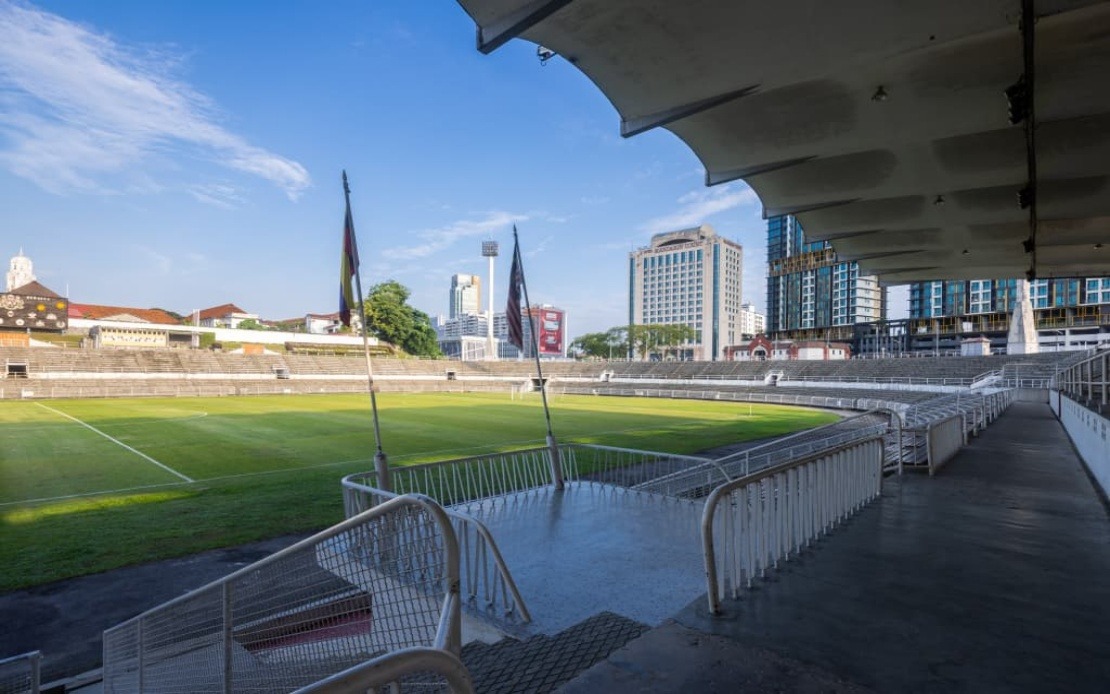
On August 31, 1957, Tunku Abdul Rahman Putra Al-Haj proclaimed independence with seven resounding shouts of "Merdeka!" at Stadium Merdeka—a moment that ended British colonial rule and launched Malaysia's sovereign journey. Nearly 70 years on, that original fervor remains alive, though its celebration has moved beyond the confines of the iconic Kuala Lumpur stadium to embrace newer landscapes. Dataran Putrajaya now serves as a focal point for national commemoration, embodying how Malaysia has sought to weave together historical memory with contemporary administrative symbolism.
The migration of National Day festivities reflects more than mere logistical convenience. When authorities shifted celebrations across different venues—from Stadium Merdeka to Dataran Merdeka and finally to Putrajaya—they essentially charted a physical manifestation of the nation's development trajectory. Putrajaya itself underwent remarkable transformation, evolving from the sleepy agricultural area known as Prang Besar into a purpose-built federal administrative hub following its development in 1995. The capital hosted its first national-level National Day in 2003 with the theme "Keranamu Malaysia," and has since become the designated venue with sufficient frequency and infrastructure to anchor the nation's most important civic observance.
This year marks the tenth occasion Putrajaya has hosted the national-level celebration, a pattern that intensified following the Cabinet's April 2025 decision to maintain it as the primary venue through 2027. The choice signals official commitment to establishing Putrajaya as the ceremonial heart of independence commemoration for the foreseeable future. Yet this consistency warrants examination: does concentrating celebrations in a purpose-built administrative centre risk alienating younger generations from the historical weight embedded in Stadium Merdeka's original significance? Academics and cultural observers wrestle with this tension between preservation and progress.
Prof Dr Sarjit Singh Gill, Chairman of the National Unity and Progressive Society Cluster at the Malaysian Professors Council and a Professor of Anthropology and Sociology at Universiti Putra Malaysia, argues that venue transformation need not diminish historical meaning. Instead, he proposes that Stadium Merdeka and Putrajaya function as complementary historical symbols, each serving distinct generational needs. Stadium Merdeka carries profound social resonance particularly for older Malaysians aged 70 and above, evoking lived memories of the independence struggle and post-colonial nation-building. Putrajaya, conversely, represents a modern administrative centre deliberately designed as a "smart city in a garden," embodying Malaysia's aspirations toward technological sophistication and contemporary governance.
Sarjit emphasizes that celebrating at both locations serves a pedagogical function, enabling successive generations to comprehend the layered significance of historical narrative alongside the nation's transformative development. When younger Malaysians encounter National Day observances in Putrajaya's ultramodern setting, they can simultaneously grasp how far the nation has traveled materially while understanding the institutional continuities linking present governance to independence pioneers. This dual approach transforms potential historical disconnection into a narrative spanning from liberation to prosperity.
Preserving patriotic sentiment among younger, digitally-native generations demands intentional structural effort, Sarjit contends. Two foundational elements warrant embedding in every National Day celebration: first, explicit recognition of past leaders' sacrifices and the consensus-building that secured independence through negotiation rather than armed conflict, and second, celebration of Malaysia's racial and religious pluralism as embodied in the unity-in-diversity principle. Reflecting on his own participation in the 1990 "Berjaya" parade, Sarjit underscores that younger people's active involvement proves essential for cultivating genuine, durable patriotism rather than ceremonial compliance.
Putrajaya's selection as the primary venue carries practical justifications alongside symbolic ones. The Event Management and Innovation Unit of the Management Services Division at the Ministry of Communications points to logistical advantages and modern infrastructure as key factors. Critically, Putrajaya's accessibility through the Mass Rapid Transit network, water taxi services, and shuttle buses offers commuters viable alternatives to private vehicle congestion—a consideration increasingly vital as participation expands. These mobility options facilitate logistics for accommodating substantially larger audiences than Stadium Merdeka's geographic constraints would permit, enabling broader democratic participation in the national observance.
The thematic architecture of contemporary celebrations also attempts to bridge historical consciousness with future-oriented development. The 2026 National Day and Malaysia Day theme, "Malaysia MADANI: Kesejahteraan Dinikmati" (Well-being Enjoyed), explicitly narrates the continuity from independence struggle through to ongoing national development aimed at citizen welfare. This framing acknowledges that 1957 represented inception rather than culmination, positioning present-day governance as the fulfillment of independence's original promise. Officials articulate this progression deliberately, suggesting that Putrajaya's selection symbolizes not abandonment of 1957's legacy but rather its active continuation.
Engaging younger audiences requires incorporating creative and technological dimensions beyond traditional ceremonial formalism. This year's programme includes innovative performance elements such as "Gema Inovasi MADANI" and the musical fusion "Rentak MADANI, Paluan Tradisi," bridging contemporary artistic sensibilities with traditional cultural expression. The inclusion of 1,500 schoolchildren in a coordinated "Human Graphic" visual formation transforms children from spectators into active participants in nation-building symbolism, fostering embodied rather than merely observational patriotism. Such deliberate strategies acknowledge that passive ceremony risks alienating digital natives accustomed to immersive, participatory experiences.
For working-age Malaysians navigating professional careers while maintaining civic engagement, National Day celebrations in accessible venues like Putrajaya enable meaningful participation. Muhammad Nasrul Nasir, a 30-year-old Administrative Assistant in the Federal Territories Department, exemplifies this demographic's evolving relationship with national commemoration. Attending last year's celebration as a spectator with family and friends created lasting memories, particularly through visceral experiences like skydiving performances. His progression this year from spectator to parade participant represents how accessible, well-organized celebrations in modern venues can deepen institutional belonging and civic commitment among younger professional classes.
The question whether venue transformation affects generational understanding of independence ultimately reflects broader anxieties about historical memory in rapidly modernizing societies. Malaysia's geographic and thematic expansion of National Day celebrations—spanning from Stadium Merdeka's historical resonance to Putrajaya's forward-looking symbolism—suggests not abandonment but rather multiplication of patriotic anchoring points. When celebrations simultaneously invoke 1957's achievement and 2027's aspirations, they position independence as an ongoing project requiring renewed commitment from each generation rather than a concluded historical episode to be commemorated ceremonially.
Malaysia's approach to preserving independence spirit across shifting venues and generations ultimately depends on intentional pedagogical effort. Experts and organizers recognize that infrastructure improvements and accessibility alone cannot transmit historical consciousness or sustain patriotic commitment. Rather, celebrations must explicitly narrate the connection between founders' sacrifices, present institutional arrangements, and future aspirations while creating participatory opportunities enabling younger Malaysians to experience patriotism as living practice rather than inherited obligation. The movement from Stadium Merdeka to Putrajaya, viewed through this lens, represents not diminishment but reconfiguration of how a maturing nation sustains and renews the independence spirit across generations.

