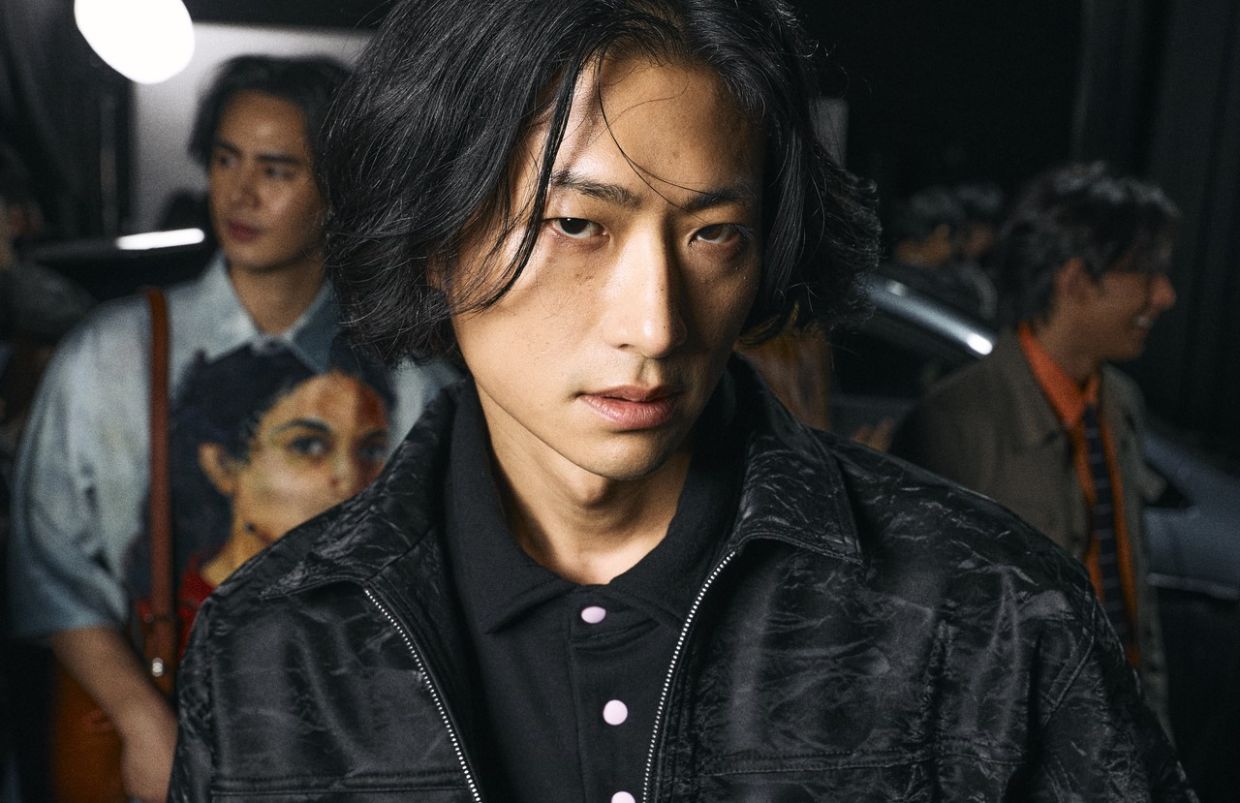
Heo Yong-jin's life took an unexpected turn when his wife casually suggested he try fashion modelling while the couple lived in Spain. The suggestion seemed improbable for a 40-year-old who had spent the previous decade as a litigation support professional at Kim & Chang, South Korea's most prestigious law firm. Yet in July, Heo found himself walking an exclusive Louis Vuitton trunk show in Bangkok, presenting a collection created by menswear creative director Pharrell Williams in collaboration with designer Nigo. The moment encapsulated his unlikely journey from the courtroom to the catwalk—a transition that would have seemed unthinkable just eighteen months earlier.
Heo's pivot into modelling began almost accidentally in 2023 when he and his wife relocated to Spain, ostensibly so he could study sports management and the agency business. Immersed in a fitness-focused environment, he gradually joined classmates for football and padel, a racket sport gaining popularity across Europe. The physical activity produced results: he shed considerable weight and noticed his appearance changing. This transformation prompted his wife to pose the question that would alter his trajectory: why not explore modelling? At 188 centimeters tall, Heo possessed the physical attributes the industry sought. With only four months remaining on his Spanish visa, he decided to take the gamble.
Building a modelling portfolio from scratch required determination and resourcefulness. Heo hired photographers, assembled his own body of work, and approached potential clients directly. His research revealed substantial demand for Asian models in the European market, a discovery that bolstered his confidence. The experience taught him that success in an unfamiliar field required initiative and persistence. When he returned to South Korea with renewed optimism, however, he encountered institutional resistance. Domestic modelling agencies dismissed him, citing his age and lack of professional experience. The industry's preference for younger talent created a significant barrier, forcing Heo to look beyond his home country.
Rejection at home pushed Heo eastward and southward. He systematically contacted modelling agencies throughout China and Southeast Asia, submitting portfolios via email and website portals. Thailand's response proved decisive—an agency there expressed interest and agreed to represent him. This willingness to work across borders reflected both his determination and a pragmatic understanding of where his market existed. Subsequently, Heo appeared in campaigns for various local brands, including sunglasses advertisements and a European insurance company commercial in which he portrayed a Malaysian father. His journey gained unexpected viral attention when an Instagram reel documenting his path accumulated four million views, introducing his story to millions online.
The Louis Vuitton trunk show represented the apex of Heo's professional trajectory thus far, yet he remains cautious about declaring victory. The high-profile booking did not immediately translate into a sustained stream of modelling work. Instead, Heo finds himself navigating the peculiar combination of excitement and precarity that characterises his new existence. The uncertainty, paradoxically, invigorates him. After a decade working within the predictable structures of a prestigious law firm, the unpredictability of freelance modelling feels genuinely stimulating. The financial insecurity occasionally troubles him, but he has concluded that material comfort does not necessarily correlate with happiness or professional fulfilment.
The transition has cultivated a transformation in Heo's sense of self-worth and professional identity. During his legal career, he projected confidence externally while harbouring doubts internally. Modelling has inverted this dynamic: the field has furnished genuine confidence rooted in substantive achievement. When brands proactively contact him for campaigns, the experience retains a surreal quality—a confirmation that others perceive value in his image and presence. The creative dimension of modelling appeals to him distinctly: the opportunity to embody a character, express individuality, and collaborate in bringing a designer's vision into tangible form. These elements were largely absent from litigation support work.
Heo does not characterise his journey as exceptional or particularly remarkable. His framing emphasises simplicity: he lost weight and began pursuing modelling. This measured perspective suggests maturity regarding his achievements and realistic assessment of the challenges ahead. South Korean brands have begun inquiring about his services, including requests for fashion lookbooks, indicating that his domestic market may gradually warm to his candidacy. Yet his ultimate ambition extends to Europe's most prestigious fashion stages. Walking in Milan and Paris fashion weeks—scheduled for late September through early October—represents his next aspiration. The major fashion houses presenting collections during these events, including Prada, Bottega Veneta, Saint Laurent, and Tom Ford, represent the pinnacle of the industry.
Achieving his European fashion week objectives will demand surmounting formidable obstacles. Heo remains an unknown quantity in an industry where established reputations hold substantial weight. He must secure agency representation capable of facilitating auditions at major fashion houses, then compete against younger, more experienced models with deeper industry connections. The mathematical improbability of success does not deter him, however. His narrative challenges prevailing assumptions about professional reinvention and age-related limitations in industries traditionally dominated by youth. For Malaysian and Southeast Asian readers, Heo's experience demonstrates that market opportunities exist throughout the region for individuals willing to pursue unconventional paths. His early success in Thailand and China suggests that Asian markets may offer possibilities for professionals transitioning careers or seeking fresh starts.
Heo's transformation carries broader implications about the relationship between career stability and personal satisfaction. His decade at a prestigious law firm provided security and professional prestige, yet left him uncertain about his deeper aspirations. The modelling field, conversely, offers no guarantees but provides clarity about his professional desires. This inversion of conventional wisdom—that security should supersede passion—reflects generational and individual shifts in how workers conceptualise career meaning. His willingness to abandon a position at South Korea's preeminent law firm to pursue an uncertain path in fashion signals changing attitudes toward career trajectory and life satisfaction among professionals in the region.
Looking forward, Heo acknowledges that his modelling career remains in formation rather than established. The prestige of walking for Louis Vuitton, while undeniably significant, does not guarantee sustained work or industry acceptance. Yet his journey illustrates that age need not disqualify individuals from pursuing new professional directions. Whether his ambitions regarding Milan and Paris fashion weeks materialise remains uncertain. What seems clear is that Heo has already achieved something potentially more valuable than guaranteed employment: he has discovered work that aligns with his interests and provides genuine professional satisfaction. For a man who once questioned whether he understood what suited him professionally, this represents a form of success that transcends catwalk appearances.

