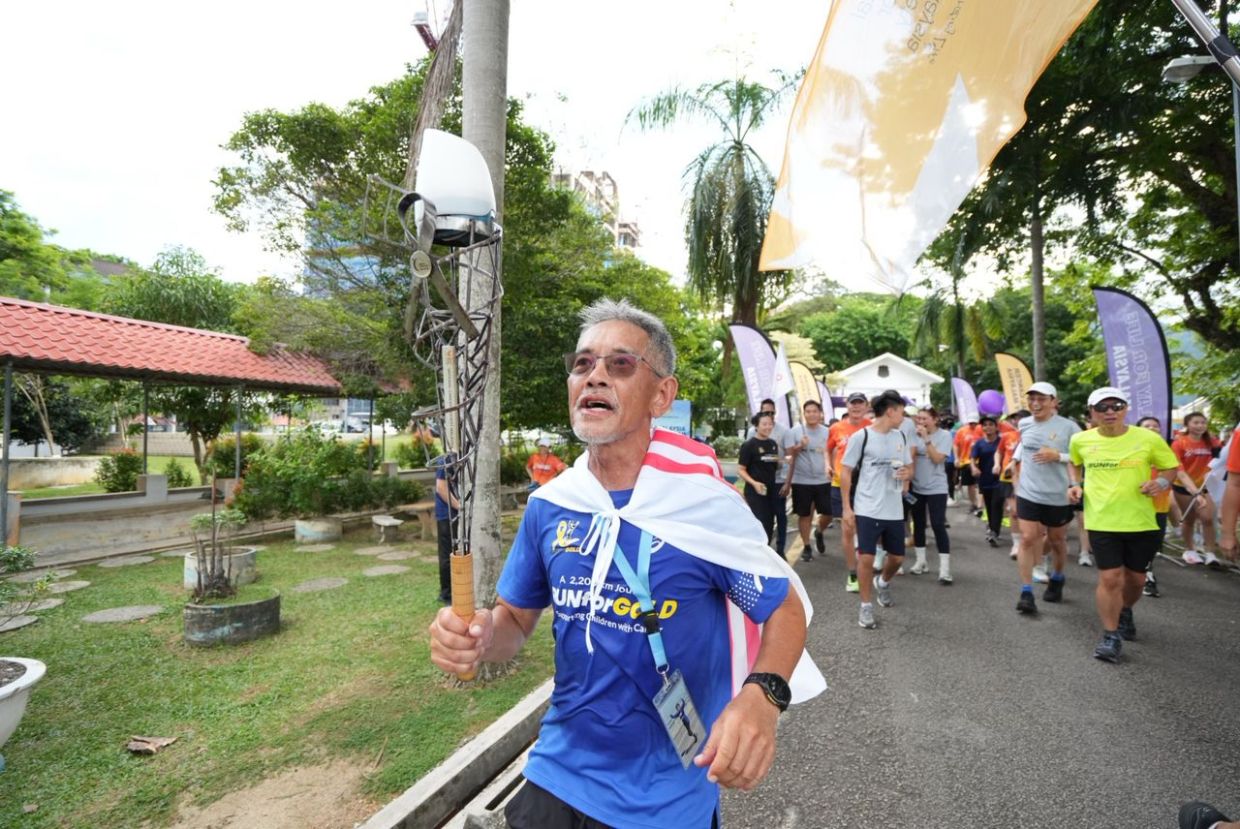
When retirement arrives for most professionals, it signals a time to ease off work commitments and enjoy the fruits of decades of labour. For Lim Shyang Guey, known widely as SG Lim, the transition took an entirely different form. The 66-year-old retired civil engineer and dedicated runner from Penang found himself confronting an unexpected void when his wife, Goh Joo Lee, succumbed to cancer in 2024 at the age of 63. Rather than withdrawing into solitude, Lim embarked on a journey that would eventually span the length of Peninsular Malaysia, transforming personal sorrow into a mission to save young lives battling the same disease that claimed his partner.
In the months following Goh's death, Lim drifted between continents and relationships, seeking comfort in familiar surroundings. He divided his time between Australia where his two children reside, Malaysia where his mother and siblings offered support, and Hong Kong where he attempted to find moments of solitude. Yet these geographical transitions could not fully occupy his mind or mend the rupture left by her absence. When describing the woman he had spent decades alongside, Lim's vocabulary distilled perfectly into two characteristics: loving and caring. He recalls not her own suffering during hospitalisation, but rather her persistent concern for those around her—even strangers in adjacent hospital beds. Despite battling cancer herself, she mustered the energy to ask him to purchase flowers for a woman in the ward opposite, a gesture that brought joy not only to the recipient but to her equally devoted husband. This portrait of compassion extended beyond her immediate circle; Goh's artistic talents, expressed through drawing, painting, and creative pop-up installations that she shared on social media, left a digital legacy that continues to inspire those who knew her.
The catalyst for Lim's ambitious undertaking arrived through literature. After reading a book by Laurence Carter exploring endurance and purpose, Lim conceived the idea of channelling his grief into a sustained physical challenge across Malaysia. He consulted directly with Carter to refine his vision before approaching the National Cancer Society Malaysia (NCSM) for partnership. Together, they crystallised his dream into "Run For Gold," a multi-stage marathon designed to simultaneously raise awareness and mobilise funds specifically for children undergoing cancer treatment. The initiative represented far more than a personal achievement; it became a vehicle for transforming one man's bereavement into tangible assistance for vulnerable populations who needed it most.
Preparing for such an extensive and demanding endeavour required meticulous planning and physical conditioning. Following his completion of the Sydney Marathon in August, Lim systematically increased his running mileage while acclimating himself to the specific demands of Malaysian weather and terrain. He trained himself to rise at 5am for early starts, deliberately ran during late morning hours to acclimatise to the heat, engaged in strength training to protect against injury over extended distances, and even acquired new technical skills in video editing to document and share his journey across social media platforms. This preparation extended beyond mere physical preparation; it represented Lim's psychological commitment to honouring the goal that had crystallised from his grief.
The human dimension of his journey became apparent once Lim began traversing the eleven states and federal territories of Peninsular Malaysia. During his inaugural visit to a children's oncology ward organised by NCSM, the reality of his mission crystallised before him. Observing frail children and the helplessness etched across their parents' faces, Lim recognised that his sacrifice was aligned with genuine purpose. This wasn't abstract charity but direct intervention in the lives of suffering families who desperately needed both financial resources and hope. The emotional weight of these encounters fortified his resolve as he accumulated kilometres and crossed state borders.
Throughout his odyssey, Lim encountered individuals whose own compassion mirrored that of his late wife, deepening the spiritual dimension of his endeavour. In Pekan, Pahang, he met a retired teacher and his spouse whose quiet determination to support the cause without financial means demonstrated that contribution takes multiple forms. This couple subsequently joined Lim across multiple stages spanning Johor, Melaka, and ultimately Penang, with the husband running alongside while the wife provided logistical support. Their devotion to one another, maintained even while assisting a stranger's mission, stirred profound reflections within Lim about the love he had lost. These encounters proved that his individual grief had become communal in nature, with strangers investing their own energy into honouring both his journey and his wife's memory.
After nearly three months on the road and having covered 2,200 kilometres, Lim crossed the finish line in George Town, Penang. In that triumphant moment, his thoughts crystallised into an utterance that encapsulated everything: "Darling, we made it!" Though physically exhausted from the final 80-kilometre stretch, Lim was simultaneously overwhelmed by the assembly of family, friends, former classmates, and complete strangers who had gathered to welcome him home. What had begun as a deeply personal response to grief had rippled outward, touching countless lives along the route and transforming a widow's private sorrow into a public testimony of love, resilience, and purpose. The journey had honoured Goh Joo Lee not merely through completion, but through the accumulation of human connection and the concrete difference raised funds would make for children fighting the same battle that claimed her life.

