Hanging in Suzanne Lim's room is a cherished photograph of her grandparents, captured in a dance hall during the 1950s. The black and white image, showing them dressed in their finest mid-dance, became the spark that would eventually shape her lifelong relationship with fashion history and cultural preservation. Today, at 33, Lim—a graphic designer by profession—has evolved that childhood inspiration into a deliberate practice of collecting, wearing, and documenting vintage Malaysian garments on social media platforms, transforming personal nostalgia into a public conversation about heritage and identity.
Lim's attraction to vintage clothing emerged naturally from her grandparents' influence. Her grandfather's love of rock and roll and her grandmother's background as a taxi dancer created a household where fashion and movement were celebrated as expressions of personality and cultural participation. Beginning dance lessons at just four years old, Lim progressed through formal training in Latin and ballroom dancing, an experience that later intersected with her exposure to traditional Malaysian dress. During her secondary school years, participation in the cultural club exposed her to the elaborate costumes, intricate accessories, and visual storytelling embedded within traditional garments performed during cultural events. This dual exposure—to both international dance forms and local cultural expression—positioned her to understand clothing not merely as aesthetic choice but as a window into historical lived experience.
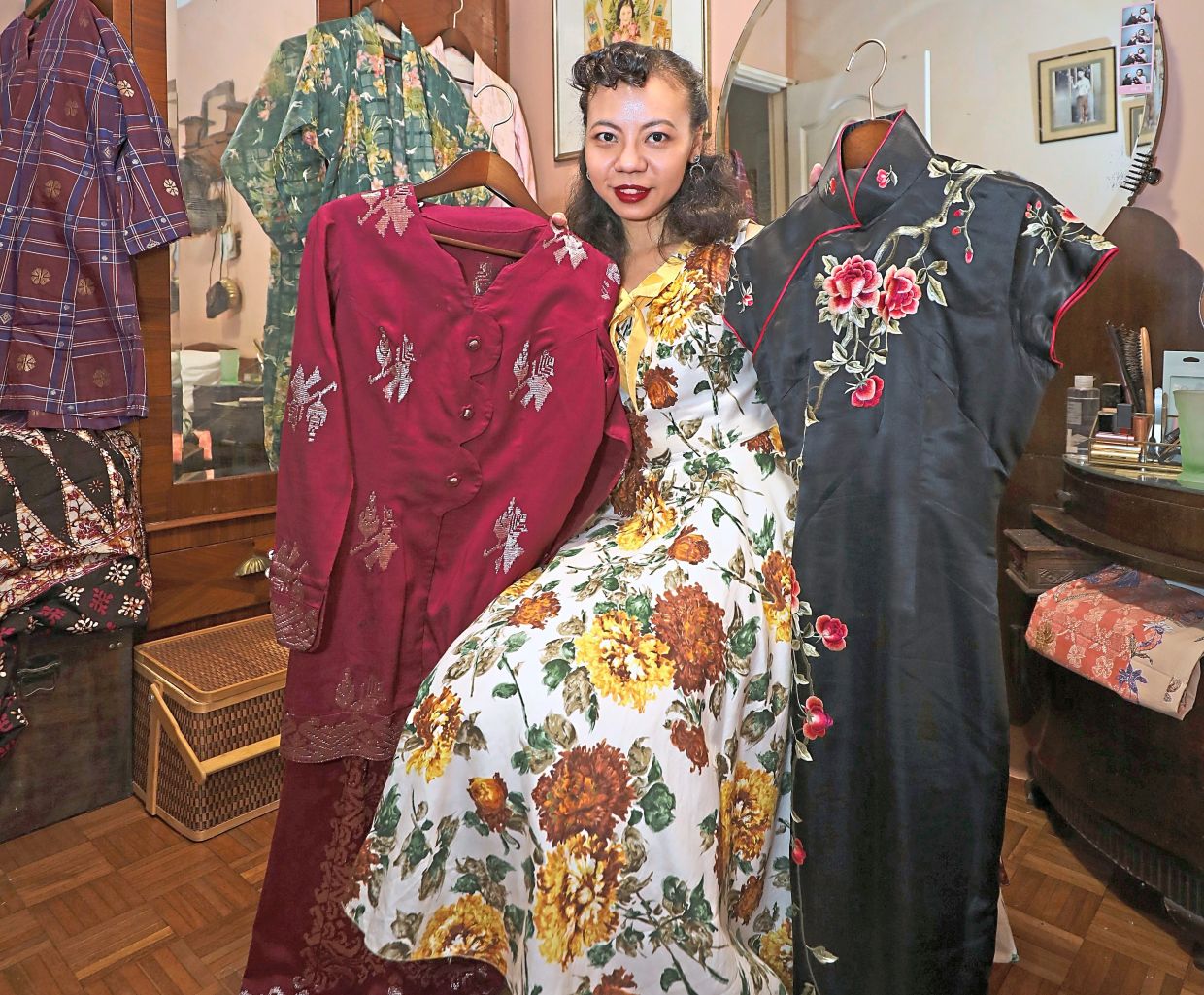
What began as youthful curiosity matured into serious collecting. Lim now maintains a curated selection of vintage Malaysian pieces including kebaya, cheongsam, batik, and songket—garments that represent distinct moments in the nation's sartorial history. She documents herself wearing these pieces against heritage backdrops, creating visual narratives that suggest how her ancestors might have moved through their daily lives. Her approach differs markedly from mere cosplay or costume; instead, she treats each piece as an artifact capable of revealing deeper truths about the societies that produced and wore them. Fashion, in her analysis, functions as historical evidence—a tangible record of economic conditions, social hierarchies, and cultural values that textbook accounts often fail to convey with equal immediacy and texture.
Recognizing that museums and traditional educational resources increasingly fail to reach younger audiences, Lim has positioned her social media presence as an accessible alternative archive. She acknowledges that her presentation isn't always strictly period-accurate, particularly when she deliberately introduces contemporary styling choices. However, when authentic textiles and historical pieces are available, she commits to representing them faithfully. This balance between authenticity and creative reinterpretation reflects a broader tension within heritage preservation: the recognition that living cultural traditions require adaptive spaces while core elements must remain coherent enough to prevent distortion or misappropriation.
Paralleling Lim's clothing-focused approach is the work of Mohamad Alif Daniel Mohammad Nor, a 25-year-old whose engagement with historical material culture emerged through different pathways. Stories shared by his grandmother kindled an initial spark; these domestic narratives gradually expanded into formal interests in historical film, music, and the material culture of specific periods. His collecting practice began in his mid-teens with currency notes issued by the Japanese military occupation force during World War II—objects that carry extraordinary historical weight and complexity. This initial acquisition point led him to join Persatuan Reka Ulang Sejarah (PRUS), a historical re-enactment society that provided structured frameworks for engaging with the past through embodied practice and material authenticity.
For Mohamad Alif Daniel, the shift from passive historical interest to active re-enactment participation represented a crucial epistemological transformation. Studying history through textbooks proved fundamentally limited compared to the embodied knowledge gained from handling period-appropriate garments, understanding their construction, and physically inhabiting the postures and movements they encourage. Re-enactment practice taught him that culture, identity, and historical thought patterns cannot be fully grasped through intellectual abstraction alone; they require sensory engagement and material encounter. This insight aligns with broader academic discussions about the limitations of conventional historical pedagogy, particularly within Southeast Asian contexts where colonial and post-colonial educational systems have sometimes disconnected local populations from intimate knowledge of their own pasts.
Both Lim and Mohamad Alif Daniel have observed a noticeable uptick in vintage collecting and heritage engagement among their peer group. This phenomenon, they suggest, reflects a generational response to digital saturation and the psychological toll of constant virtual connectivity. Young Malaysians increasingly seek tactile, material experiences that provide anchoring in physical reality and temporal specificity. Vintage objects and historical garments satisfy this appetite by offering tangible connections to concrete moments in the past—they are escapism, certainly, but escapism with substance and educational value rather than mere fantasy indulgence.
Lim emphasizes that contemporary engagement with heritage doesn't require rigid historical reproduction. Instead, a more productive approach permits young people to draw inspiration from the past while exercising creative agency in the present. This negotiation between fidelity and innovation particularly resonates with younger generations who reject the false binary between tradition and modernity. However, she insists that creative freedom must operate within meaningful constraints—the garments themselves, their construction methods, their textiles, and their cultural significance must remain sufficiently recognizable to prevent the dilution or misrepresentation that could ultimately undermine cultural identity itself.
The implications of this generational turn toward historical material culture extend beyond individual aesthetic choice or personal hobby. Mohamad Alif Daniel has observed that his public sharing of traditionally styled dress encouraged others, particularly fellow Malaysians who harbored shame or anxiety about wearing cultural garments in contemporary urban spaces, to reclaim their own heritage with greater confidence and pride. This social ripple effect suggests that highly visible public figures engaging authentically with cultural dress can shift broader community attitudes and create permission structures for others to explore their own cultural identities without fear of mockery or social censure. In plural, multicultural Malaysia, such confidence in cultural expression carries particular significance for maintaining vibrant, self-assured communities.
The broader pattern reflects a sophisticated understanding of how material culture functions as a repository of knowledge, identity, and social history. Neither Lim nor Mohamad Alif Daniel treats vintage garments as quaint relics to be preserved in museum vitrines, separated from lived experience. Instead, they animate these objects through wear, documentation, and public engagement, transforming them from historical artifacts into active participants in contemporary cultural discourse. This approach acknowledges that heritage survives not through preservation alone but through continuous re-engagement, reinterpretation, and integration into present-day life. For Malaysia's younger generations, vintage clothing and historical re-enactment have become vehicles for reconnecting with ancestral knowledge, building community with peers who share similar values, and asserting cultural identity in increasingly globalized contexts. The photograph of Lim's grandparents dancing remains inspirational not because it captures a frozen moment to be replicated, but because it demonstrates that their ancestors possessed agency, creativity, and pride in their cultural expression—qualities the current generation seeks to reclaim and carry forward into an uncertain future.

