At her Petaling Jaya kitchen, chef Yenni Law demonstrates a skill that few of her peers have mastered: the precise butchering of secondary beef cuts. With focused intensity, she guides her blade through sinew, fat and connective tissue, separating usable meat from waste with practised efficiency. This specialisation has earned Law and co-founder Shelly Saw a Malaysia Book of Records recognition for featuring the most secondary cuts of beef on a restaurant menu—twenty distinct varieties served across their establishment. Yet Law remains something of an anomaly in an industry where prime cuts have long dominated culinary conversation and customer expectations.
Malaysia's position as Southeast Asia's largest beef consumer masks a profound imbalance in how the meat is utilised. Prime cuts—the coveted striploin, tenderloin and ribeye that command premium prices—constitute merely 8 to 10 percent of a beef carcass. The remaining 80 to 90 percent, classified as secondary cuts, has traditionally been ground into minced meat or processed into burger patties and sausages. This practise means most Malaysian diners have never experienced the distinct flavour profiles and textural qualities that secondary cuts offer when properly prepared and served as main courses.
The secondary beef category encompasses remarkable diversity. Flat iron derives from the shoulder, while flank comes from the abdominal muscles. Rump originates from the hindquarters, hanging tender from the diaphragm, and picanha from the top rump cap. Chuck primal encompasses the shoulder and neck region, inside skirt from the plate primal, and outside skirt from the diaphragm muscle. Each cut presents unique textural and flavour characteristics that challenge the conventional wisdom that only premium cuts deserve centre-plate billing.
Over the past year, the Klang Valley dining ecosystem has undergone a subtle but discernible shift. Mid-range and high-end establishments have begun incorporating secondary cuts into their regular offerings, moving beyond the historical treatment of these portions as secondary ingredients. This transformation has not occurred spontaneously but rather through deliberate industry efforts. Meat & Livestock Australia, the regulatory body overseeing meat standards for Australian and international markets, has partnered with local distributors including Lucky Frozen Sdn Bhd to organise seminars, masterclasses, and tasting events that reframe secondary cuts as protagonists rather than supporting players.
The strategic parallels with other culinary transformations are striking. When Norway's Minister of Fisheries launched an intensive campaign to introduce Norwegian salmon to Japan during the 1980s, Japanese chefs initially dismissed the fish as unsuitable for their cuisine. Yet through sustained educational initiatives and targeted promotion, salmon sushi evolved into Japan's most popular sushi topping within decades. Malaysian chefs and restaurateurs now experience similar revelations through structured learning environments. Law herself attended recent masterbutcher classes organised by Meat & Livestock Australia, bringing her entire team to benefit from expert instruction on processing techniques and fat trimming efficiency. These gatherings serve a dual purpose: introducing chefs to unfamiliar cuts while validating their existing practises against professional standards.
Valeska V, regional manager for South-East Asia at Meat & Livestock Australia, articulates the organisation's strategic reasoning. Prime cuts remain inherently tender and require minimal technical skill to prepare, making them simultaneously attractive to chefs seeking efficiency and to consumers accustomed to ease. However, as both professional and domestic audiences develop culinary sophistication, markets become receptive to different offerings. The concurrent pressure on pricing creates a practical imperative. By demonstrating how to extract maximum value and exceptional quality from secondary cuts, industry bodies open possibilities that many chefs might otherwise dismiss outright.
Economic considerations provide perhaps the most compelling motivation for the shift. Secondary cuts typically cost 20 to 60 percent less than their prime counterparts—potentially representing hundreds of ringgit in per-serving savings. As global oil crises and worldwide beef shortages have propelled prime cut prices upward by approximately 30 percent, secondary cuts have faced far more modest increases of around 10 percent. Desmond Chong, head chef at woodfire grill restaurant Ignis KL, now features three to four secondary cuts on his menu specifically because cost dynamics have rendered prime cuts increasingly untenable for establishment economics. This pricing pressure, while painful, has effectively forced culinary innovation.
James See, business development director at Lucky Frozen Sdn Bhd, frames secondary cut adoption within a broader resilience narrative. Malaysia's stable appetite for beef, combined with global supply constraints, necessitates diversification in consumption patterns. Utilising entire beef carcasses rather than prioritising narrow cuts creates resistance to inflation while maximising value. This philosophy aligns with emerging global sustainability consciousness and pragmatic supply chain management.
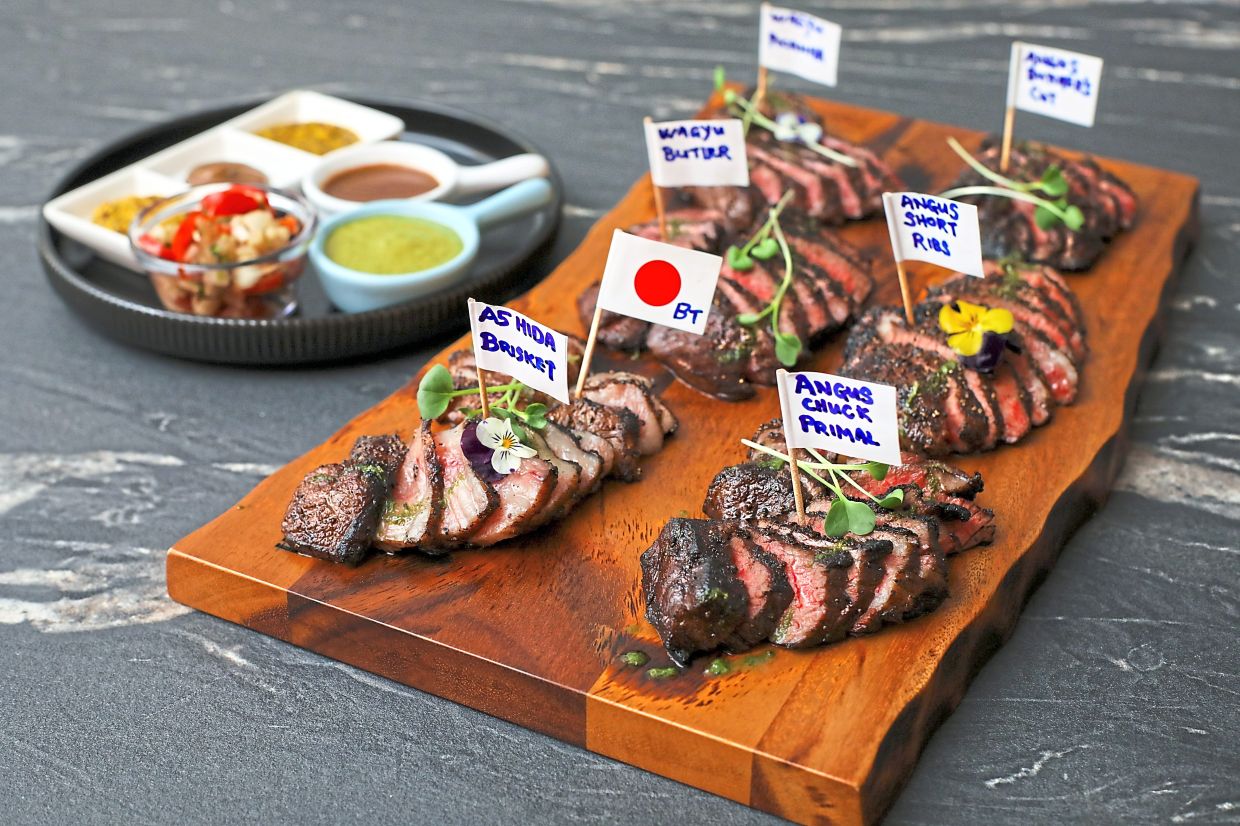
The sensory experience of secondary cuts challenges the assumption that premium price correlates with superior eating. At Law's restaurant, diners encounter large platters featuring butcher's cut, chuck primal, brisket, picanha and short rib, each delivering pronounced bovine flavours alongside distinct textural experiences—varying levels of chew, bounce, malleability and tenderness. Similarly, at Ignis, charcoal-fired short ribs and flat iron steaks emerge with beautifully caramelised exteriors and silken interior textures that rival prime cuts without excessive richness. The diversity available within secondary cuts expands the tasting spectrum beyond what premium selections alone could provide.
Yet transition carries legitimate challenges. Secondary cuts demand significantly steeper learning curves than their prime counterparts. They contain greater proportions of sinew, silver skin and fat requiring skilled identification and removal. Law emphasises that practitioners must distinguish between fat and sinew visually—a task that appears simple in concept but demands considerable practise to execute consistently. This knowledge barrier represents the primary obstacle preventing more rapid adoption across Malaysia's restaurant sector.
The momentum building around secondary beef cuts reflects deeper transformations in Malaysia's dining culture. Education initiatives continue expanding, supply chains strengthen, and chefs accumulate expertise through shared learning environments. As global beef scarcity persists and pricing pressures mount, the practical case for secondary cuts becomes progressively harder to ignore. What began as niche experimentation at establishments like Meat Feds now represents a genuine reorientation of how Malaysian restaurants source, prepare and serve beef to increasingly discerning diners.

