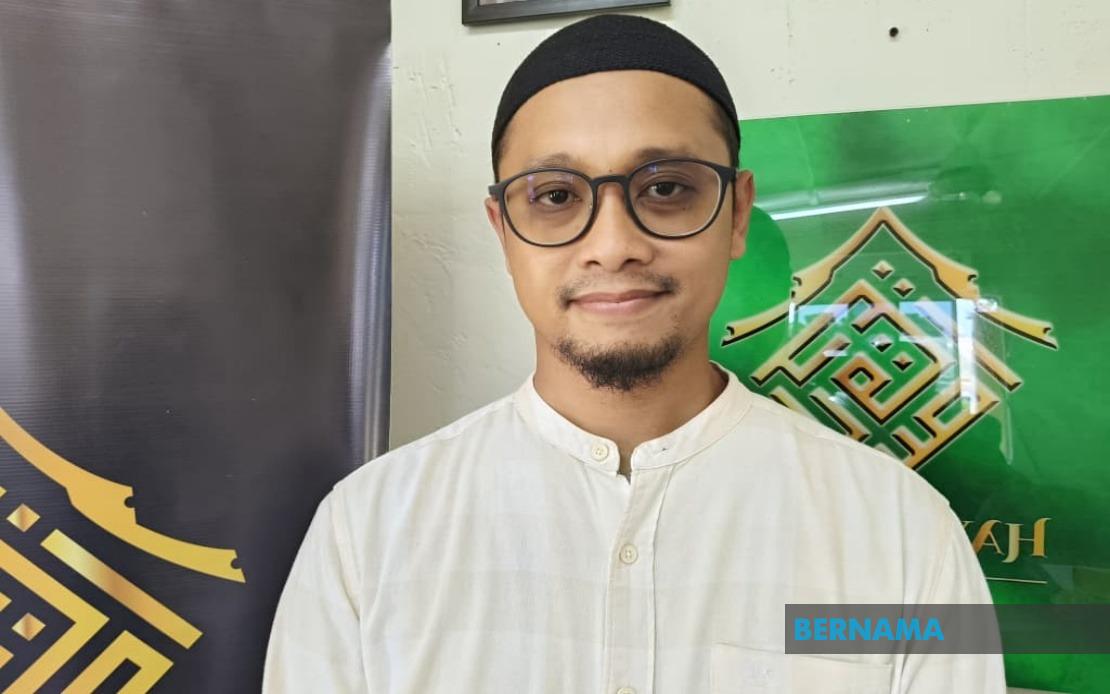
Mohd Rasli Hassan stands as testimony to the possibility of redemption. The 52-year-old Malaysian, once ensnared by substance abuse that threatened to consume his entire future, has emerged as a rehabilitation coach—a transformation that required years of struggle, professional intervention, and ultimately, unwavering personal commitment to change. His journey from addiction to inspiration challenges societal assumptions about whether individuals trapped in cycles of drug dependency can ever truly reclaim their lives and contribute meaningfully to their communities.
Rasli's descent into substance abuse began remarkably early. He was just eleven years old when he first experimented with drugs in Pasir Mas, Kelantan, a rural town in Malaysia's northeast. For eight years, his addiction deepened undetected by his family until police intervention forced the issue into the open. This delayed discovery meant that nearly a decade of his formative teenage years were consumed by substance dependency, a period when most youths are establishing educational foundations and social connections. Instead, Rasli was locked in the grip of addiction during precisely the years when intervention could have prevented deeper entrenchment.
Following his arrest, the Malaysian justice and rehabilitation system placed him at the Kuala Terengganu National Anti-Drug Agency (AADK) facility for seven months. This governmental intervention marked the first structured attempt to extract him from his addiction trajectory. Rather than remaining institutionalised or abandoned after his initial rehabilitation stint, however, Rasli was given an opportunity to remain connected to recovery work. From 2017 onwards, he served as a peer support counsellor at Rumah Rakan Islah, a private rehabilitation centre located in Setiu, Terengganu. This role kept him embedded within a supportive ecosystem while allowing him to begin contributing to others' recovery—a position that likely reinforced his own commitment to staying clean.
Last year, Rasli took a decisive step toward formalising his expertise and expanding his capacity to help others. He completed the Academy in Industry (ADI) programme at Rumah Rakan Islah, a one-year initiative that culminated in his earning a Professional Diploma in Drug Addiction Recovery Coaching. The ADI programme represents a significant institutional investment in transforming recovering addicts into trained professionals. It combines practical, industry-based learning with formal education, equipping graduates with both therapeutic knowledge and practical skills spanning diverse areas including agricultural training—recognising that sustainable recovery often requires economic independence alongside psychological healing.
What distinguishes the ADI programme from conventional rehabilitation is its systematic integration of evidence-based methods with experiential learning. Muhammad Anas Mohd Nasar, the academic director and manager of Rumah Rakan Islah, explained that the centre had previously conducted similar training informally, based on accumulated experience and collegial discussion. The ADI programme transformed these ad hoc practices into a documented, structured curriculum comprising six core modules. These modules address rehabilitation methodologies, therapeutic approaches, and the complete continuum of care—from a participant's initial entry through treatment completion and workforce integration. This systematisation enhances replicability and quality assurance across different cohorts and potentially other facilities adopting the model.
The ADI programme operates under stringent selection criteria that reflect its aspirational nature. Candidates must have maintained drug-free status for a minimum of five years prior to enrolment, demonstrating sustained recovery rather than mere detoxification. They must additionally demonstrate willingness to engage in both training and labour—a requirement that filters for genuine commitment to transformation rather than passive rehabilitation. The programme is conducted in partnership with the Malaysia Productivity Corporation (MPC), lending both institutional credibility and access to productivity-enhancement frameworks. To date, ten participants have successfully completed the ADI programme and received diplomas, suggesting both the rigour of selection and the intensity of the training regimen.
Rasli's reflection on his achievement carries particular weight given his personal history. Speaking to Bernama, he articulated a philosophy increasingly advocated by rehabilitation specialists: that past struggles need not determine future trajectory. "This success proves that everyone deserves a second chance," he stated, emphasising how the programme restored his confidence, restructured his thinking patterns, and catalysed determination toward building a better future. For Malaysian readers, his testimony counters stigmatising narratives that often portray addiction as an irreversible moral failing rather than a treatable condition amenable to recovery and productive reintegration.
Rumah Rakan Islah's approach reflects broader contemporary thinking about rehabilitation's purpose. Rather than viewing recovery solely as the absence of drug use, the centre positions it as a foundation for active contribution to society. The ADI programme explicitly frames recovery as a springboard toward gainful employment and economic productivity. This perspective aligns with growing international evidence suggesting that purposeful work and skill development substantially reinforce psychological recovery and reduce relapse risk. For Southeast Asian nations grappling with rising substance abuse rates, this model offers an alternative to purely custodial or abstinence-focused approaches.
The centre's collaborative partnerships extend beyond the MPC. Rumah Rakan Islah participates in programmes organised by the Malaysian Substance Abuse Council (MASAC) in conjunction with Universiti Sains Islam Malaysia (USIM) and Universiti Putra Malaysia (UPM). These academic linkages suggest that rehabilitation is increasingly transitioning from grassroots-only work into academically-grounded practice informed by research and university expertise. For Malaysia, this institutional elevation of addiction recovery and coaching as legitimate professional domains may gradually shift public and policy perceptions.
Rasli's current position as a rehabilitation coach at Rumah Rakan Islah completes a remarkable arc. He has moved from being a client requiring intervention to becoming an interventionist helping others navigate their own recovery journeys. This transition carries profound symbolic and practical significance. Recovering individuals functioning as peer counsellors and coaches often prove uniquely effective precisely because they possess lived experience of the struggles their clients face. They model the possibility of change through their very presence.
For Malaysian policymakers and rehabilitation professionals, Rasli's case illuminates several policy implications. First, it demonstrates that recovery trajectories need not terminate with initial treatment completion; instead, graduated pathways toward professional roles can be constructed. Second, it suggests that formalising and credentialling recovery coaching through structured programmes enhances both the coach's professional standing and the quality of care delivered. Third, his success indicates that individuals with substantial addiction histories can become productive members of the workforce when given appropriate training, opportunity, and ongoing support structures.
The broader context matters here too. Malaysia continues confronting persistent substance abuse challenges, with Government figures regularly documenting new cases and relapses. Against this backdrop, developing a cadre of trained recovery coaches drawn from the population of recovered addicts represents both a humane policy choice and a pragmatic resource deployment strategy. Rasli and his nine fellow ADI programme graduates embody this dual logic—they are simultaneously living proof that recovery is possible and newly-equipped professionals capable of scaling recovery support across the nation.
Ultimately, Rasli's journey inverts the typical addiction narrative. Rather than an arc of decline, criminal involvement, and tragic endings, his life has traced an arc of recovery, professional development, and purposeful contribution. He entered adolescence as a vulnerable youth susceptible to substance dependency, spent two decades entangled in addiction, and now operates as a certified rehabilitation professional. For readers across Southeast Asia confronting similar substance abuse epidemics, his transformation offers neither naive optimism nor false simplicity—but rather evidence that with adequate institutional support, skilled intervention, and personal determination, even deeply damaged lives can be meaningfully repaired and redirected toward serving others.

