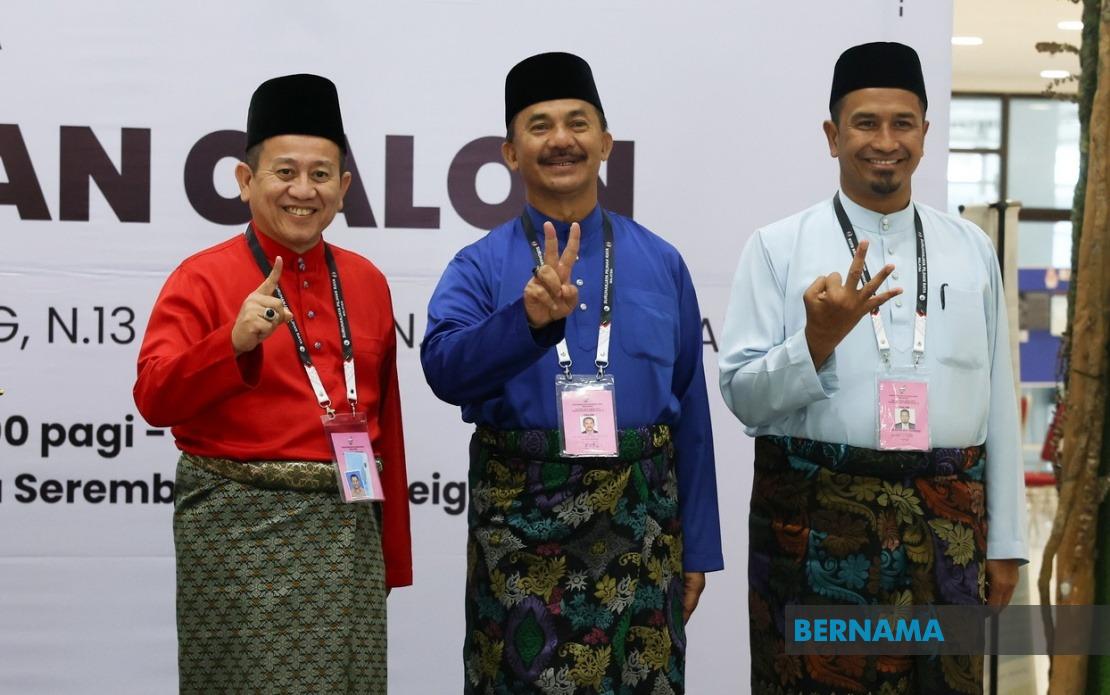
The 16th Negeri Sembilan State Election is shaping up as a generational moment for the state's electorate, with political parties across the spectrum strategically blending veteran politicians and newcomers to present voters with meaningful alternatives. This calculated mix of established figures and untested candidates reflects broader shifts within Malaysia's political landscape as parties attempt to rebuild legitimacy and widen their appeal beyond traditional strongholds.
Pakatan Harapan, contesting all 36 State Legislative Assembly seats, has committed to fielding 24 newly unveiled candidates alongside experienced campaigners, signalling an attempt to rebrand after its 2023 disappointment in Negeri Sembilan. The coalition's decision to inject this level of fresh blood into its roster suggests internal recognition that voter fatigue may have set in among long-serving representatives. Significantly, party chairman Datuk Seri Aminuddin Harun himself exemplifies this rejuvenation strategy, deliberately stepping aside from his Sekamat seat to contest Linggi instead—a tactical repositioning that simultaneously demonstrates willingness to take calculated risks while maintaining leadership representation at the state level.
The continued prominence of high-profile PH figures such as DAP Secretary-General and Transport Minister Anthony Loke provides institutional continuity and name recognition. Loke's decision to defend the Chennah seat anchors PH's campaign with ministerial gravitas, particularly among voters concerned with federal governance and portfolio competence. This layering of national-level figures atop grassroots newcomers creates a narrative wherein PH positions itself as simultaneously reformist and responsible—capable of pursuing change without sacrificing administrative experience.
Barisan Nasional has adopted a more conservative generational approach, fielding 13 new candidates from its slate of 25 contenders. The coalition's restraint in introducing fresh faces may reflect confidence in existing structures, yet it simultaneously risks amplifying perceptions of stagnation among younger voters seeking generational change. UMNO Deputy President and Foreign Minister Datuk Seri Mohamad Hasan's continued candidacy in Rantau reinforces BN's reliance on senior figures to drive voter mobilisation, though this dependency could prove problematic if anti-incumbency sentiment strengthens. The strategic repositioning of candidates like Datuk Ismail Lasim, who moves from Senaling to Juasseh, suggests internal recalibrations based on demographic or ground intelligence rather than fresh thinking.
Barisan Nasional's state leadership, represented by Negeri Sembilan Chairman Datuk Seri Jalaluddin Alias defending his Pertang seat from the 2023 election, demonstrates institutional continuity that may appeal to stability-focused voters but could alienate those desiring transformation. The coalition's approach essentially amounts to territorial consolidation rather than expansive innovation, a posture that may prove adequate in traditional BN strongholds but potentially vulnerable in swing districts where novelty and reform messaging carries weight.
Perikatan Nasional's participation across 11 seats through a multi-party framework including PAS, Gerakan, Wawasan, and MIPP introduces further fragmentation into the competitive landscape. This distributed candidacy across component parties complicates messaging coherence and may confuse voters uncertain about PN's unified direction or commitment to Negeri Sembilan specifically. The arrangement essentially allows PN to contest without the resource concentration that unified party machines provide, potentially limiting its capacity to mount sustained voter engagement campaigns.
The most striking departure emerges through Bersatu's independent participation. The party fielded 24 candidates operating under its own logo rather than the PN umbrella used during 2023, with Information Chief Datuk Tun Faisal Ismail Aziz representing the new candidate category. This rebranding manoeuvre signals organisational ambition and potential friction within Perikatan structures, suggesting Bersatu seeks individual political identity and credit-claiming opportunities separate from coalition partners. Chairwoman Hanifah Abu Bakar's continued candidacy in Labu anchors the party's experience quotient, though this dual-track strategy—mixing newcomers and incumbents across separate party branding—may generate voter confusion regarding Bersatu's actual organisational coherence.
The candidacy landscape encompasses significant demographic variation that holds implications for campaign messaging and voter engagement strategies. Gemencheh's Datuk Abd Latiff A Tambi, at seventy years old, represents the election's eldest contender, embodying decades of political experience and networks, whilst Sri Tanjung's Bersatu candidate Leevineshwaraan Murugan, at twenty-three, represents millennial political participation and generational transition. This forty-seven-year age spread within the candidate pool reflects conscious attempts by parties to bridge demographic divides, recognising that Malaysian electorates increasingly span multiple generational cohorts with distinct policy priorities and political values. The presence of both extremes simultaneously underscores tensions between continuity and change that define this election fundamentally.
The participation of minor parties and independent candidates, including Parti Berjasa, Parti Orang Asli Malaysia, Parti Sosialis Malaysia, and four independent contenders, further fragments the competitive space. Whilst these entities individually command limited electoral influence, collectively they symbolise voter appetite for alternatives beyond the two primary coalitions. Their presence may prove consequential in closely contested marginal seats where vote-splitting dynamics determine outcomes, particularly if they mobilise specific constituencies around niche policy priorities that major parties neglect.
With 103 candidates confirmed competing for 36 seats following nomination closure, Negeri Sembilan voters will encounter an unusually crowded ballot presenting genuine choice architectures across ideological and generational spectrums. Early voting on July 28 and polling day on August 1 will determine whether voters reward fresh faces seeking to revitalise their parties or validate experienced politicians' continued governance. The outcome will signal important lessons about Malaysian voter preferences regarding generational transition, political renewal, and the electoral penalties or premiums attached to continuity versus change—insights holding relevance far beyond Negeri Sembilan's borders as the nation contemplates its political trajectory.

