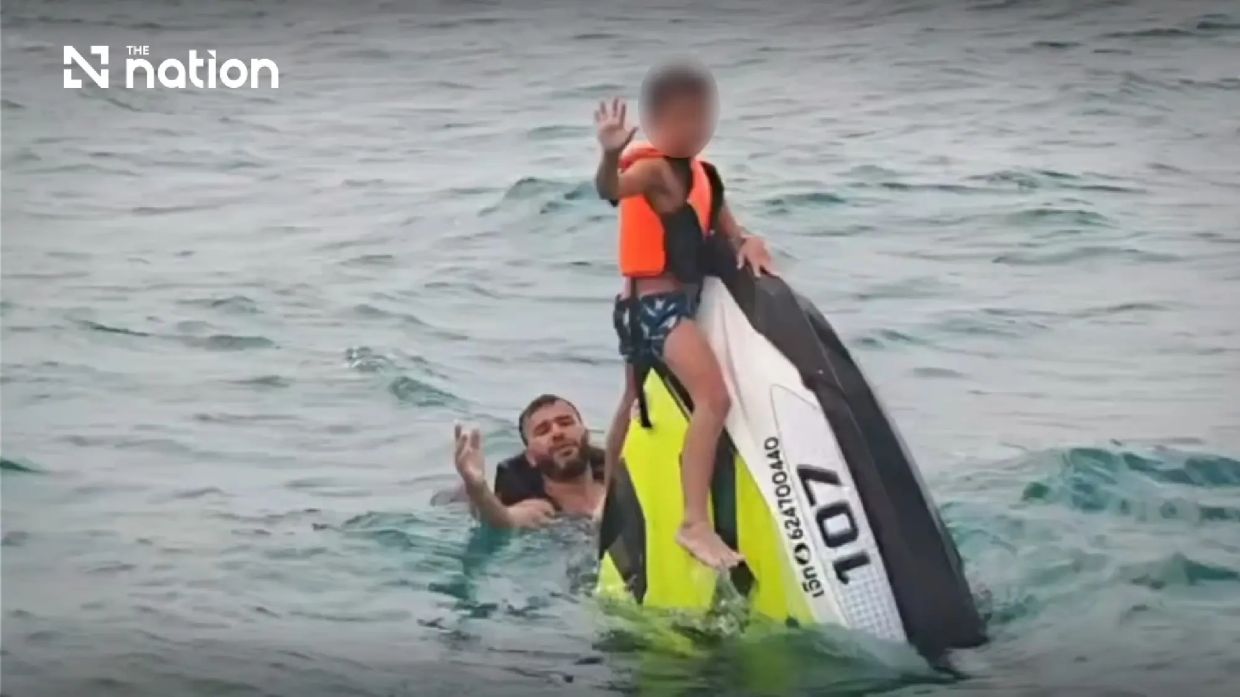
A French father and his two young sons endured a frightening night at sea after their rented jet ski overturned near Koh Samui, Thailand's renowned beach destination, before rescue teams located them on Friday morning. The 50-year-old man and his children, ages five and seven, were pulled to safety following their extended drift in the Gulf of Thailand waters, according to local authorities who confirmed the family's ordeal on Saturday. The trio were checked at a local medical facility after their overnight emergency but were cleared for discharge shortly after arrival, marking what could easily have ended in tragedy.
The incident unfolded when the father rented a jet ski from a commercial operator on the island at approximately 5pm on Thursday. The rental arrangement stipulated that the family should return the watercraft within a designated timeframe, yet when hours passed without their return, the concerned operator immediately flagged the situation to search-and-rescue personnel and provincial officials. This swift action by the rental business ultimately proved instrumental in preventing what might have become a fatal outcome at sea.
Rescue crews located the family at around 10am on Friday morning, discovering them in an exhausted state after consuming significant quantities of seawater during their prolonged exposure. The local government official coordinating the rescue effort noted that the father and his two sons displayed visible signs of their traumatic experience, with pallid complexions particularly evident on the younger boys. Such physiological indicators reflected the severe stress inflicted by their unexpectedly extended time in the marine environment.
Investigators have begun examining the circumstances that led to the jet ski's unexpected capsizing merely 15 minutes after the family departed with the vessel. The father initially told authorities that he possessed considerable experience operating such watercraft, raising questions about what mechanical or environmental factors might have caused the mishap. However, the rental operator subsequently informed media outlets that the family may have ventured beyond the geographic boundaries established in their rental contract, potentially into areas with different sea conditions or stronger currents.
Rescue footage distributed by local authorities depicted the jet ski in an almost completely inverted position, with only its angular front section protruding above the waterline. One of the children could be seen perched atop the submerged craft while his father remained in the water nearby, both secured by life jackets that undoubtedly saved their lives. Rescue personnel communicating with the family can be heard in the video encouraging them to remain calm and assuring them of their survival, before carefully transferring the boy to a rescue vessel and providing the distressed family with drinking water.
The incident underscores the importance of adequate safety equipment and adherence to rental guidelines at popular tourist destinations. Life jackets functioned as critical protective gear for this family, preventing a potential tragedy in open water where assistance took hours to arrive. Many accident investigations at coastal resorts have highlighted that non-compliance with designated safe zones and overestimation of personal swimming or water sports abilities frequently contribute to maritime emergencies in Thailand's tourist zones.
Despite their harrowing experience, the family chose to remain in Thailand and complete their holiday, a decision reflecting either remarkable resilience or perhaps an underestimation of their close brush with catastrophe. Such incidents, while statistically uncommon at managed resort facilities, periodically occur across Southeast Asia's booming water sports tourism industry, where the combination of inexperienced operators, inadequately maintained equipment, and commercial pressure to maximise bookings sometimes creates hazardous conditions.
Koh Samui maintains a reputation as one of Thailand's premier family holiday destinations, drawing millions of international visitors annually through its appeal of well-maintained beaches, relatively tranquil waters compared to other regions, and an extensive portfolio of family-oriented accommodation and entertainment facilities. The island's infrastructure and rescue coordination capabilities were tested and proven adequate in this instance, though the incident raises questions about safety protocols governing water sports rental operations and whether current oversight mechanisms sufficiently protect international visitors unfamiliar with local marine conditions and hazards.
This rescue operation adds to the extensive history of maritime emergencies in Thailand's tourist zones, a region where thousands of visitors participate in water activities daily. The involvement of rapid-response rescue teams, coupled with the family's timely discovery before their condition deteriorated further, represents a successful intervention. Nevertheless, the incident serves as a cautionary reminder for travellers throughout Southeast Asia that water sports activities, despite their recreational appeal, carry inherent risks that demand respect, proper instruction, appropriate safety equipment, and strict adherence to operational guidelines established by rental and tour providers.

