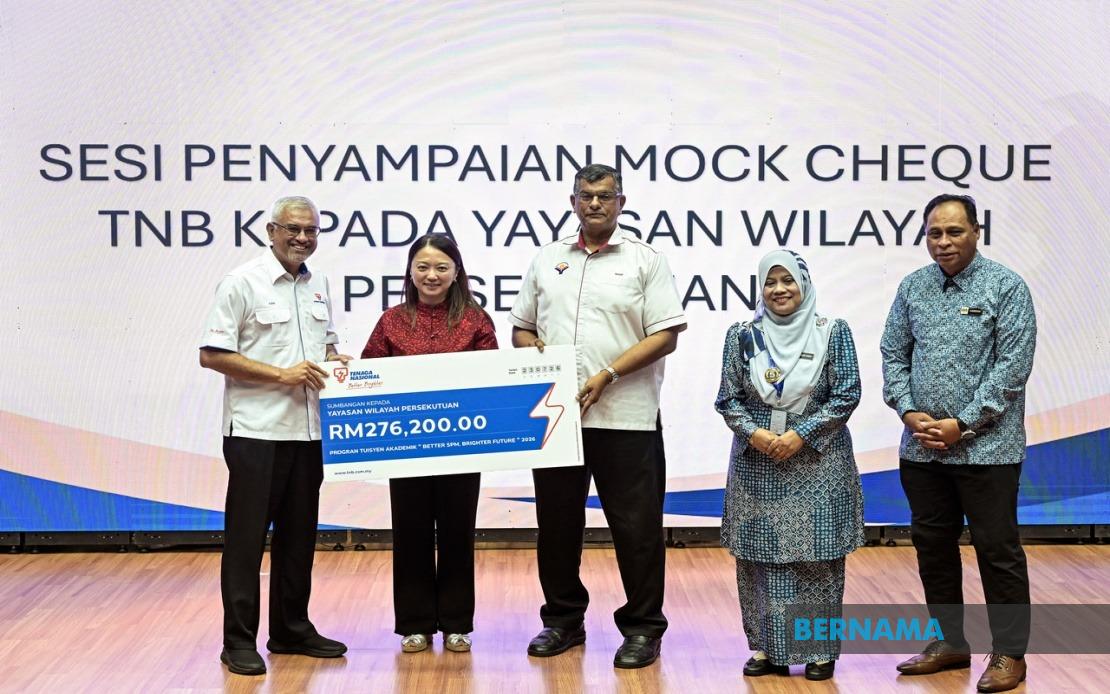
The Better SPM Brighter Future Programme has begun offering complimentary academic support to approximately 1,600 Form Five students preparing for their Malaysian Certificate of Education examinations. Spanning 40 secondary institutions throughout Kuala Lumpur, this initiative represents a significant intervention in addressing educational accessibility and exam readiness disparities within the federal territory.
Hannah Yeoh, Minister in the Prime Minister's Department overseeing Federal Territories and chairman of Yayasan Wilayah Persekutuan, unveiled the scheme at Sekolah Seni Malaysia Kuala Lumpur. The programme emerged from recognition that supplementary tuition costs often create considerable financial strain for Malaysian households, particularly those with limited means. By eliminating fees for enrolled candidates, the initiative seeks to ensure that economic constraints do not compromise academic preparation or performance outcomes.
Tenaga Nasional Berhad has allocated RM276,200 to support the programme's implementation, demonstrating corporate sector engagement in educational advancement. This financial commitment reflects TNB's broader commitment to community development within the territories it serves. The funding enables YWP to coordinate delivery of tuition services in close partnership with the Kuala Lumpur Federal Territories Education Department, creating an integrated approach drawing on both statutory and philanthropic resources.
The curriculum focus remains strategically narrowed to four critical subjects that form the foundation of SPM assessment frameworks. Bahasa Melayu and English represent essential language competencies required across virtually all tertiary pathways and professional domains in Malaysia. Mathematics and History similarly constitute core subjects that significantly influence university admissions decisions and career trajectories. This concentration allows participating schools to deploy instructional resources efficiently while addressing areas where students typically seek supplementary assistance.
For many Malaysian families, particularly those in urban centres like Kuala Lumpur where living costs remain elevated, private tuition represents a discretionary expense that many cannot afford. The scheme directly addresses this equity concern by removing financial barriers to academic support. Students from disadvantaged backgrounds gain access to structured preparation previously available primarily to families with higher disposable incomes, thereby narrowing performance gaps that often correlate with socioeconomic status.
The programme demonstrates deliberate policy recognition that examination success requires more than classroom instruction alone. SPM candidates across Malaysia have long supplemented formal education with private tutoring, creating a two-tiered system where wealthier students access additional guidance and resources. This initiative represents an attempt to democratise access to supplementary tuition, acknowledging that standardised examinations demand comprehensive preparation.
Yeoh also addressed recent public discourse concerning cleanliness standards following large-scale events at Dataran Merdeka. Her remarks distinguished between legitimately critiquing civic behaviour and inappropriately attacking particular groups or agencies. She emphasised that promoting public responsibility for environmental cleanliness constitutes an educational imperative rather than blame assignment. This messaging reflects broader urban governance challenges where public spaces require collective stewardship rather than reliance solely on municipal authorities.
The minister stressed that adult conduct establishes behavioural benchmarks for younger generations. Environmental stewardship and civic responsibility develop through observation and experience rather than abstract instruction, making public exemplification crucial. When adults habitually disregard waste disposal protocols or treat cleanliness as exclusively others' responsibility, children internalise these attitudes, perpetuating cycles of poor civic behaviour across communities.
Kuala Lumpur City Hall maintains its commitment to preserving Dataran Merdeka as an accessible recreational facility serving the broader public. Balancing public access with maintenance standards requires sustained coordination between municipal authorities and community participants. The space's role as a venue for major public events—including international sports broadcasts that attract substantial crowds—creates particular challenges for infrastructure and cleanliness management.
The Better SPM Brighter Future Programme sits within Malaysia's broader policy framework emphasising educational equity and opportunity enhancement. As universities increasingly compete for qualified intake and employers demand stronger foundational competencies, ensuring comprehensive exam preparation becomes increasingly important. This initiative recognises that resource constraints should not determine educational outcomes for capable students.
Regionally, similar tuition support programmes operate across Southeast Asia, though Malaysia's approach of combining governmental and corporate resources while partnering with established educational authorities represents a distinctive model. The integration of YWP's philanthropic mandate with official education department structures potentially creates sustainability advantages compared to purely private or wholly state-administered alternatives.
The programme's scale—targeting 40 schools and 1,600 students—indicates meaningful scope while remaining geographically contained to Kuala Lumpur. Potential expansion to other Malaysian states would require comparable corporate sponsorship and institutional coordination. Early outcomes from this initiative will likely inform broader policy considerations regarding standardised examination support frameworks across the nation.
Moving forward, monitoring student progression and examination outcomes will provide empirical evidence regarding programme effectiveness. Measuring not merely participant satisfaction but actual academic achievement gains will establish whether free tuition translates into measurable performance improvements. Such data will prove invaluable for policymakers assessing whether this model merits expansion or replication within Malaysian educational systems.

