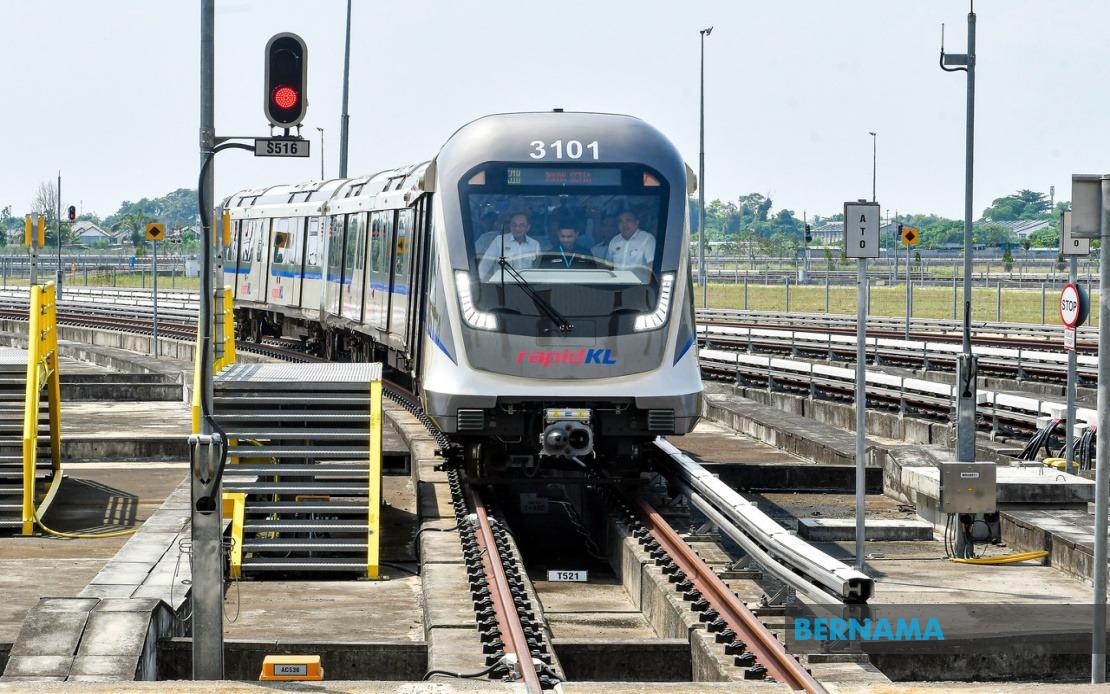
Prime Minister Datuk Seri Anwar Ibrahim has launched a month-long free fare programme for the Light Rail Transit 3 Shah Alam Line, commencing from June 29 through July 31. The initiative extends beyond the main rail service to encompass feeder bus services operated by Prasarana Malaysia Berhad, creating an integrated public transport trial period that targets a broad spectrum of users across the Klang Valley region.
The announcement has generated considerable enthusiasm among student populations, who represent a significant portion of the line's potential user base. For tertiary education students juggling limited budgets with commuting demands, the removal of fare barriers presents a meaningful opportunity to reassess their daily transport choices. Many currently depend on ride-hailing applications or parental support to navigate between residential areas and educational institutions, a financial burden that compounds across academic years.
Arissa Ahmad Khairul, a 22-year-old Bachelor of Journalism student at Universiti Teknologi MARA, articulated how the free fare scheme addresses a genuine pain point for the student community. She highlighted that the combination of complimentary access and improved train amenities creates an attractive proposition for cost-conscious users. Her specific commute from Kepong to the UiTM Shah Alam campus via Bandar Utama illustrates the line's potential to streamline journey times, converting what might otherwise be a multi-leg trip requiring various transport modes into a single, efficient rail connection.
Beyond individual convenience, transport observers recognise the broader strategic value embedded in the free trial period. Yamin Ahmad, a 25-year-old media professional, characterised the initiative as a forward-thinking approach that removes financial hesitation from first-time users. This perspective captures an important dimension of public transport adoption—that trial periods serve not merely as subsidies but as information-gathering mechanisms. When potential riders experience the service firsthand without immediate cost concerns, they gain authentic data about time efficiency, comfort levels, and route utility that shapes long-term transportation habits.
The comparative advantage of rail transit over private vehicle use becomes particularly evident during such trial phases. Commuters gain tangible exposure to cost savings through eliminated fuel and parking expenses, alongside time benefits derived from dedicated rail corridors that bypass road congestion. For the Klang Valley, where traffic congestion perpetually strains productivity and quality of life, shifting even a modest percentage of commuters from private vehicles to public transport generates economy-wide gains.
The Universiti Teknologi MARA institution presents a compelling case study for the line's potential impact. With approximately 42,000 enrolled students, only roughly 13,500 reside in on-campus residential colleges, leaving approximately 28,500 students navigating daily commutes from off-campus accommodation. Many concentrate in neighbouring municipalities including Kuala Lumpur and Subang Jaya. Mohamad Adib Hazim Mohamad Razali, president of UiTM's Students' Representative Council, emphasised that the dedicated UiTM station represents transformational infrastructure for this dispersed student population. The economic implications extend beyond individual fare savings—systematic adoption of public transport by university students reduces demand for campus parking, alleviates vehicular congestion in surrounding residential zones, and generates a cohort of transit-literate passengers whose habits may persist into professional life.
The financial mechanics of the free trial deserve scrutiny from a policy perspective. By removing the immediate transaction barrier, the government effectively converts fare revenue into a market research investment. The ridership data accumulated during this month-long window will inform subsequent pricing strategies, service frequency adjustments, and infrastructure planning decisions. High utilisation during the free period provides evidence of latent demand that fare barriers previously suppressed, while patterns of actual usage offer insights into peak periods, popular stations, and emerging commuting corridors.
For the broader regional context, the LRT3 Shah Alam Line represents critical infrastructure development in Malaysia's continuing urbanisation and metropolitan expansion. The Klang Valley, encompassing Kuala Lumpur and surrounding municipalities, has experienced sustained population growth and economic concentration, creating transportation challenges that incremental road expansion cannot adequately address. Strategic investment in rail capacity represents recognition that sustainable urban growth requires modal shift toward high-capacity public transit.
The timing of this initiative carries additional significance within Malaysia's political and economic landscape. As the government pursues productivity improvements and cost-of-living relief measures for middle and working-class households, transport expense reduction addresses a genuine household budget concern. For students specifically, transport costs represent discretionary expenses that many sacrifice through trade-offs affecting health, social participation, or academic engagement. Removing this friction point, even temporarily, provides tangible government responsiveness to young voter concerns.
Successful trial periods typically depend on complementary factors beyond fare elimination. Service reliability, cleanliness, safety perception, and information clarity significantly influence whether trial users become long-term passengers. The LRT3 Shah Alam Line's modern facilities, referenced approvingly by interviewed commuters, suggest infrastructure quality conducive to positive first experiences. However, sustained ridership growth requires operational excellence and consistent service delivery throughout and beyond the trial period.
Looking forward, the free fare month functions as a critical juncture in the line's trajectory toward operational normalcy. Stakeholders will scrutinise ridership numbers, demographic composition, and geographic distribution patterns to understand whether initial enthusiasm translates into sustainable demand at standard pricing. For students and cost-sensitive commuters, the approaching return to fare collection will represent a genuine test of whether the service's demonstrated advantages prove sufficiently compelling to warrant continued patronage despite resuming costs.
The initiative ultimately reflects broader policy tensions between immediate subsidy and long-term sustainability, between encouraging behavioural change and maintaining operational viability. The month-long free period generates momentum and practical experience that may reshape commuting patterns across the region, particularly for the substantial student population whose transport choices ripple through campus operations and surrounding communities for years to come.

