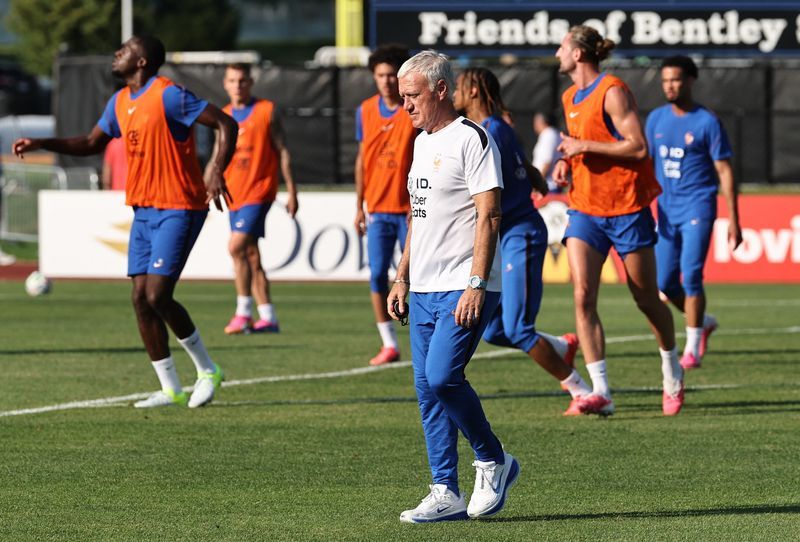
France's progression through the World Cup group stage was built on an attacking display of such quality that few teams in the tournament possess the firepower to match Kylian Mbappe, Ousmane Dembele and Michael Olise in combination. Having finished at the top of Group I with a perfect record, Didier Deschamps' side produced commanding victories over Senegal, Iraq and Norway that yielded 10 goals and established them as genuine contenders for the trophy. Yet beneath the gloss of those scorelines lies a structural problem that the French coaching staff must resolve before they take on Sweden on Tuesday in the Round of 32—a persistent weakness down the left flank that has occasionally left them exposed and somewhat disorganised in crucial moments.
The vulnerability on France's left side stems from a combination of individual form and tactical uncertainty rather than a single glaring deficiency. Theo Hernandez, operating at left back, has failed to deliver the consistent performances expected of a player of his calibre, appearing uncharacteristically hesitant in both defensive positioning and his usual attacking contributions. In response, Deschamps is expected to introduce Lucas Digne into the starting lineup, a move designed to inject greater defensive solidity and a more reliable crossing outlet from the wide area. Digne, with his experience and measured approach to the game, represents a safer option than Hernandez for a knockout match where tactical discipline becomes paramount.
The adjustment extends beyond the defensive line. Bradley Barcola is widely anticipated to replace Desire Doue on the left side of France's forward line, a change that reflects Deschamps' desire for increased direct running and explosive pace in transition. Barcola's natural width and penetrative movement would complement the creative brilliance of Olise, Mbappe and Dembele on the opposite flank, creating a more balanced attacking system that doesn't rely quite so heavily on the right side for width and cutting edge. This recalibration would not fundamentally alter France's overall tactical approach but would generate greater coherence across the entire team, reducing the disjointed nature that occasionally appeared during the group phase.
Sweden represent the kind of awkward test that can unsettle teams during the knockout stages, particularly those accustomed to overwhelming opposition through superior attacking quality. Having finished second in Group F behind the Netherlands, Sweden's record contains both eye-catching moments and damaging defeats. An emphatic 5-1 victory over Tunisia was followed by a heavy 5-1 loss to the Dutch, with a 1-1 draw against Japan providing evidence of their capacity to remain organised and difficult to break down. The Swedish team lacks the spectacular attacking appeal of France's squadron but possesses the physical robustness and structural discipline to make the evening uncomfortable should the French become impatient or allow their focus to drift.
Sweden's tactical blueprint will likely involve sitting deep defensively, inviting France to come at them while seeking opportunities to strike on the counter-attack or through set-piece routines. This defensive approach exposes one of France's residual vulnerabilities: their occasional susceptibility to quick transitions when they commit numbers forward. The group stage match against Norway's second-string illustrated this danger, with France's attacking commitment occasionally leaving dangerous space in behind their defensive line. In the knockout format, where a single mistake can prove fatal, such lapses take on far greater significance than they did when France could simply outscore their opponents through relentless attacking pressure.
The return of William Saliba to central defence provides some reassurance in this regard. His presence brings a measure of defensive stability and organisational clarity that had been lacking, offering Deschamps the foundation upon which to build a more structured backline. Combined with the anticipated adjustments on the left side, France's defence should present a far more coherent and difficult proposition than it sometimes did during the group phase. However, as former England international Gary Lineker observed in comments to French sports daily L'Equipe, the fundamental advantage lies with the French attacking complement, which simply outmatches Sweden's forward options of Alexander Isak, Viktor Gyokeres and Anthony Elanga.
The depth of France's attacking resources represents perhaps their most potent advantage and one that sets them apart from every other competitor in the tournament. While Mbappe has served as the focal point and driving force throughout the campaign, Dembele's hat-trick performance against Norway and Olise's orchestrated creativity have demonstrated the remarkable breadth of attacking options at Deschamps' disposal. The bench contains further genuine quality through Bradley Barcola, Desire Doue, Rayan Cherki, Jean-Philippe Mateta and Marcus Thuram—a quartet of attacking talents that no rival nation can match in terms of collective calibre and flexibility. This surplus of attacking riches creates a situation where France can genuinely expect to score additional goals even if one avenue of attack becomes temporarily congested or neutralised.
Historically, the French record in knockout competition at the World Cup offers encouragement, save for the 2022 final defeat to Argentina. Deschamps' side has navigated the elimination rounds with relative comfort since their last knockout exit in 2014, suggesting they have developed the mental resilience and tactical intelligence required when matches become tighter and more tactical. The transition from group play, where France could overwhelm through numerical advantage in attacking play, to knockout football, where matches are frequently decided by narrow margins and individual moments of quality, requires a different mindset and approach. France's historical success in these stages suggests they possess the necessary experience and sophistication.
A victory against Sweden would present France with a quarter-final meeting against either Germany or Paraguay, matchups that carry different strategic implications but offer France a clear path through the tournament structure. The tactical adjustments Deschamps is implementing represent a measured response to real vulnerabilities rather than fundamental structural changes to his team's philosophy. By solidifying the left flank and creating greater balance across the pitch, France can maintain their attacking potency while reducing the defensive exposure that occasionally troubled them during the group phase. The fundamental advantage in attacking talent remains decisively with the French, but the resolution of these tactical issues could make them a far more complete and difficult proposition for any remaining opponents.

