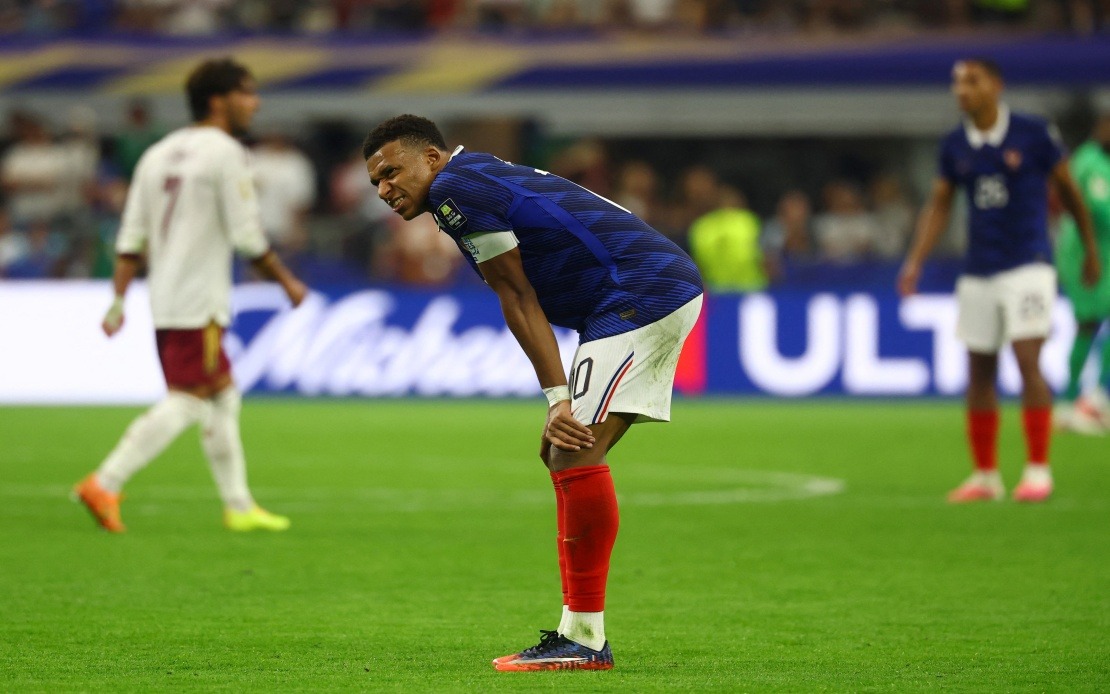
France experienced significant civil unrest on Tuesday evening after the national football team's disappointing 2-0 loss to Spain in the FIFA World Cup semifinal, resulting in widespread arrests across major cities and raising concerns about crowd management at major sporting events. The scale of police intervention—with 141 arrests in the Paris region alone and approximately 20 additional detentions in Lyon—underscores the volatile atmosphere that can develop when high-stakes sporting outcomes disappoint passionate fan bases, particularly in a nation where football holds deep cultural significance.
Police operations in Paris focused primarily on prosecuting individuals involved in the use of firework mortars, which were allegedly directed toward law enforcement officers and emergency personnel responding to the initial disturbances. The Paris Police Prefecture's emphasis on this particular offense reflects growing concerns across French law enforcement about weaponised fireworks at public gatherings, which have become increasingly common during protests and after major sporting events. By concentrating enforcement efforts on attacks against officers rather than pursuing all participants broadly, authorities attempted to distinguish between casual demonstrations of frustration and more deliberate confrontations with police.
The profile of those arrested provides insight into the demographic composition of those involved in the disorder. The detainees reportedly ranged in birth year from 2002 to 2011, indicating that many were teenagers or young adults in their early twenties—a generation that has grown up with social media amplifying collective emotional responses to major events. This age demographic's involvement in street disturbances following sporting events has become a recurring pattern across Europe, prompting sports sociologists and security experts to examine how digital connectivity influences crowd behaviour and the rapid mobilisation of groups around shared grievances.
In Lyon, the situation developed differently in terms of scale but similarly in terms of trigger mechanisms. Several hundred spectators had gathered at Place Bellecour, one of the city's most prominent public squares, to watch the match collectively. When Spain secured victory, the crowd's disappointment manifested in formations of smaller groups that began throwing projectiles, including fireworks, toward police positions. The decision by French riot police to intervene relatively swiftly resulted in approximately 20 arrests, suggesting that authorities applied more measured responses where the initial disturbances remained more contained than in Paris.
Remarkably, despite the intensity of these incidents across two major French cities, authorities reported no serious injuries to any participants, police officers, or emergency personnel. This outcome represents a fortuitous conclusion given the potential for escalation when firework mortars are involved—weapons that can cause severe trauma if they strike individuals directly. The absence of significant casualties may reflect either restraint on the part of those throwing projectiles or the effectiveness of police protective equipment and positioning strategies that minimised the impact of such weapons.
Property damage assessments similarly indicated minimal destruction across both cities, particularly in Lyon where local authorities explicitly noted the absence of significant material harm. This distinction between disruptive behaviour and destructive vandalism is important for understanding the nature of the disturbances. Participants engaged in confrontational acts against police presence but did not transform the disorder into broader campaigns targeting infrastructure, commercial establishments, or public property—a pattern that could have escalated resource requirements for repairs and intensified political pressure on authorities.
The timing of this incident within the broader context of major sporting events in Europe carries relevance for the region and particularly for Southeast Asian nations increasingly hosting or bidding to host tournaments. France's experience demonstrates that even in affluent, well-resourced democracies with professional police forces and established crowd management protocols, the emotional investment surrounding international football competitions can overwhelm normal civic conduct. For Malaysia and neighbouring countries developing sporting event infrastructure and security procedures, these incidents offer cautionary lessons about the necessity for comprehensive planning that extends beyond matchday management into post-event protocols for dispersing crowds and managing disappointment-driven congregation in public spaces.
The incident also reflects the specific cultural and political dimensions of French football fandom, where matches carry significance extending beyond sport into national identity narratives. A World Cup semifinal defeat represents not merely a sporting loss but a symbolic challenge to national prestige—particularly for a nation that has previously achieved World Cup success and maintains expectations of competitive excellence. This psychological dimension helps explain why public disturbances emerge more readily following significant defeats than after typical competitive losses during regular season matches.
French authorities' response protocols, including the rapid deployment of riot police and the systematic documentation of detainees, reflect lessons absorbed from previous instances of disorder at major sporting events. The emphasis on identifying those targeting emergency personnel specifically suggests that justice system processing may distinguish between those engaged in generalised disorder and those deemed to have escalated confrontations through direct attacks on officials. Such differentiation in prosecution approaches can influence how communities perceive police response fairness and may affect patterns of participation in future disturbances.
Looking forward, the incident raises questions about preventive measures that event organisers and authorities might implement before rather than after matches generating high emotional stakes. Some countries have experimented with fan management strategies including controlled viewing areas, increased stewarding, predetermined dispersal routes, and enhanced communication with supporter groups before matches anticipated to generate strong reactions. The effectiveness of such approaches remains contested among security professionals, with debate persisting about whether increased restrictions on public assembly represent proportionate responses to the statistical reality that most supporters disperse peacefully even after disappointing outcomes.

