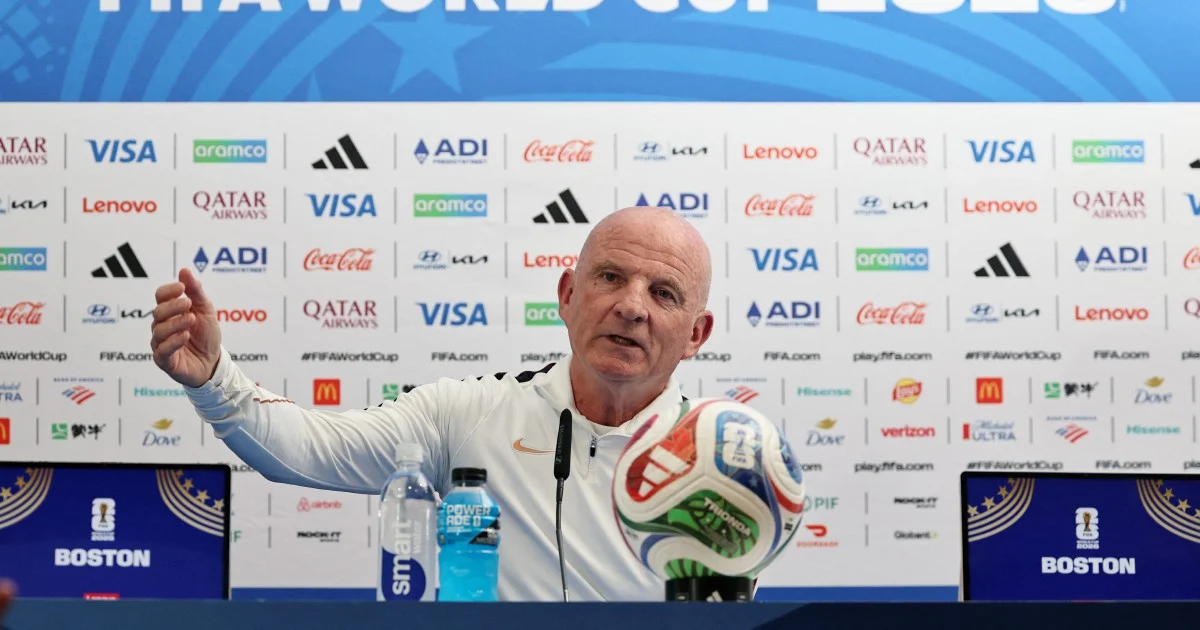
France's pursuit of first place in World Cup Group I takes on significance beyond mere sporting prestige when they confront an equally commanding Norway on Friday, with assistant coach Guy Stephan emphasizing how the finishing position determines crucial logistical advantages throughout the tournament. Speaking to journalists on Thursday from Boston, Stephan outlined the practical realities underpinning the French team's ambition, revealing that manager Didier Deschamps had returned to France to attend his mother's funeral, leaving tactical decisions in capable hands during a pivotal fixture.
The 2018 world champions have already secured passage to the knockout stage alongside their Scandinavian opponents, each having claimed maximum points from their opening two matches. Yet the margin of advancement carries substantial implications for operational efficiency and player welfare during the demanding tournament schedule. Stephan articulated how topping the group allows France to remain stationed in the Northeastern United States through the quarter-final stage, preserving continuity in accommodation, training facilities, and travel familiarity. The alternative outcome—finishing second—forces the team into an exhausting rotation visiting distant American cities including Dallas, Miami, and Atlanta, fragmenting their base of operations and introducing unnecessary fatigue during a compressed competitive calendar.
Beyond the evident logistical considerations, Stephan highlighted environmental factors influencing performance levels across different American regions. Temperature variations between Massachusetts and the deep South present physiological challenges for European athletes accustomed to temperate climates. Maintaining positioning in the cooler northeast rather than descending into the heat and humidity of Texas and Florida provides tangible competitive advantages during physically demanding knockout matches. This calculus extends the conversation from convenience into genuine strategic territory, where tournament organizers have created geographic disparities that influence group outcomes.
France requires merely a draw against Norway to secure top spot thanks to their superior goal difference accumulated through their previous victories. This mathematical reality grants Stephan's team considerable tactical flexibility, allowing them to approach the encounter with controlled aggression rather than desperation. Norway, however, enters the fixture with identical credentials and motivation, having matched France's two-win start to the tournament. The Norwegian side represents a formidable opponent motivated by identical benefits, creating a compelling contest between matched qualities rather than a hierarchical contest between stronger and weaker competitors.
Squad depth concerns complicated France's preparations, with influential central defender William Saliba ruled out of the encounter. Saliba's absence forces adjustments to the defensive organization that Deschamps has meticulously constructed. Additionally, striker Marcus Thuram reported calf discomfort that may necessitate tactical modifications should his condition deteriorate. These personnel issues inject genuine uncertainty into French calculations, preventing any assumption of smooth passage despite favorable mathematical circumstances.
Stephan acknowledged the unusual nature of managing team affairs during Deschamps' absence, noting the established communication protocols maintained despite the manager's temporary departure. While remaining in regular telephone contact with his boss, Stephan anticipated minimal dialogue on Friday itself given the personal tragedy commanding Deschamps' immediate attention. This separation illustrates how major tournaments proceed regardless of individual circumstances, requiring institutional structures and trusted subordinates to maintain continuity during unexpected disruptions. Assistant coaches must balance respecting their manager's situation with ensuring competitive preparations proceed adequately.
The fixture carries particular resonance for Southeast Asian observers given the tournament's expanding global footprint and the increasing complexity of World Cup scheduling across vast geographic territories. Malaysian football administrators and analysts following the competition witness how tournament infrastructure and geographic positioning influence outcomes beyond pure tactical or athletic superiority. The French-Norwegian encounter demonstrates how organizational logistics have transformed into legitimate competitive factors, influencing team preparation quality and player recovery capabilities throughout extended tournaments.
France's six-point accumulation after two matches represents exceptional performance that historically guarantees advancement from group stages. As Stephan noted to assembled reporters, accumulating maximum points early provides genuine strategic advantages, particularly in modern tournaments where scheduling compresses fixtures into demanding sequences. The French team's successful start reflects both quality execution and the organizational discipline that characterizes successful international programs. Yet pressing forward with a victory rather than accepting the mathematically sufficient draw demonstrates competitive culture prioritizing dominance over merely satisfactory outcomes.
Norway's equivalent performance trajectory suggests Scandinavian football continues developing competitive capabilities that challenge traditional powerhouse hierarchies. The Norwegian program has invested substantially in youth development and tactical innovation, yielding successive tournament performances that validate strategic investments in player development pipelines. Friday's encounter will test whether this ascending trajectory can overcome a France team bearing world championship experience and deeper playing talent pools. The competitive balance between these nations reflects broader shifts in international football dynamics where geographic or historical status no longer guarantees outcomes.

