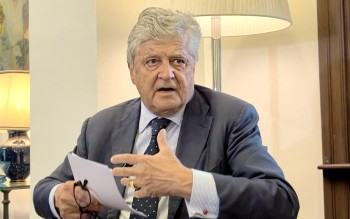
France has extended an offer of technical collaboration to Malaysia on civil nuclear energy development, contingent upon Kuala Lumpur's decision to incorporate atomic power into its long-term energy security framework. French Minister Delegate for Foreign Trade and Economic Attractiveness Nicolas Forissier made the overture during his inaugural official visit to Malaysia, emphasising that Paris stands prepared to share decades of accumulated expertise should the Malaysian government move forward with nuclear infrastructure development. The proposal arrives at a critical juncture as Malaysia deliberates its energy mix for the coming decades, weighing traditional fossil fuels against low-carbon alternatives.
Forissier's comments underscored that the final determination rests exclusively with Malaysian policymakers, who remain in the exploratory phase of evaluating nuclear energy's feasibility within the country's broader decarbonisation agenda. The minister noted that Malaysian government officials have initiated substantive discussions on the matter, indicating serious consideration rather than casual exploration. These ongoing deliberations reflect Malaysia's growing alignment with global trends toward cleaner electricity generation, particularly as Southeast Asian nations face mounting pressure to reduce carbon emissions and meet climate commitments.
The French position reflects Paris's confidence in nuclear energy as a cornerstone of decarbonisation strategy. France itself derives approximately 60 per cent of its electricity from nuclear generation, with the remainder sourced from renewable alternatives including solar and wind installations. This diversified approach has positioned France as one of Europe's lowest-carbon electricity producers and lends credibility to the nation's advocacy for atomic power as a climate solution. The French government's willingness to transfer such know-how internationally demonstrates broader geopolitical interest in shaping global energy transitions according to its technological strengths and diplomatic priorities.
Forissier articulated the long-term commitment required for nuclear energy development, emphasising that atomic power facilities demand sustained investment and operational continuity spanning 50 to 80 years. This protracted timeline distinguishes nuclear from renewable alternatives and necessitates strong institutional frameworks, technical capacity, and political will across multiple electoral cycles. For Malaysia, such a commitment would entail building indigenous expertise in nuclear safety, waste management, and regulatory oversight—areas where international partnerships prove invaluable for developing nations embarking on nuclear programmes for the first time.
The French delegation accompanying Forissier comprised representatives from more than 20 companies, signalling substantial private-sector enthusiasm for deepening economic partnerships with Malaysia. This industrial contingent reflects confidence that Malaysia's energy transition presents genuine commercial opportunities for French technology providers and service firms. The composition of the delegation suggests France is positioning itself not merely as a diplomatic partner but as a comprehensive solution provider across nuclear energy's entire value chain, from reactor design and construction to operational support and decommissioning planning.
Forissier's visit epitomises a broader intensification of bilateral relations between France and Malaysia across multiple domains. The timing follows several high-level diplomatic engagements that have elevated the two countries' partnership profile. In March 2025, Malaysia's Defence Minister visited a French aircraft carrier, symbolising military and strategic cooperation. Subsequently, Prime Minister Datuk Seri Anwar Ibrahim travelled to France on July 3-4, 2025, for substantive discussions with French leadership. These reciprocal visits at ministerial and premier levels demonstrate mutual commitment to deepening engagement beyond traditional commercial channels.
Malaysia's energy transition presents distinct complexities that nuclear power could address, though the option remains contentious domestically. The nation possesses substantial natural gas reserves that have historically powered its electricity grid, yet growing demand and climate imperatives necessitate diversification. Renewable energy development, particularly solar installations, has accelerated, but intermittency challenges limit baseload capacity. Nuclear energy would provide reliable, carbon-free baseload generation, addressing two critical objectives simultaneously: meeting rising electricity demand while achieving emissions reduction targets aligned with Malaysia's climate commitments.
The nuclear proposition arrives as Southeast Asian nations increasingly reconsider atomic power's role in regional energy security. Several regional states have previously rejected nuclear development due to safety concerns, seismic risks, and waste disposal uncertainties. However, shifting global climate narratives and technological advances have prompted reassessment. Vietnam, for instance, shelved its nuclear programme but continues evaluating future possibilities. Thailand and Indonesia have similarly grappled with nuclear considerations. Malaysia's deliberations thus reflect wider Southeast Asian engagement with atomic energy's potential contributions to climate and energy security objectives.
Domestically, Malaysia's nuclear energy debate involves complex stakeholder considerations. Environmental groups maintain concerns about waste storage and accident risks in a region prone to seismic activity and tropical weather phenomena. Conversely, energy security advocates emphasise nuclear's capacity to reduce dependence on imported fossil fuels and provide price-stable electricity generation. Public awareness campaigns and transparent governmental communication become crucial for building social consensus on such consequential infrastructure decisions. France's experience navigating public acceptance of nuclear infrastructure could offer valuable lessons for Malaysian policymakers undertaking similar societal conversations.
The French offer must be contextualised within broader geopolitical positioning regarding energy technology transfer and climate solutions. European nations, including France, increasingly view climate technology provision as a strategic instrument for expanding diplomatic influence and securing long-term economic partnerships. By positioning France as Malaysia's preferred nuclear partner, Forissier simultaneously advances commercial interests and strengthens bilateral relations. For Malaysia, accepting French partnership would create durable institutional linkages and technology dependencies spanning decades, with implications extending beyond energy into broader bilateral relations.
Malaysia's government has not committed to nuclear development, maintaining its evaluative posture while considering alternatives. The French initiative does not pressure Malaysia toward any particular outcome but rather ensures nuclear remains a viable option should Malaysian decision-makers determine atomic power aligns with national energy strategies. The ongoing national debate referenced by Forissier will ultimately determine whether Malaysia joins France and other nations investing substantially in nuclear infrastructure or pursues alternative pathways prioritising renewable energy expansion and grid modernisation.
The French overture represents a calculated investment in future partnership, predicated on Malaysia's eventual policy choices. Should Malaysia's government eventually decide that nuclear energy merits development, France has established itself as a credible, experienced partner capable of providing comprehensive support across technical, commercial, and regulatory dimensions. For now, France's role remains that of an attentive facilitator, standing ready to translate Malaysia's energy ambitions into concrete nuclear capacity should the nation's democratic processes conclude that atomic power serves the national interest.

