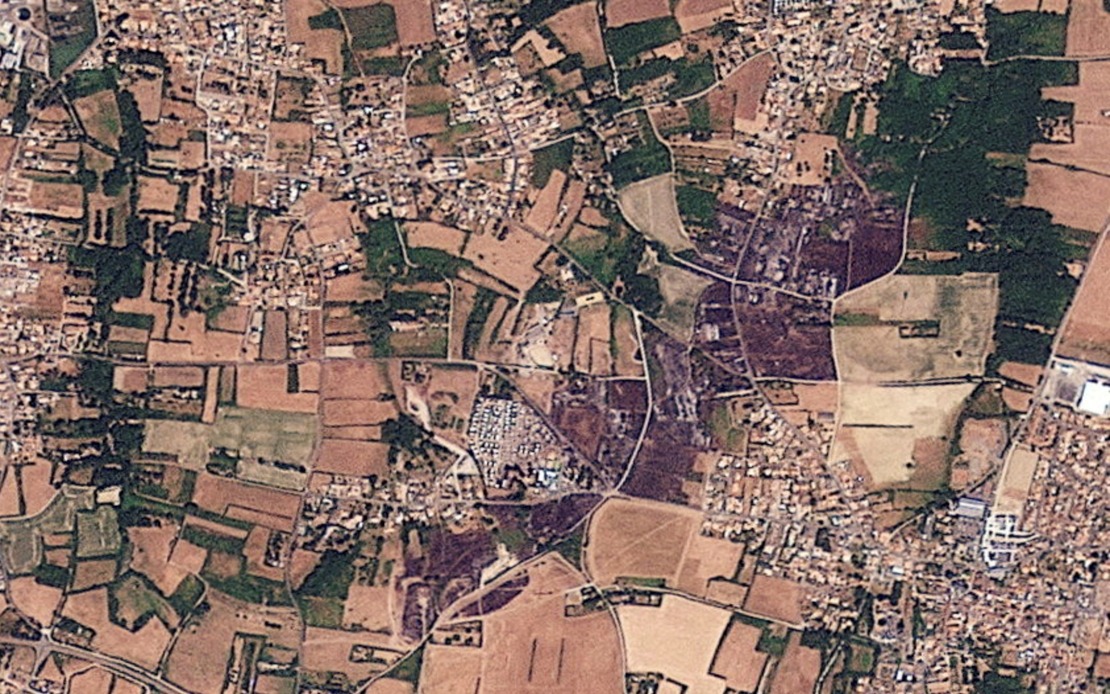
France is battling an intensifying wildfire crisis that threatens to overwhelm firefighting resources and disrupt critical infrastructure across the nation. Two active blazes ravaging the Fontainebleau forest have collectively consumed 1,920 hectares of woodland, with the threat of further expansion looming as summer heat persists across the country. The scale of destruction underscores the mounting environmental and social toll of seasonal fires that have become increasingly prevalent in recent years, driven by climate change and, in some cases, deliberate criminal acts.
The initial fire erupted on Sunday and has already devoured approximately 1,500 hectares, while a second blaze that ignited subsequently has destroyed between 300 and 400 hectares. Despite the deployment of around 600 firefighters working around the clock, containment remains challenging as the flames continue their advance through the densely forested terrain. The overnight spread demonstrates the volatile conditions facing emergency responders, who must battle not only the fires themselves but also unpredictable weather patterns and terrain obstacles that impede their progress.
In a significant development, French authorities have arrested two individuals suspected of deliberately igniting the primary Fontainebleau fire, transforming this environmental disaster into a criminal investigation. This discovery reflects a troubling pattern emerging across the country, where intentional firesetting has emerged as a notable cause of wildfire outbreaks. Since the fire season commenced, national authorities have apprehended 59 people nationwide on suspicion of deliberately starting wildfires, indicating that arson constitutes a material proportion of the fire incidents ravaging French territory.
French Transport Minister Philippe Tabarot has responded to the escalating crisis by publicly demanding stringent legal consequences for those responsible for setting fires deliberately. His comments distinguish between two categories of offenders: those who commit arson with criminal intent, who should face severe imprisonment and substantial penalties, and individuals suffering from pyromania—a psychological compulsion to start fires—who require medical intervention rather than purely punitive measures. Tabarot's differentiation suggests recognition that addressing the wildfire crisis requires both deterrence through legal mechanisms and clinical treatment for those with underlying psychological conditions.
Beyond Fontainebleau, the wildfire emergency has metastasized across France's diverse regions, threatening communities and disrupting transportation networks. The Trevillach wildfire, which ignited earlier this month in the Pyrenees-Orientales region, has caused extensive damage to railway infrastructure along the crucial Perpignan-Villefranche-Vernet-les-Bains corridor. The national railway operator SNCF has suspended train services between Ille-sur-Tet and Villefranche-Vernet-les-Bains until at least July 20, creating logistical complications for regional transportation and economic activities dependent on rail connectivity.
In Brittany, the situation deteriorated when a heath fire erupted near Cap Fréhel in the Côtes-d'Armor department, forcing the evacuation of more than 100 residents on Monday as the blaze consumed approximately 38 hectares. This incident exemplifies how even relatively modest fires, measured against the Fontainebleau catastrophe, nonetheless impose severe human costs through displacement, property loss, and community disruption. The evacuation reflects authorities' appropriate caution regarding potential further spread and their commitment to prioritizing civilian safety during active fire operations.
Simultaneously, the Lozère region has experienced its own fire outbreak, with reports indicating that 107 hectares have already succumbed to flames. These concurrent incidents across geographically dispersed regions suggest that France is experiencing a nationwide wildfire phenomenon rather than isolated occurrences, signalling systemic challenges related to climate conditions, vegetation management, and fire prevention infrastructure. The simultaneous demands on firefighting resources across multiple regions strain governmental capacity and necessitate coordination between national and local authorities.
For Southeast Asian observers, the French wildfire crisis offers sobering parallels to regional fire challenges, particularly the recurring transboundary haze episodes affecting Malaysia, Indonesia, and Singapore. Both contexts involve large-scale landscape fires driven partly by climatic conditions and partly by human activities—whether deliberate or negligent. The French experience demonstrates how even wealthy nations with sophisticated emergency response capabilities can be overwhelmed by fire events during peak seasons, underscoring the severity of environmental pressures facing modern societies.
The French government's response strategy, combining criminal prosecution for arsonists with medical treatment for individuals with pyromania, represents a more nuanced approach to fire prevention than purely punitive measures alone. This framework acknowledges that effective wildfire management requires addressing multiple causative factors simultaneously, from deterring criminal acts through severe penalties to treating underlying psychological disorders and presumably improving forest management practices. Such comprehensive approaches may offer instructive lessons for other nations struggling with escalating fire emergencies.
The arrest of 59 suspected arsonists nationwide during this fire season indicates that deliberate firesetting constitutes a substantial portion of France's wildfire problem—information that transforms the policy discussion from purely environmental management toward also addressing criminal justice and social deterrence. The visible consequences of deliberate fires, including mass evacuations and railway disruptions, may strengthen public and political support for implementing harsh penalties as Transportation Minister Tabarot has advocated.
As the summer season progresses, France's wildfire crisis appears likely to persist, potentially escalating further as temperature records continue to be shattered across the continent. The convergence of environmental vulnerability, infrastructure impacts, and criminal dimensions creates a complex policy challenge requiring sustained coordination across emergency services, law enforcement, transportation authorities, and international agencies. The unfolding situation demonstrates that modern fire emergencies transcend purely technical firefighting challenges, encompassing criminal investigation, public safety, psychological health, and infrastructure resilience within an increasingly climate-stressed environment.

